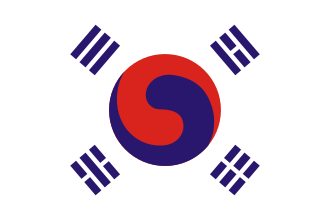
“We proclaim to Heaven and Earth that we have established the name of our country as the Great Han Empire.”
For thirteen years, the Korean Empire stood as a remarkable experiment — a monarchy reborn, a nation straining toward modernity, and a sovereign state asserting its place among the empires of the world. Proclaimed in 1897 and extinguished by Japanese annexation in 1910, the Korean Empire represents one of the most dramatic and poignant chapters in Korean history. It was an era of genuine transformation, real reform, and ultimately, devastating loss.
To understand the Korean Empire, you must understand the world it was born into: a peninsula caught between the competing ambitions of Japan, China, and Russia, where the centuries-old Joseon dynasty was collapsing under the weight of foreign pressure and internal crisis. Out of that chaos came a bold declaration — Korea would not be a vassal. Korea would be an empire.
Quick Facts: The Korean Empire at a Glance
| Official Name | Daehan Jeguk (대한제국, Great Han Empire) |
| Period | 1897–1910 |
| Capital | Hanseong (present-day Seoul) |
| Emperor (Founder) | Emperor Gojong (r. 1897–1907) |
| Last Emperor | Emperor Sunjong (r. 1907–1910) |
| Reform Era Name | Gwangmu (光武, “Brilliant Martial”) |
| Preceded by | Kingdom of Joseon |
| Succeeded by | Japanese Korea (Japanese colonial administration) |
Why Did Joseon Become an Empire in 1897?
The proclamation of the Korean Empire did not emerge from a position of strength — it emerged from crisis. Throughout the 1880s and 1890s, the Joseon dynasty had been battered by competing foreign powers. China had long claimed suzerainty over Korea, treating it as a tributary state. Japan, newly modernized after the Meiji Restoration, was determined to break that relationship and establish its own influence on the peninsula.
The First Sino-Japanese War (1894–1895) changed everything. Japan’s decisive victory ended China’s traditional dominance over Korean affairs, and the Treaty of Shimonoseki formally recognized Korean independence from Chinese suzerainty. But this independence was fragile, and Japan quickly moved to fill the vacuum. In 1895, the Japanese-backed assassination of Queen Min — known posthumously as Empress Myeongseong — shocked Korea and the watching world. King Gojong, fearing for his own safety, sought refuge in the Russian legation in early 1896, a period known as the Agwan Pacheon (俄館播遷). He remained there for nearly a year.
When Gojong returned to his palace in 1897, he and his advisors, influenced in part by reformist groups including the Independence Club, made a calculated decision. To assert Korea’s full sovereignty — not as a kingdom subordinate to anyone, but as an empire equal to China’s Qing dynasty and Japan’s Meiji imperial state — Gojong would elevate himself to the rank of emperor. On 12 October 1897, at a newly constructed Round Altar called Wongudan in central Hanseong, King Gojong performed the solemn ritual of sacrifice to Heaven and proclaimed himself Emperor of the Great Han Empire. The era name Gwangmu, meaning “Brilliant Martial,” was adopted to mark the new beginning.
The choice of the name “Han” was deliberate — it referenced the ancient Han confederacies of the Korean peninsula, Mahan, Jinhan, and Byeonhan, asserting a deep indigenous identity quite distinct from any Chinese or Japanese framing. Korea was not borrowing its legitimacy from anyone. It was reaching back into its own history.
3 Pillars of the Gwangmu Reform Era
1. Modernizing the Military and State Structure
Emperor Gojong and his government understood that sovereignty without strength was an illusion. The Gwangmu reforms prioritized building a modern military, reorganizing the army along Western-influenced lines and establishing military academies. The government also reformed the legal code and administrative structures, drawing on models from Japan, the United States, and Europe while trying to preserve Korean distinctiveness. The 1899 Daehan Gukje (Great Han National Constitution) was a foundational document asserting absolute imperial sovereignty — placing supreme authority in the hands of the emperor as a modern head of state.
2. Infrastructure and Economic Development
The Korean Empire pursued ambitious infrastructure projects. Electric streetcars began running in Hanseong in 1899, making the city one of the earlier Asian capitals to have such a system. Telegraph lines were extended, and the government worked to develop railways, though much of this infrastructure ultimately benefited Japanese economic interests as Japan’s grip tightened. Land surveys were conducted to modernize property registration, a significant administrative undertaking. The government also promoted new industries and worked to modernize the financial system, including the establishment of banking institutions.
3. Education and Cultural Modernization
The empire invested in modern schools, sending students abroad to study Western science, law, and technology. New educational institutions were founded in Hanseong, and the government sought to expand literacy and modern knowledge. Newspapers flourished during this period, and public discourse — though often constrained — was more open than it had been under the more rigid Joseon system. The era saw genuine intellectual ferment, with Korean thinkers grappling with questions of nationhood, sovereignty, modernity, and identity.
“The reforms of the Gwangmu era were not mere imitation of the West — they were a Korean attempt to define what a modern Korean state could and should be, on Korean terms.”
The Tightening Noose: Japan’s Encroachment
Despite the energy of the Gwangmu reforms, the Korean Empire was operating under conditions that made genuine independence increasingly difficult to sustain. Japan’s victory in the Russo-Japanese War (1904–1905) was the decisive turning point. With Russia neutralized as a counterbalancing power and with tacit American approval secured through the Taft-Katsura agreement, Japan moved decisively to consolidate control over Korea.
The Japan-Korea Protectorate Treaty of 1905, known in Korea as the Eulsa Treaty or the “Treaty of Humiliation,” stripped the Korean Empire of its right to conduct its own foreign affairs. A Japanese Resident-General, initially the formidable Itō Hirobumi, was installed in Seoul with sweeping powers. Emperor Gojong refused to affix his personal seal to the treaty — a point of profound historical significance that Korean historians have long emphasized — but the treaty was signed by cabinet ministers under intense Japanese pressure regardless.
Gojong attempted to resist through international diplomacy. In 1907, he secretly sent emissaries — Yi Sang-seol, Yi Joon, and Yi Wi-jong — to the Second Hague Peace Conference in the Netherlands, hoping to expose Japan’s violation of Korean sovereignty to the international community. The mission failed; the great powers refused to receive the Korean delegates. Japan used the episode as a pretext to force Gojong to abdicate in favor of his son, who became Emperor Sunjong. A further treaty the same year reduced the Korean Empire to a Japanese protectorate in all but name, giving the Resident-General control over internal administration as well.
Resistance continued across the country. The Righteous Army movement (Uibyeong) — armed guerrilla fighters who had been resisting Japanese encroachment since the mid-1890s — intensified its campaigns. Tens of thousands of Koreans took up arms. The Japanese military conducted brutal suppression campaigns. But outgunned and outmanned, the resistance, though fierce and morally significant, could not hold back annexation.
The End: Annexation and the Legacy of 1910
On 22 August 1910, the Japan-Korea Annexation Treaty was signed, and on 29 August it was proclaimed. The Korean Empire ceased to exist. Korea became a colony of the Japanese Empire, a status it would endure until Japan’s defeat in World War II in August 1945.
The legacy of the Korean Empire is contested and complex. On one hand, the thirteen years of the empire represented a genuine, if ultimately unsuccessful, effort by Koreans to chart their own course toward modernity and sovereignty. The Gwangmu reforms produced real achievements in infrastructure, law, and education. On the other hand, the period also saw concentrated imperial power, social tensions, and the ultimate failure to protect the nation from foreign domination.
For modern Koreans, the empire carries deep emotional resonance. The Wongudan altar site — where Gojong proclaimed himself emperor — still exists in central Seoul, though much of the original complex was demolished during the Japanese colonial period. What remains is a powerful symbol of a moment when Korea declared, however briefly, that it stood as an independent, sovereign empire before the world.
| Aspect | Late Joseon Dynasty | Korean Empire (Gwangmu Era) |
|---|---|---|
| Ruler’s Title | King (Wang) | Emperor (Hwangje) |
| International Status | Tributary to Qing China | Claimed full sovereign equality |
| Constitutional Basis | Neo-Confucian governance tradition | Daehan Gukje (1899 constitution) |
| Urban Infrastructure | Traditional; limited modernization | Electric streetcars (1899), telegraph expansion |
| Reform Orientation | Gradual, Neo-Confucian framing | Active modernization on Korean terms |
Continue Exploring
On This Site
- Emperor Gojong: The Last King and First Emperor of Korea
- The Assassination of Queen Min: A Nation in Crisis
- The Righteous Army Movement: Korea’s Armed Resistance to Japan
- Wongudan: The Round Altar Where an Empire Was Born