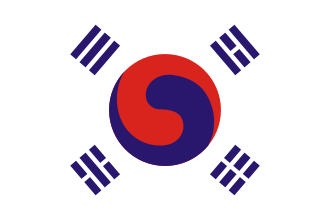
“We proclaim to Heaven and Earth that we have founded an imperial nation.” — Emperor Gojong, upon declaring the Korean Empire, 1897
For most of its history, Korea existed as the Joseon Kingdom — a Confucian monarchy that had endured for more than five centuries under the Yi dynasty. But in the final years of the nineteenth century, a world of steamships, telegraphs, and imperial rivalry was closing in on the peninsula. In a dramatic act of political self-assertion, King Gojong climbed the newly constructed Hwangudan altar in Seoul on 12 October 1897 and proclaimed the founding of the Daehan Jeguk — the Korean Empire. With that ceremony, Korea declared itself the sovereign equal of China, Japan, and the Western powers.
The empire lasted only thirteen years. Yet those years were among the most consequential in all of Korean history, a compressed age of modernisation, diplomatic struggle, and ultimately national tragedy. Understanding the Korean Empire means understanding why modern Koreans still speak of gwangmu reform, why independence movements burned so fiercely after 1910, and why the question of sovereignty remains emotionally charged on the peninsula today.
Quick Facts: The Korean Empire at a Glance
| Fact | Detail |
|---|---|
| Official Name | Daehan Jeguk (대한제국) |
| Founded | 12 October 1897 |
| Dissolved | 29 August 1910 (Japan–Korea Annexation Treaty) |
| Emperors | Gojong (r. 1897–1907), Sunjong (r. 1907–1910) |
| Capital | Hanseong (present-day Seoul) |
| Reform Programme | Gwangmu Reforms |
| Era Name | Gwangmu (Gojong), Yunghui (Sunjong) |
| Preceded By | Joseon Kingdom |
| Succeeded By | Japanese Korea (Joseon under Governor-General) |
Why Did Korea Declare Itself an Empire in 1897?
The proclamation of 1897 was not mere ceremony — it was a calculated response to a cascade of geopolitical shocks. To appreciate its significance, it helps to trace the pressures that made it feel not only possible but necessary.
Throughout the nineteenth century, the Joseon court had maintained its traditional relationship with Qing China as a tributary state. That relationship, whatever its limitations, provided a kind of diplomatic shelter. The First Sino-Japanese War (1894–1895) shattered that arrangement entirely. Japan’s swift defeat of China and the resulting Treaty of Shimonoseki formally ended Korea’s tributary status, leaving Joseon exposed and diplomatically unmoored.
What followed was a period of violent instability. In October 1895, Japanese agents — acting with the complicity of the Japanese legation in Seoul — assassinated Queen Min (Empress Myeongseong), Gojong’s consort and a formidable political figure in her own right. The murder shocked Korean elites and galvanised anti-Japanese sentiment. Fearing for his life, Gojong took extraordinary refuge in the Russian legation in February 1896, remaining there for nearly a year in an episode known as the Agwan Pacheon (俄館播遷).
When Gojong finally returned to his own palace — the newly designated Deoksugung, chosen partly because it was surrounded by foreign legations and thus harder to attack — he and his advisers concluded that a dramatic symbolic act was required. By elevating Korea’s status from kingdom to empire and himself from king to emperor, Gojong placed Korea on nominally equal diplomatic footing with the Qing Empire and the Japanese Empire. The Hwangudan altar, constructed specifically for the occasion on the grounds of what had been the Joseon-era site for sacrifices to Heaven, was a statement in stone and timber: Korea, too, communed directly with Heaven and owed ritual deference to no earthly superior.
The Gwangmu Reforms: Modernisation on Korea’s Own Terms
The founding of the empire was accompanied by an energetic, if unevenly implemented, programme of modernisation known as the Gwangmu Reforms, named for Gojong’s imperial era name meaning “Radiant Martial Might.” These reforms touched virtually every domain of governance and society.
In land administration, the government undertook a nationwide cadastral survey — the first systematic land measurement in Korean history — to establish clear property rights and a rational tax base. In finance, a central bank structure was attempted. The military was reorganised along modern lines, with new drill manuals, Western-style uniforms, and attempts to professionalise officer training. In education, new schools teaching mathematics, foreign languages, and natural sciences opened in Seoul and the provinces. Telegraph lines were extended, and Korea’s first railway — connecting Seoul to Incheon, then expanded toward Busan — began operation during this period, though much of the railway infrastructure was built under Japanese pressure and financing.
The legal system was also reformed, with codes distinguishing civil from criminal matters in ways influenced by Western and Japanese models. The traditional examination system for government recruitment was abolished, replaced by new criteria that at least nominally valued technical competence alongside classical learning.
Architecturally, the era left visible marks on Seoul. Western-influenced buildings rose near Deoksugung palace. The city acquired electric streetlights and, eventually, trams. A visitor to Hanseong in 1905 would have found a city simultaneously haunted by its Joseon past and straining toward a self-imagined modern future.
“The Korean Empire was a genuine attempt to rewrite Korea’s place in the world — not a surrender to foreign models, but a selective, contested effort to claim modernity on Korean terms.”
3 Defining Crises That Doomed the Empire
1. The Russo-Japanese War and Its Aftermath (1904–1905)
The Korean Empire’s hopes of playing Russian and Japanese influence against each other collapsed when Japan dealt Russia a stunning defeat in the Russo-Japanese War. Japan’s victory in 1905 was sealed diplomatically by the Treaty of Portsmouth — and for Korea, it was sealed ominously by the Taft-Katsura agreement, through which the United States tacitly recognised Japan’s paramount interest in Korea in exchange for Japanese recognition of American authority in the Philippines. Korea was, in effect, abandoned by every major power that might have constrained Japanese ambitions.
2. The Eulsa Treaty (1905) and the Loss of Diplomatic Sovereignty
In November 1905, Japanese representatives — backed by the implicit threat of military force already stationed in Korea — presented the Korean imperial court with the Eulsa Treaty (also called the Japan–Korea Protectorate Treaty). The treaty stripped Korea of its foreign affairs competence, placing diplomatic representation in Japanese hands and establishing the office of the Japanese Resident-General in Seoul. Emperor Gojong refused to sign and later insisted he had not validly consented, but the treaty was imposed nonetheless. Korea was now a protectorate in all but name. The empire’s sovereignty, proclaimed so boldly in 1897, had been hollowed out in less than a decade.
3. Gojong’s Abdication and the Final Annexation (1907–1910)
Gojong made one last attempt at international recourse. In 1907 he secretly dispatched envoys to the Second Hague Peace Conference, hoping to have the Eulsa Treaty declared invalid before the assembled powers of the world. The gambit failed — the envoys were refused official recognition. Japan used the episode as a pretext to force Gojong’s abdication in July 1907. His son, the pliant and personally mild Sunjong, became the second and last emperor. Three years later, on 29 August 1910, the Japan–Korea Annexation Treaty formally dissolved the Korean Empire. The country that Gojong had proclaimed to Heaven and Earth thirteen years earlier ceased to exist as a sovereign state.
Legacy: How the Korean Empire Shaped Modern Korean Identity
The thirteen years of the Korean Empire were, on one reading, a failure — a state that could not defend itself, reforms that could not be completed, diplomacy that came too late. But that reading misses something important about how the empire functions in Korean historical memory.
The proclamation of 1897 established a vocabulary of Korean sovereignty that survived annexation. When Korean independence activists drafted their Declaration of Independence in March 1919 — triggering the great March First Movement — they invoked the right of the Korean people to self-governance, a concept the imperial period had articulated and popularised. The Provisional Government of Korea, established in Shanghai the same year, explicitly presented itself as the successor to the Korean Empire’s legitimacy.
The Gwangmu Reforms, incomplete as they were, demonstrated that Koreans were capable of conceiving and implementing modernisation on their own initiative — a point that mattered enormously against Japanese colonial arguments that Korea required external tutelage to advance. Historians such as those associated with the Academy of Korean Studies have debated the degree to which these reforms were genuinely autonomous versus shaped by foreign pressures, but the debate itself reflects the empire’s enduring relevance.
Physically, remnants of the empire survive in Seoul. Deoksugung Palace, with its unusual blend of Korean traditional and Western neoclassical architecture, remains one of the city’s most visited historic sites. The site of the Hwangudan altar — where Gojong performed the Heaven sacrifice in 1897 — is now partially occupied by a hotel, but the circular stone drum tower (hwangungu) still stands, a quiet monument to an audacious moment.
Comparison: Joseon Kingdom vs. Korean Empire
| Aspect | Joseon Kingdom | Korean Empire |
|---|---|---|
| Ruling Title | King (Wang) | Emperor (Hwangje) |
| Duration | 1392–1897 (505 years) | 1897–1910 (13 years) |
| Diplomatic Status | Tributary state of China | Claimed full sovereignty |
| State Religion/Philosophy | Neo-Confucianism | Confucian, with Western legal influences |
| Land Survey | Periodic, incomplete | Systematic cadastral survey (Gwangmu era) |
| Military | Traditional structure | Modernised, Western-style drills |
| Capital Architecture | Gyeongbokgung-centred | Deoksugung-centred, with Western buildings |
| End Cause | Self-transformation into empire | Forced Japanese annexation |
Continue Exploring
On This Site
- The Joseon Dynasty: Five Centuries of Korean Civilisation
- The March First Movement of 1919: Korea’s Cry for Independence
- Deoksugung Palace: Where the Empire Made Its Last Stand
- Empress Myeongseong: The Queen Who Defied Japan