A practical guide to sleeping in a Korean Buddhist monastery: how the official program works, the difference between experience and rest formats, an hour-by-hour schedule, what to pack, and which temples suit English-speaking visitors.
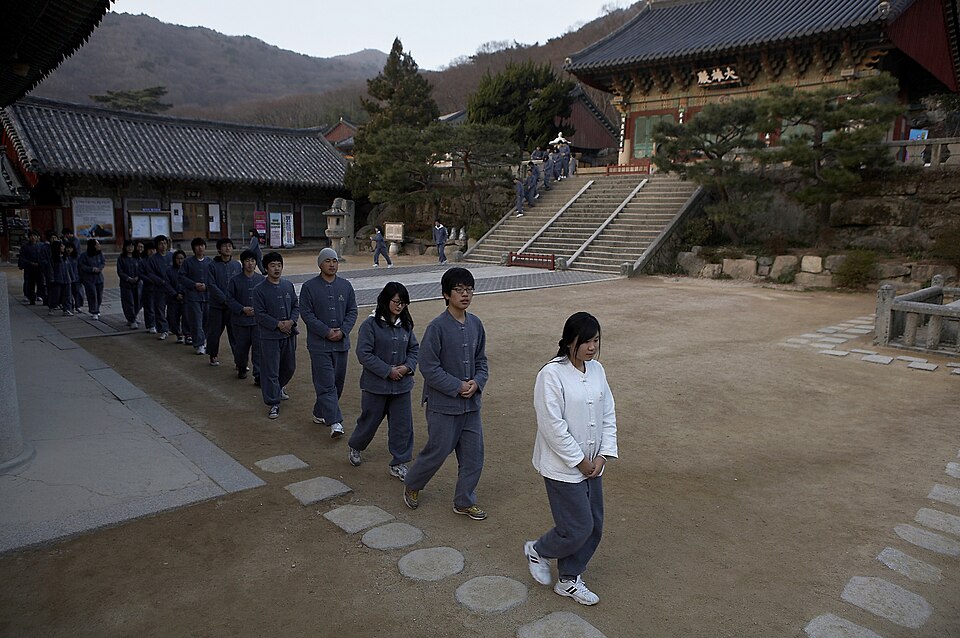
At half past three in the morning, in a mountain valley somewhere in Korea, a monk walks the temple grounds striking a wooden clapper. A few minutes later a drum sounds, then a bell, and lights come on in a hall where a row of visitors in loose grey clothes, most of whom had never set foot in a Buddhist temple until the day before, file in to sit behind the monks for dawn chanting. By seven they will have meditated, bowed, and eaten a silent breakfast of rice, soup, and vegetables. By nine most of them will describe it as the most memorable thing they did in Korea.
Templestay is an official national program that lets anyone spend a night, or a day, living by the schedule of a working monastery. It is inexpensive, well organized, available in English at many temples, and open to people of any faith or none. This guide explains how it works, how to choose between the different formats and temples, what to expect hour by hour, and the history of the tradition you will briefly join.
Why Templestay Matters
Korean Buddhism has been practiced in the mountains for seventeen centuries, and the daily rhythm of its monasteries, the pre-dawn ceremony, the communal work, the formal meal, the evening bell, has changed very little in that time. Templestay opens that rhythm to outsiders without diluting it. Guests sleep in temple dormitories, eat what the monks eat, and attend the same ceremonies; the difference is that someone explains what is happening and why. For a visitor interested in Korean history, it is the one experience that turns the temples seen on day trips from architecture into a living practice.
It is also, simply, restful. Phones are put away, meals are silent, the schedule is fixed, and the setting is usually a forested valley far from a city. Many Koreans use templestay as a retreat from work, and the “rest” format exists precisely for that purpose. Whether you want a structured introduction to Buddhist practice or a quiet night in a beautiful place, the program accommodates both.
Quick Facts
| What It Is | Official program of the Korean Buddhist Jogye Order, run since 2002 at roughly 140 temples nationwide |
|---|---|
| Formats | Experience (structured overnight), Rest (free-schedule overnight), Day (2–4 hours, no overnight) |
| Prices | Roughly 50,000–100,000 KRW per person per night including lodging, meals, and uniform; day programs 20,000–40,000 KRW |
| Booking | Online at the official Templestay site (English available), typically 1–4 weeks ahead; some temples accept same-week bookings |
| Best Time | Year-round; October for foliage, May for Buddha’s Birthday lanterns, winter for snow and solitude |
| Website | https://eng.templestay.com |
Historical Background
Buddhism reached the Korean peninsula in the fourth century and became the state religion of Silla, Goryeo, and the kingdoms between, producing the temples, pagodas, and sculptures that fill this site’s other guides. Under the Confucian Joseon dynasty, from the fourteenth century, Buddhism was pushed out of the cities and into the mountains, and the monasteries that survived did so as self-sufficient communities in remote valleys, farming their own land and keeping to a schedule set by the sun. That is why Korea’s great temples are mountain temples, and why the templestay experience takes place among forests and streams rather than in city centers.
The monastic day that guests join has its roots in the rules laid down by Chinese Chan masters in the eighth and ninth centuries and refined by Korean Seon teachers such as Jinul in the twelfth. The dawn ceremony, the 108 prostrations that symbolize the 108 afflictions of the mind, the formal meal known as balwoo gongyang in which four bowls are used and cleaned in a set order so that nothing is wasted, and the evening drum and bell that offer the teaching to all creatures, are all elements of that rule. They are practices, not performances, and the temples that host guests continue them whether or not anyone is watching.
Templestay itself was created in 2002, when Korea co-hosted the football World Cup and faced a shortage of hotel rooms. Temples opened their doors to visitors as a temporary measure, and the response was so strong that the Jogye Order made the program permanent. Coreaverse’s history of Korean Buddhism traces the seventeen-hundred-year story behind the schedule you will follow.
How to Book and Choose a Program
Booking
All participating temples are listed on the official Templestay website, which has an English version with a search by region, date, and program type, and marks which programs offer English-language support. Booking is done directly on the site with a card payment, and the temple sends confirmation with directions and a packing list. Popular temples near Seoul and the well-known mountain temples fill up several weeks ahead for weekends and for October, so book early; midweek stays can often be arranged within a few days. The Templestay Information Center in Insadong, opposite Jogyesa temple in central Seoul, can also help with bookings in person and runs its own short programs.
Experience or Rest?
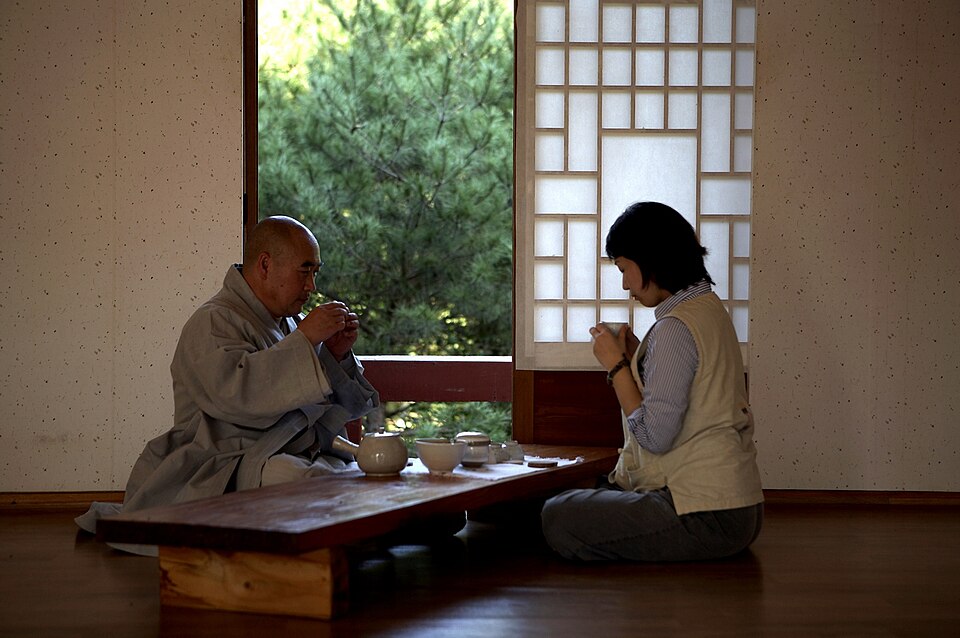
Every temple offers one or both of two overnight formats. The experience program follows a full schedule: a temple tour, the evening ceremony, chanting, seated meditation, an early night, dawn chanting, 108 prostrations, the formal meal, a tea conversation with a monk, and often a craft such as lotus lantern making or prayer-bead threading. It is the right choice for a first visit and for anyone who wants to understand the practice. The rest program provides the same lodging and meals but leaves the schedule almost empty; guests are welcome at the ceremonies but not expected, and the time is theirs for walking, reading, or sleeping. It suits people who want quiet rather than instruction, and it is what many Korean city-dwellers choose. Day programs, of two to four hours with a meal or tea, are offered by some temples, notably in Seoul, for those who cannot stay the night.
Prices
Costs are modest. Most overnight programs are priced between about 50,000 and 100,000 KRW per adult per night, with children discounted, and the fee includes the room, the uniform, all meals, and activities. Rooms are typically shared dormitories with heated floors and bedding on the floor, separated by gender; some temples offer private or family rooms for a higher fee.
Official Templestay Booking (English) -> Browse Templestay Packages with Transport ->
What a Templestay Day Looks Like
Schedules vary by temple, but an experience program follows a pattern close to this one.
- 14:00–15:00 – Arrival. Check in, receive the uniform, a loose vest and trousers in grey or brown, and settle into the dormitory. An orientation covers temple etiquette: how to bow, how to walk in the halls, when to keep silence.
- 15:30 – Temple tour. A guide or monk walks the grounds, explaining the gates, the main hall, the paintings, and the temple’s history.
- 17:00 – Dinner. A simple vegetarian meal, sometimes served buffet-style, sometimes as the formal balwoo gongyang.
- 18:00 – Evening ceremony. The drum, wooden fish, cloud gong, and bell are sounded in turn, then chanting in the main hall. Guests sit or kneel behind the monks and follow the bows.
- 19:00 – Meditation or tea with a monk. An introduction to seated meditation, or an informal conversation over tea in which guests may ask anything.
- 21:00 – Lights out.
- 03:30–04:00 – Wake-up and dawn ceremony. The clapper, then the bell, then chanting as the sky lightens.
- 05:00 – 108 prostrations and meditation. The bows are physically demanding; participants may do fewer, and many thread a prayer bead with each bow.
- 06:30 – Breakfast, then free time to walk the grounds or the forest.
- 08:30 – Activity. Lotus lantern making, a walking meditation, communal work such as sweeping the courtyard, or a visit to a hermitage.
- 10:30–11:00 – Closing and departure.
Etiquette and What to Bring
Temples ask for a few things in return for their hospitality. Dress modestly and keep the uniform on during the program; remove shoes before entering any hall and place them neatly; walk quietly and do not step on the raised threshold of a doorway; keep silence where asked, especially at meals and before dawn; and put phones on silent or away. Alcohol, meat, and smoking are forbidden on the grounds. Photography is usually allowed outdoors but not during ceremonies, and never of monks without permission. Bring comfortable underlayers, socks, toiletries, a small towel, a water bottle, and a warm layer for early mornings even in summer; mountain halls are cold at dawn. The temple provides bedding, the uniform, and all meals.
Best Temples for a First Templestay
Jogyesa and Bongeunsa, Seoul. The two city temples are the easiest options: Jogyesa in Insadong is the head temple of the Jogye Order and runs day programs and short overnight stays, and Bongeunsa in Gangnam offers a regular overnight program in English amid the skyscrapers. Neither has the mountain atmosphere, but both are ideal for visitors with limited time.
Golgulsa, near Gyeongju. Famous for sunmudo, a Buddhist martial art practiced by its monks, which guests learn in the program; the temple also has a sixth-century Buddha carved into a cliff. Energetic and popular with younger visitors.
Haeinsa, Hapcheon. The temple of the Tripitaka Koreana, in Gayasan National Park, offering a classic mountain program with a guided visit to the woodblock depositories. See Coreaverse’s separate guide.
Magoksa, Gongju. A UNESCO-listed temple in a bend of a river, known for a warm, well-run program with English support and a beautiful stream-side setting.
Beopjusa, Boeun. Home to Korea’s only surviving five-storey wooden pagoda and a 33-meter gilded Buddha, in Songnisan National Park; strong on temple food.
Naksansa, Yangyang. The rare coastal temple, on a headland above the East Sea, where the dawn ceremony is followed by sunrise over the water.
Baekyangsa, Jangseong. Renowned for its temple cuisine, thanks to a nun whose cooking became internationally known; programs here focus on food and the forest.
The official site lists many more; for a first stay, choose a temple with English support and within reach of your route rather than the most famous name.

Recommended Itinerary
A templestay fits most easily into a longer trip as a one-night break between cities. Two examples:
- Seoul-based, two days. Morning at Jogyesa and the Templestay Information Center in Insadong for a day program, or an overnight at Bongeunsa; return to your hotel the next morning in time for a full day of palaces.
- Southern circuit, three days. Day 1: Seoul to Daegu by KTX, bus to Haeinsa, templestay check-in. Day 2: dawn ceremony and woodblock depositories, bus to Daegu, KTX to Gyeongju. Day 3: Gyeongju’s historic center, with an optional second night at Golgulsa for sunmudo.
Whichever you choose, arrive rested; the pre-dawn wake-up is easier after an early night than after a long travel day.
Nearby Places & Experiences
Most templestay temples sit inside national parks, and the surrounding trails are the natural complement: Gayasan at Haeinsa, Songnisan at Beopjusa, Seoraksan at Sinheungsa, which also hosts a program. Temple food, the vegetarian cuisine of the monasteries, can be sampled without a stay at restaurants in Insadong and Jongno, and the Korean Temple Food Center near Jogyesa runs cooking classes. Buddha’s Birthday, in April or May by the lunar calendar, fills temples with lanterns and Seoul with the Lotus Lantern Festival parade, and a stay in the days before it is especially colorful.
Practical Tips
Bring a little cash for the temple shop and for bus fares in rural areas. Tell the temple in advance about dietary needs; the food is vegetarian and usually vegan. The 108 prostrations are optional in practice, and anyone with knee trouble can bow fewer times or sit. Dormitory floors are heated but firm; a thin sleeping mat is often provided, and light sleepers may want earplugs. Above all, arrive with an open mind and a willingness to follow the schedule; the reward comes from doing the whole thing, dawn included.
Frequently Asked Questions
How much does a templestay cost?
Roughly 50,000 to 100,000 KRW per person per night, including lodging, meals, and uniform; day programs are cheaper.
Do I need to be Buddhist?
No. The program is open to everyone, and the practices are explained as cultural experience. Respect for the rules is all that is asked.
Experience or rest program?
Experience for a structured introduction with chanting, meditation, prostrations, and tea with a monk; rest for the same lodging and meals with a free schedule.
Which temples are best for English speakers?
Jogyesa and Bongeunsa in Seoul, Golgulsa, Haeinsa, Magoksa, Beopjusa, and Naksansa all run programs with English support; the official site marks them.
What should I bring?
Comfortable underlayers, socks, toiletries, a towel, and a warm layer; the temple provides the uniform, bedding, and meals. Leave alcohol and meat at home.
Continue Exploring
Korean Buddhism Explained -> Haeinsa & the Tripitaka Koreana -> Bulguksa: Silla’s Buddhist Masterpiece ->
- 10-templestay-beomeosa.jpg — Cultural Corps of Korean Buddhism / CC BY-SA 4.0 / Wikimedia Commons source
- 10-templestay-magoksa.jpg — Cultural Corps of Korean Buddhism / CC BY-SA 4.0 / Wikimedia Commons source
- 10-templestay-beopjusa.jpg — MeganYoungmee / CC BY-SA 3.0 / Wikimedia Commons source
Disclosure: This article may contain affiliate links. Booking through them supports Coreaverse at no extra cost to you.