A practical guide to Korea’s tea country: train and bus routes from Seoul, what the main plantation costs and when it opens, the best viewpoints, where to drink and buy the tea, and the thousand-year tradition the fields continue.
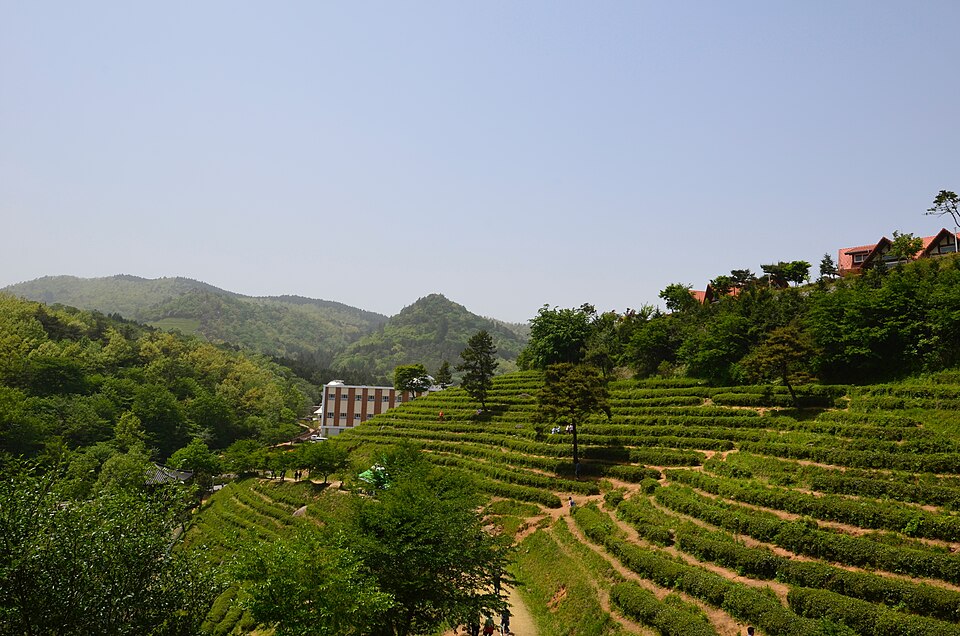
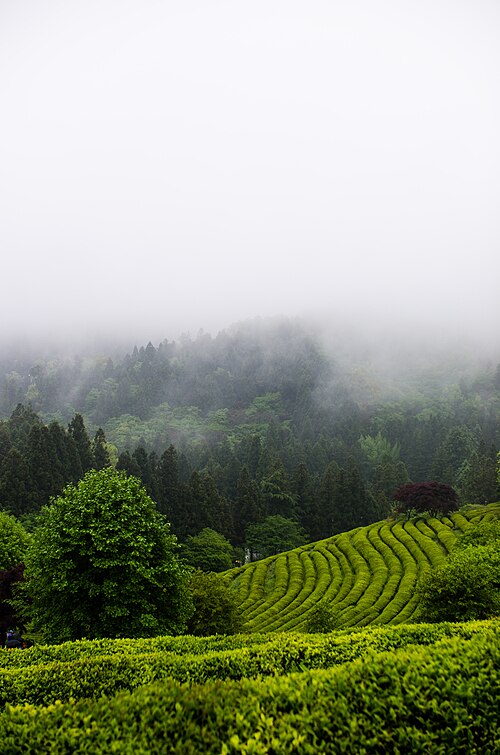
On the hills above the south coast of Jeolla, five hours from Seoul, rows of tea bushes curve across the slopes in contour lines so regular they look drawn. Cedars planted along the entrance road frame the approach, mist hangs in the valleys in the early morning, and from the viewpoints at the top of the plantation the terraces fall away toward the sea. Boseong grows a large share of Korea’s green tea, and Daehan Dawon, its oldest and largest plantation, has become one of the most photographed landscapes in the country.
It is a long way from Seoul, and that is part of the point: the region around Boseong is rural, slow, and full of things to see, from a coastal bathhouse that fills its pools with tea-infused seawater to one of Korea’s best-preserved walled villages. This guide covers how to get there, how the plantation works, what to do with the rest of the day, and the history of tea in Korea that the fields represent.
Why Boseong Matters
Tea has been drunk in Korea for more than a thousand years, brought from China by Buddhist monks and cultivated in the warm southern provinces, where the climate suits the plant. It flourished under the Goryeo dynasty, when tea ceremonies were part of court ritual and the celadon tea bowls of the period became the finest ceramics in Asia. Under Joseon, Buddhism’s retreat and Confucian preference for wine pushed tea to the margins, kept alive in the monasteries and by a handful of scholars, most famously the nineteenth-century monk Cho-ui, whose writings revived interest in it. Boseong’s fields are the modern chapter of that story: commercial plantations established in the twentieth century on hills where wild tea had grown for centuries.
For visitors the plantation offers something few heritage sites can: a landscape that is both spectacular and productive, where the tradition described in Coreaverse’s article on Korean tea can be tasted at its source. Add the tea museum, the bathhouse at Yulpo, and the walled village of Naganeupseong an hour away, and Boseong anchors a two-day journey through the least visited and most rewarding corner of the country.
Quick Facts
| Location | Daehan Dawon, 763-65 Nokcha-ro, Boseong-gun, Jeollanam-do (about 5 hours south of Seoul) |
|---|---|
| Hours | Roughly 09:00–18:00, later in summer; last entry about an hour before closing |
| Admission | Adults about 4,000 KRW, children less; Korean Tea Museum small separate fee; Yulpo green-tea bath about 8,000 KRW |
| Getting There | KTX to Gwangju Songjeong + bus to Boseong (about 3.5 hours total), or express bus from Seoul (about 4.5 hours); local bus or taxi to the plantation |
| Best Time | Late April–May for the first harvest and the festival; December–January for the light festival; early morning any season for mist and empty paths |
| Website | https://www.dhdawon.com |
Historical Background
The first Korean record of tea cultivation dates to 828, when an envoy returning from Tang China brought seeds that King Heungdeok of Silla ordered planted on the slopes of Jirisan, not far east of Boseong. Wild tea still grows on those slopes, and the temples of the region, Hwaeomsa, Ssanggyesa, and their neighbors, became the centers of Korean tea culture for the next thousand years. Under Goryeo, tea was woven into state ceremony, into Buddhist offerings, and into the aesthetic life of the aristocracy, and the demand for fine tea ware drove the potters of Jeolla to produce the jade-green celadon that remains the most admired Korean ceramic.
The Joseon dynasty’s turn to Confucianism reduced tea to a scholarly and monastic pursuit. It survived in the mountain temples and in the writings of a few devotees; the scholar Jeong Yak-yong, exiled to the Jeolla coast in the early nineteenth century, took his pen name, Dasan, “tea mountain,” from the hill where he picked wild leaves, and his friend the monk Cho-ui composed the treatises on tea that are still read today. Boseong’s own tea is mentioned in Joseon geographical records as a local product, and the hills around the town had long been known for wild bushes.
Commercial cultivation began in 1939, when the first plantation was laid out on the slopes of Hwalseongsan, chosen for its mild climate, sea fog, and well-drained soil. After a period of neglect, the plantation was replanted from 1957 by the founder of Daehan Dawon, who terraced the hillside and lined its entrance with the cedars that are now nearly as famous as the tea. Boseong today produces a large share of Korea’s green tea, and its landscape, designated a national scenic site, has become the image of Korean tea itself. Coreaverse’s article on the art of Korean tea covers the ceremony and the brewing traditions that the fields supply.
The Art of Korean Tea Tradition -> Korean Traditional Food: A Cultural Feast ->
How to Visit
Getting There from Seoul
Boseong is remote, and the journey takes most of a morning. The fastest route is the KTX from Yongsan Station to Gwangju Songjeong, about one hour fifty minutes, followed by an intercity bus from Gwangju’s U-Square terminal to Boseong, about one hour thirty minutes, with departures roughly every hour. Direct express buses from Seoul Central City Terminal to Boseong take around four and a half hours. From Boseong’s bus terminal, local buses toward Yulpo pass the plantation entrance in about twenty minutes, and taxis take fifteen. Travelers coming from Busan or the east can reach Boseong by bus via Suncheon in about an hour and a half. A rental car from Gwangju makes the region’s scattered sights far easier to combine.
Admission & Hours
Daehan Dawon charges a modest admission of a few thousand won, collected at a gate at the foot of the cedar avenue, and opens from nine in the morning until early evening, later in midsummer. The plantation is a working farm as well as an attraction, and the paths between the terraces are open to walkers; the harvest, in late April and May, is the one time visitors may find sections closed while the pickers work. The Korean Tea Museum in the Korea Tea Culture Park a few kilometers away charges a small separate fee and closes on Mondays.
Tea Tasting and Buying
The plantation’s own shop and café at the entrance sell the current year’s tea by grade, from the prized first flush picked before the spring rains to the everyday later harvests, along with green tea ice cream, green tea noodles, and sweets; the ice cream has become an obligatory part of the visit. The shops in Boseong town and the tea museum sell teas from the region’s other producers, some of them small family farms, and a tea ceremony can be experienced at the museum or at tea houses near the plantation. Prices for good first-flush tea are higher than visitors expect; it is a hand-picked product from a short season.
What to See at Daehan Dawon
The cedar avenue. From the gate, a road climbs between two rows of towering Japanese cedars planted when the plantation was replanted in the 1950s. It is cool, dark, and quiet, and the moment it opens onto the bright terraces is the plantation’s best piece of theater.
The terraces. Paths lead up between the rows, which follow the contours of the slope in curves that photograph well from almost any angle. The bushes are pruned flat at waist height, and in spring the new leaves are a brighter green against the older growth. Walk slowly; the fields are larger than they look, and the higher you climb, the wider the view.
The viewpoints. Two observation decks near the top of the plantation look down over the whole hillside to the sea in the distance, and a further path continues into the bamboo grove and the forest above. The upper deck is the classic photograph and is busiest mid-morning; before nine it is often empty.
The bamboo and the pond. A bamboo forest borders the tea fields on one side, and at the foot of the terraces a pond with a waterfall and a small pavilion marks the return path to the entrance and the café.
Beyond the Plantation
Korean Tea Museum. In the Korea Tea Culture Park near the town, the museum traces tea from its Silla arrival to the present, with displays on cultivation, processing, and the ceremony, a tasting room, and demonstration fields. It is the best place to understand what you have walked through.
Yulpo Beach and the green-tea seawater bath. Ten minutes below the plantation, the small resort of Yulpo faces a broad bay, and its public bathhouse pumps seawater from the sea and infuses it with green tea from the fields. The hot pools look out over the water, and a soak after a morning on the terraces is the region’s particular pleasure.
The Boseong Green Tea Festival. Held in early May at the plantations and the culture park, with tea-picking and tea-making experiences, ceremonies, markets, and performances, it is the busiest and most colorful week of the year.
The winter light festival. From December into January, the cedar avenue and the lower terraces of Daehan Dawon are illuminated after dark, and a tree of lights stands in the fields; it draws large crowds at weekends.
Recommended Itinerary
This two-day plan from Seoul uses trains and buses; with a car from Gwangju the second day can go further.
- Day 1, morning – Travel. KTX to Gwangju Songjeong and bus to Boseong, arriving early afternoon.
- 14:00 – Daehan Dawon. Walk the cedar avenue and the terraces to the upper deck, then tea and green tea ice cream at the café.
- 17:00 – Yulpo. Bus or taxi down to the beach for the green-tea bath and a seafood dinner; stay the night in Yulpo or Boseong town.
- Day 2, 07:30 – Fields at dawn. Return to the plantation at opening for the mist and the empty paths, or watch sunrise from Yulpo beach.
- 10:00 – Tea museum. The Korea Tea Culture Park for the museum and a tasting.
- 12:00 – Naganeupseong or Suncheon Bay. Bus toward Suncheon for the walled folk village of Naganeupseong, where villagers still live inside a Joseon town wall, or the reed beds and mudflats of Suncheon Bay, then onward to Suncheon for the train.

Nearby Places & Experiences
Naganeupseong Folk Village, an hour east toward Suncheon, is a Joseon-era walled town whose thatched houses are still inhabited, with the wall walkable around the whole circuit. Suncheon Bay, a little further, is a coastal wetland of reed beds and mudflats with a famous sunset viewpoint, and the neighboring national garden is vast. Songgwangsa, one of Korea’s three jewel temples, sits in the hills north of Suncheon and runs a templestay. Jeungdo and the salt flats of the Sinan islands lie west along the coast for travelers with a car. Boseong itself is known, apart from tea, for its clam and eel dishes at the coast.
Practical Tips
Wear shoes with grip; the paths between the terraces are earth and can be slippery after rain or dew, and the climb to the upper decks is steady. Mornings are misty and cool even in summer, so bring a layer. The café and shop are the only facilities inside the plantation; restrooms are at the entrance. Buy tea at the source, and ask for the harvest grade; a small tin of first flush makes a better souvenir than anything in Seoul. Public transport around Boseong is infrequent, so check return bus times before setting out, and consider a taxi between the plantation, Yulpo, and the museum.
Frequently Asked Questions
How do I get there from Seoul?
KTX to Gwangju Songjeong, then bus to Boseong, about three and a half hours in total, or a direct express bus in about four and a half hours; local bus or taxi from Boseong to the plantation.
How much does Daehan Dawon cost?
A few thousand won for adults, less for children.
When is the best time to visit?
Late April to May for the harvest and the festival; December and January for the light festival; early morning in any season.
What is the green tea seawater bath?
A bathhouse at Yulpo Beach with hot pools of seawater infused with local green tea, overlooking the bay.
How long do I need?
Two hours for the plantation, a half day with the museum and Yulpo, and an overnight for the fields at dawn and the wider region.
Continue Exploring
The Art of Korean Tea -> Korean Traditional Food -> Korea’s Heritage Sites: A Cultural Journey ->
- 14-boseong-green-tea-field.jpg — Jakob Reichmann / CC BY-SA 3.0 / Wikimedia Commons source
- 14-boseong-morning-mist.jpg — Eugene Lee / CC BY-SA 3.0 / Wikimedia Commons source
- 14-boseong-tea-rows.jpg — revi / Free Art License / Wikimedia Commons source
Disclosure: This article may contain affiliate links. Booking through them supports Coreaverse at no extra cost to you.