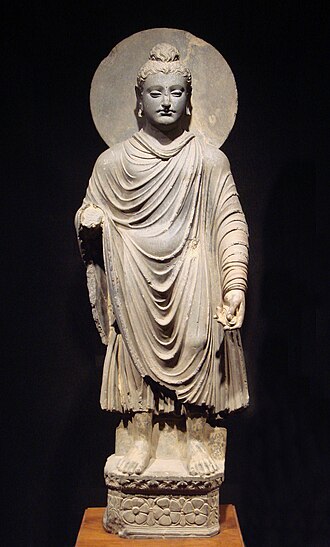
“In stone and gilt bronze, in ink and lacquer, Korean Buddhist artists did not merely depict the sacred — they sought to embody it.”
Few artistic traditions in East Asia rival the depth, beauty, and historical continuity of Korean Buddhist art. For well over a millennium, the teachings of the Buddha shaped not only the spiritual lives of the Korean people but also the very landscape of the peninsula — filling it with gilded temples, sublime stone pagodas, luminous paintings, and bronze bells whose resonance still carries across mountain valleys today. From the moment Buddhism arrived on the Korean peninsula in the fourth century CE, it became a transformative force, inspiring some of the most remarkable artistic achievements the ancient world produced.
Korean Buddhist art is not a single style frozen in time. It evolved across distinct historical periods — the Three Kingdoms era, the Unified Silla dynasty, the Goryeo dynasty, and the Joseon dynasty — each leaving its own unmistakable mark on the tradition. To trace this art is to trace the history of Korea itself: its alliances and conflicts, its moments of national confidence and cultural synthesis, its periods of devotion and suppression. It is a story told in stone, bronze, silk, and gold.
Quick Facts: Korean Buddhist Art at a Glance
| Period | Approximate Dates | Key Artistic Features |
|---|---|---|
| Three Kingdoms | 4th – 7th century CE | Gilt-bronze Buddhas, early pagodas, influence from China and Central Asia |
| Unified Silla | 668 – 935 CE | Stone sculpture, cave temples (Seokguram), monumental bell-casting |
| Goryeo | 918 – 1392 CE | Illuminated sutras, celadon vessels, refined Buddhist painting |
| Joseon | 1392 – 1897 CE | Temple murals, wooden architecture, devotional painting under Neo-Confucian suppression |
How Did Buddhism First Shape Korean Artistic Life?
Buddhism entered the Korean peninsula in 372 CE, when a monk named Sundo arrived at the court of Goguryeo bearing sutras and images — a gift from the Former Qin dynasty of China. Within decades, the neighboring kingdoms of Baekje and Silla had also received the faith, each through slightly different channels and with slightly different cultural emphases. The arrival of a new religion carrying an entirely new visual vocabulary — the image of the seated or standing Buddha, the bodhisattva, the lotus, the wheel of the dharma — gave Korean artists both a challenge and an extraordinary opportunity.
The earliest surviving Korean Buddhist sculptures date from the Three Kingdoms period and reveal artists grappling creatively with models transmitted from China and, through China, from the Gandhara region of what is now Pakistan and Afghanistan. Small gilt-bronze seated Buddhas, cast with remarkable technical skill, show the characteristic “archaic smile” and cascading robes of early East Asian Buddhist iconography. Yet already in these early works, Korean craftsmen were finding their own voice: a certain warmth of expression, a preference for elegant, attenuated forms, a mastery of gilt-bronze casting that would become a hallmark of the tradition.
Among the most celebrated sculptures of this era is the Pensive Bodhisattva — known in Korean as the Bangasayusang — a gilt-bronze figure seated in a posture of meditative reflection, one finger raised gently to the cheek. Two such figures survive, now housed in the National Museum of Korea in Seoul, and they rank among the supreme achievements of Asian sculpture. Their serene, inward expression seems to capture a moment of boundless compassion held perfectly still.
The Golden Age: Unified Silla and the Art of Seokguram
When the kingdom of Silla unified the peninsula in 668 CE — with Tang Chinese assistance, and at considerable military cost — it inherited the artistic traditions of all three kingdoms and had the resources and ambition to synthesize them into something new. The Unified Silla period (668–935 CE) is widely regarded as a golden age of Korean Buddhist art, a moment when Korean artists achieved a confident mastery of form that placed their work among the finest anywhere in the Buddhist world.
The supreme monument of this era — and arguably of all Korean Buddhist art — is Seokguram, a granite grotto shrine constructed on the slopes of Mount Toham near the ancient capital of Gyeongju. Built in the eighth century, Seokguram houses a monumental seated Buddha carved in white granite, surrounded by relief carvings of bodhisattvas, guardian figures, and celestial beings. The spatial arrangement of the grotto, the mathematical precision of its proportions, and the extraordinary quality of its stone carving combine to create an effect of serene, otherworldly perfection. Seokguram was designated a UNESCO World Heritage Site in 1995, together with the nearby Bulguksa Temple.
The Unified Silla period also saw the flowering of Korean bell-casting. The Emille Bell — formally known as the Divine Bell of King Seongdeok — cast in 771 CE and now preserved in Gyeongju, is one of the largest and most acoustically remarkable bronze bells in Asia. Its surface is covered with relief carvings of exquisite refinement: flying apsaras, lotus designs, and dedicatory inscriptions. The bell’s tone, described by those who have heard it as profoundly resonant and melancholic, has given rise to one of Korea’s most enduring legends.
“The Seokguram Buddha does not merely represent enlightenment — in its stillness and proportion, it seems to demonstrate it.”
Goryeo: The Age of Devotional Refinement
If the Unified Silla period was an age of monumental confidence, the Goryeo dynasty (918–1392 CE) was an age of devotional refinement. Buddhism was the state religion of Goryeo, and royal and aristocratic patronage funded artistic production of extraordinary sophistication. Goryeo Buddhist art is characterized above all by its elegance: a love of fine materials, intricate detail, and luminous color that reflects a culture in which religious devotion and aesthetic sensibility were deeply intertwined.
Goryeo Buddhist painting — produced on silk, often in gold and silver pigment on dark indigo-dyed grounds — represents one of the high points of East Asian religious art. Paintings of Amitabha Buddha, Gwaneum (the bodhisattva of compassion), and various guardian deities survive in museums around the world, and they are universally admired for their technical brilliance and spiritual intensity. The figures are rendered with extraordinary care: robes fall in complex, rhythmic folds; jewelry is depicted with jeweler’s precision; expressions convey both transcendent calm and intimate warmth.
The Goryeo period also produced the Tripitaka Koreana — one of the most ambitious and celebrated projects in the history of Buddhist scholarship. Comprising over 81,000 individual woodblocks carved with the entire Buddhist canon, the Tripitaka Koreana was completed in 1251 CE and is preserved at Haeinsa Temple in South Gyeongsang Province. It was inscribed on the UNESCO Memory of the World Register and remains the most complete and accurate surviving collection of Buddhist texts in the world. The woodblocks themselves, carved with exceptional precision and uniformity, are a remarkable artistic achievement as well as a scholarly one.
Why Did Korean Buddhist Art Survive the Joseon Period?
The establishment of the Joseon dynasty in 1392 brought a dramatic reversal in Buddhism’s official fortunes. The new dynasty adopted Neo-Confucianism as its state ideology, and Buddhist institutions were systematically marginalized: temples were banned from city centers, the number of ordained monks was restricted, and state patronage was withdrawn. For an artistic tradition so deeply dependent on royal and aristocratic support, this could have been fatal.
Yet Korean Buddhist art did not die during the Joseon period — it transformed. Pushed to the mountains and sustained by popular devotion rather than royal command, Buddhist temples became centers of a more intimate, community-rooted artistic production. Temple murals — large-scale paintings depicting scenes from the life of the Buddha, the Western Pure Land, and various Buddhist narratives — flourished as a form accessible to ordinary worshippers. Wooden temple architecture, refined over centuries, reached new levels of sophistication, with intricately bracketed halls set against dramatic mountain landscapes.
Many of Korea’s most beloved Buddhist temples — including Tongdosa, Beopjusa, and Seonamsa — preserve Joseon-era buildings and paintings that testify to the resilience of the tradition. These mountain sanctuaries, collectively known as the “Sansa,” were inscribed as a UNESCO World Heritage Site in 2018, recognized for both their outstanding architectural heritage and their role as living communities of Buddhist practice.
Comparison: Buddhist Art Across the Korean Dynasties
| Feature | Three Kingdoms / Unified Silla | Goryeo | Joseon |
|---|---|---|---|
| Primary medium | Bronze, stone | Silk painting, woodblock printing, celadon | Temple murals, wooden architecture |
| Patronage | Royal courts | Royal family, aristocracy | Popular / community |
| Dominant style | Monumental, serene | Refined, detailed, luxurious | Narrative, accessible |
| UNESCO recognition | Seokguram & Bulguksa (1995) | Tripitaka Koreana / Haeinsa (1995) | Korean Sansa (2018) |
3 Reasons Korean Buddhist Art Matters Today
- It is a living tradition. Unlike many ancient art forms preserved only in museums, Korean Buddhist art continues to be produced in active temple communities. Monks trained in traditional techniques still create paintings, cast bells, and carve wooden figures following centuries-old methods. The tradition is alive, not archived.
- It shaped Korean cultural identity. Even after Neo-Confucianism became the dominant ideology of the Joseon period, Buddhist aesthetic sensibilities continued to permeate Korean visual culture — influencing everything from ceramic design to garden architecture. To understand Korean aesthetics is, in large part, to understand the Buddhist imagination.
- It represents a unique synthesis. Korean Buddhist art absorbed influences from China, Central Asia, and India, but it was never merely imitative. Korean artists consistently transformed what they received, producing works of originality and refinement that influenced their neighbors in turn — most notably Japan, where Korean Buddhist missionaries and artists played a formative role in the development of early Japanese Buddhist art.
The legacy of Korean Buddhist art is written across the landscape of the Korean peninsula — in the granite face of the Seokguram Buddha gazing serenely eastward toward the sea, in the deep resonance of the Emille Bell, in the indigo-and-gold paintings of Goryeo bodhisattvas preserved in museums from Seoul to Paris. It is a legacy of devotion made visible, of an entire civilization’s spiritual aspiration given enduring form in stone and bronze, silk and wood.
For the visitor to Korea today, encountering this tradition is not merely a matter of visiting museums. It means climbing mountain paths to ancient temple halls, standing before granite Buddhas weathered by a thousand winters, hearing the strike of a wooden mallet on a great bronze bell at dawn. In these moments, the distance between the past and the present collapses, and the living power of one of humanity’s great artistic traditions makes itself unmistakably felt.