“To govern is to correct. If you set an example by being correct, who would dare to remain incorrect?” — Confucius, Analects, a maxim that guided Korean rulers for centuries.
Few philosophical traditions have shaped a civilization as thoroughly as Confucianism shaped Korea. Introduced from China over two millennia ago, Confucian thought wove itself into the fabric of Korean governance, family structure, education, and social order. By the time the Joseon dynasty (1392–1897) rose to power, Confucianism was not merely an imported philosophy — it had become the organizing principle of an entire civilization, adapted and debated by Korean scholars who made it distinctly their own.
To understand Korea — its emphasis on education, its reverence for elders, its traditions of civil service and scholarly achievement — one must understand Korean Confucianism. This is its story.
Quick Facts: Korean Confucianism at a Glance
| Origin of Confucianism | China, developed by Confucius (551–479 BCE) |
| Arrival in Korea | Early centuries CE, during the Three Kingdoms period |
| Peak Influence | Joseon dynasty (1392–1897) |
| Key Korean School | Neo-Confucianism (Seongnihak / Chu Hsi school) |
| Most Celebrated Scholar | Yi Hwang (Toegye, 1501–1570) and Yi I (Yulgok, 1536–1584) |
| Key Institution | Sungkyunkwan — the royal Confucian academy in Hanyang (Seoul) |
| Examination System | Gwageo civil service examination based on Confucian classics |
From China to Korea: The Long Journey of Confucian Thought
Confucianism entered the Korean peninsula gradually, carried along the same cultural and trade corridors that brought Chinese writing, Buddhism, and statecraft. During the Three Kingdoms period — when Goguryeo, Baekje, and Silla competed for dominance across the peninsula — all three kingdoms absorbed elements of Chinese civilization, and Confucian texts were among the most prized imports.
Goguryeo established a national Confucian academy called the Taehak as early as 372 CE, making it one of the earliest formal educational institutions on the peninsula. Baekje, with its close maritime links to China and Japan, transmitted Confucian knowledge eastward to Japan, serving as a cultural bridge. Silla, which would eventually unify the peninsula in 668 CE, incorporated Confucian ideals of loyalty and hierarchy into its own aristocratic system known as the bone-rank system.
During the Goryeo dynasty (918–1392), Confucianism coexisted alongside Buddhism as an equally important pillar of governance and elite culture. Goryeo rulers maintained a system of civil examinations rooted in Confucian learning, and scholars at the royal court engaged deeply with classical Chinese texts. However, it was not until the late Goryeo period that a more rigorous and philosophical form of Confucianism — known as Neo-Confucianism — arrived and began to transform Korean intellectual life.
Scholars such as An Hyang (1243–1306) are credited with introducing Neo-Confucianism, particularly the Chu Hsi (Zhu Xi) school, to Korea. This school emphasized not merely correct ritual behavior but the deep investigation of moral principle (li) underlying all things. It demanded that the scholar examine his own nature as much as the texts he read — a rigorous intellectual and moral discipline that appealed deeply to Korean literati.
Why Did Neo-Confucianism Dominate the Joseon Dynasty?
The founding of the Joseon dynasty in 1392 by General Yi Seonggye — who became King Taejo — was not merely a political revolution. It was, in the minds of its architects, a moral and philosophical revolution. The founders of Joseon were deeply committed Neo-Confucian reformers who viewed the late Goryeo period as morally corrupt and Buddhist-dominated. They sought to build a state organized entirely around Confucian principles.
This ideological commitment had sweeping consequences. Buddhism, which had enjoyed royal patronage for centuries, was pushed to the margins. Monasteries lost land and privileges. In their place, Confucian institutions flourished. The Sungkyunkwan — the royal Confucian academy located in the capital Hanyang (present-day Seoul) — became the intellectual heart of the nation, training the officials who would staff the government bureaucracy.
Governance in Joseon was structured around the gwageo, a civil service examination system derived from Chinese models but adapted to Korean conditions. To pass the highest levels of the gwageo, a candidate had to demonstrate mastery of the Confucian Four Books and Five Classics. The examination system was, in theory, meritocratic — open to those who could master the texts regardless of birth. In practice, only members of the educated aristocratic class known as the yangban had the resources and leisure to study for years or decades. Nevertheless, the ideal of the scholar-official who governed through moral example rather than mere force remained central to Joseon political culture.
“The gentleman is not a vessel” — a phrase from the Confucian Analects that Joseon scholars took to heart, insisting that true officials must cultivate broad virtue, not merely technical skill.
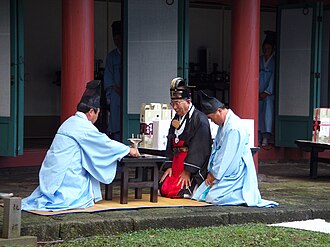
The Joseon court also codified Confucian social norms into law and ritual. The Gyeongguk Daejeon, the great law code of Joseon, embedded Confucian principles of hierarchy, filial piety, and loyalty into the legal framework of the state. Ancestral rites — carefully specified ceremonies honoring deceased parents and grandparents — became legal obligations as much as religious customs.
5 Ways Confucianism Reshaped Korean Society
1. The Family as the Model for All Relationships
At the core of Confucian ethics lay the five fundamental relationships: ruler and subject, parent and child, husband and wife, elder brother and younger brother, and friend and friend. All but the last were hierarchical. In Joseon Korea, this translated into a profound emphasis on filial piety — the duty of children to honor and obey parents — and on clear social hierarchy within families. Extended family networks became the primary unit of social identity, and ancestral rites reinforced bonds across generations.
2. The Scholar-Official as Social Ideal
The Confucian ideal of the junzi — the morally cultivated gentleman — became the organizing aspiration of Joseon’s elite class. The yangban aristocracy defined themselves not primarily by military prowess or commercial wealth but by scholarship and moral cultivation. A man who could compose classical Chinese poetry, discuss the Four Books fluently, and conduct ancestral rites with perfect propriety was the social ideal of Joseon Korea.
3. Civil Examinations as the Gateway to Power
The gwageo examination system channeled elite ambition into scholarship and created a culture in which education was the supreme social good. Families invested generations of resources in educating sons for the examinations. While this system could be rigid and exclusionary, it also produced a highly literate governing class and an enduring national reverence for learning that persists in Korean culture to this day.
4. The Marginalization of Women
Confucian orthodoxy, as interpreted in Joseon Korea, significantly constrained the lives of women. The principle of the “three obediences” — a woman’s obedience to her father, then her husband, then her son — was codified into social norms. Elite women were increasingly confined to the domestic sphere, and remarriage for widows was actively discouraged and eventually prohibited for women of the yangban class. These were some of the more restrictive applications of Confucian thought, departing from the somewhat more open norms of the Goryeo period.
5. Ritual as the Foundation of Social Order
In Joseon Korea, proper ritual performance — at funerals, ancestral rites, weddings, and state ceremonies — was understood as the very mechanism by which social harmony was maintained. The scholar-officials of Joseon debated endlessly over the correct performance of ritual, and these debates were not merely academic. They were political, because a king or official who performed rituals incorrectly was understood to be undermining the moral order of society itself.
Korea’s Greatest Confucian Thinkers
Korea produced a number of original Confucian thinkers who engaged creatively with the tradition they had inherited, rather than simply repeating Chinese models.
Yi Hwang (Toegye, 1501–1570) is widely regarded as Korea’s greatest Confucian philosopher. His extensive debates with fellow scholar Ki Daesung on the relationship between moral principle (li) and vital force (gi) — known as the Four-Seven Debate — represent one of the most sophisticated philosophical exchanges in Korean intellectual history. Toegye argued for the primacy of moral principle and emphasized personal moral cultivation as the path to sagehood. His influence was so profound that his image appeared on the South Korean 1,000-won banknote.
Yi I (Yulgok, 1536–1584) offered a contrasting perspective, emphasizing the role of vital force in human nature and moral life. Yulgok was also a practical statesman who proposed institutional reforms and argued that Confucian governance must engage with the realities of the material world. His image appeared on the South Korean 5,000-won banknote, a testament to his enduring national standing.
Both scholars established schools of thought that divided Korean Confucian intellectuals into rival camps for generations, their debates eventually intersecting with political factionalism in ways that shaped Joseon political history.
Confucianism’s Enduring Legacy in Modern Korea
The Joseon dynasty ended in 1897, and Korea’s twentieth century brought colonization, war, division, and rapid modernization. Yet Confucian values have proven remarkably durable. Scholars of modern Korea frequently note the ways in which Confucian attitudes toward education, hierarchy, and family continue to shape South Korean society.
South Korea’s extraordinary emphasis on educational achievement — its students consistently ranking among the top performers in international assessments — reflects a cultural inheritance from the Joseon gwageo tradition. The intense competition of university entrance examinations echoes, in a modern key, the centuries-long culture of examination preparation that defined yangban life.
The deep respect for elders embedded in Korean language itself — with its elaborate system of speech levels reflecting the relative status of speaker and listener — is a living artifact of Confucian social philosophy. Family-centered values, corporate loyalty, and the social prestige attached to formal credentials all carry the imprint of Korea’s long Confucian past.
At the same time, modern Koreans have also pushed back against aspects of the Confucian inheritance that they find limiting — particularly its historical constraints on women’s roles and its tendency toward rigid hierarchy. Contemporary Korean society is engaged in an ongoing negotiation between Confucian inheritances and modern democratic and egalitarian values, a negotiation that is itself part of the living tradition of Korean intellectual life.
Continue Exploring
Deepen your understanding of Korean Confucianism and its historical context with these resources: