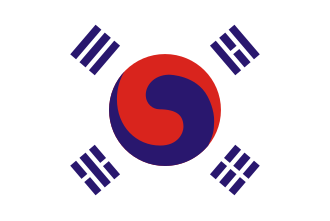
“The Korean Empire was not merely a change of name — it was a declaration to the world that Korea stood as a sovereign nation, equal among empires.”
In October 1897, on a ceremonial altar newly constructed in the heart of Seoul, King Gojong of Joseon performed a ritual that would reshape Korean history. He offered sacrifices to heaven, donned the robes of an emperor, and proclaimed the birth of the Daehan Jeguk — the Great Han Empire. In a single ceremony, Korea shed over five centuries of dynastic identity and stepped onto the world stage as an empire in its own right.
The Korean Empire lasted only thirteen years, from 1897 to 1910, but within that brief and turbulent window, it represented something remarkable: a determined, if ultimately unsuccessful, attempt by Korea to modernize, assert independence, and survive in an era of aggressive imperial competition among Japan, Russia, China, and the Western powers.
Quick Facts: The Korean Empire at a Glance
| Fact | Detail |
|---|---|
| Official Name | Daehan Jeguk (대한제국, Great Han Empire) |
| Founded | 12 October 1897 |
| Dissolved | 29 August 1910 (Japan–Korea Annexation Treaty) |
| Capital | Hanseong (modern-day Seoul) |
| Head of State | Emperor Gojong (r. 1897–1907), then Emperor Sunjong (r. 1907–1910) |
| Preceded by | Joseon Dynasty (1392–1897) |
| Followed by | Japanese Korea (1910–1945) |
| Government type | Absolute monarchy (empire) |
Why Did Korea Declare Itself an Empire in 1897?
To understand the proclamation of the Korean Empire, one must look at the geopolitical earthquake that preceded it: the First Sino-Japanese War (1894–1895). For centuries, Joseon Korea had existed within a tributary relationship with Qing China, acknowledging Chinese suzerainty while maintaining its own internal governance. Japan’s decisive victory over China in 1895 shattered that arrangement entirely. The Treaty of Shimonoseki forced China to formally recognize Korean independence, abruptly severing the tributary bond that had defined Korean diplomacy for generations.
This left Korea exposed — nominally independent, but surrounded by hungry imperial powers. Japan’s influence surged dramatically in the years immediately following the war. In 1895, Japanese agents were implicated in the brutal assassination of Queen Min (posthumously Empress Myeongseong), who had sought to counter Japanese influence by cultivating closer ties with Russia. The murder, carried out inside Gyeongbokgung Palace itself, sent shockwaves through the Korean court and the international community.
Fearing for his life, King Gojong took the extraordinary step of seeking refuge inside the Russian legation in Seoul, where he resided from February 1896 to February 1897 — a period known as the Agwan Pacheon, or the Royal Flight to the Russian Legation. When he finally returned to his palace, Gojong and his advisors concluded that a dramatic symbolic act was needed: by declaring Korea an empire, they could signal to the world that Korea was the sovereign equal of Japan and China, not a subordinate of either.
The proclamation also drew on domestic pressure from reformist groups, notably the Independence Club (Dongnip Hyeophoe), which had been advocating for genuine Korean sovereignty and modern governance since 1896.
The Gwangmu Reforms: Modernization Under Pressure
Emperor Gojong’s reign era was named Gwangmu, meaning “Radiant Warrior,” and it lent its name to the sweeping reforms his government attempted to implement. The Gwangmu Reforms were Korea’s urgent effort to modernize its military, legal system, economy, and infrastructure before imperial rivals could exploit its vulnerabilities.
Among the most significant changes:
- Military modernization: The imperial government sought to build a trained, professional standing army equipped with modern weapons and drilled according to Western methods.
- Land surveys: A systematic nationwide land survey (Yangjeon) was launched to clarify land ownership, establish a modern cadastral system, and increase state revenues.
- Legal and administrative reform: New courts and legal codes were introduced, drawing on both Western and Japanese models, aimed at establishing a more rational civil administration.
- Infrastructure investment: The empire oversaw the expansion of telegraph lines, the construction of railways, and the development of modern postal systems — many of these projects involving foreign capital and expertise.
- Education: Modern schools were established, and study abroad programs were encouraged to build a cadre of trained officials and technicians.
“The Gwangmu Reforms represented Korea’s most concerted effort at self-directed modernization — a race against time that the empire ultimately could not win.”
These reforms were real and consequential, but they faced enormous obstacles. Chronic underfunding, factional infighting within the court, resistance from conservative elites, and constant foreign interference — particularly from Japan and Russia — hampered their implementation. The Korean Empire was attempting to modernize a centuries-old agrarian state while simultaneously navigating one of the most dangerous geopolitical environments in East Asian history.
Three Key Turning Points That Sealed the Empire’s Fate
1. The Russo-Japanese War (1904–1905)
Japan’s victory over Russia in the Russo-Japanese War (1904–1905) was catastrophic for Korean independence. Russia had been the one great power willing to counterbalance Japanese influence on the peninsula. With Russia’s defeat and humiliation at sea and on land, that counterweight was removed. The war was partly fought on and around Korean territory, and Japan had already coerced Korea into signing a protocol in February 1904 that gave Japan the right to use Korean territory for military purposes.
2. The Eulsa Treaty (1905)
In November 1905, Japanese officials — backed by the implicit threat of military force — pressured Korean ministers into signing the Japan–Korea Protectorate Treaty, known in Korean as the Eulsa늑約 (Eulsa Forced Treaty). This treaty stripped Korea of its right to conduct its own foreign affairs, placing diplomatic representation entirely in Japanese hands and establishing a Japanese Resident-General in Seoul with sweeping powers. Emperor Gojong refused to personally sign or affix his seal to the treaty, and he subsequently sent secret envoys to the Hague Peace Conference of 1907 to protest its illegitimacy before the international community — an effort that failed to win support from the major Western powers.
3. The Forced Abdication of Emperor Gojong (1907)
Japan’s response to the Hague mission was swift and severe. Japanese authorities pressured the Korean court to force Gojong’s abdication in July 1907. His son, the compliant Crown Prince, ascended as Emperor Sunjong. Almost immediately, a new treaty further reduced Korean sovereignty, placing the Korean administrative apparatus under Japanese supervision and disbanding the Korean imperial army. Armed resistance broke out across the country in the form of the Uibyeong (Righteous Army) movement, but it was crushed by superior Japanese military force.
Comparison: Joseon Dynasty vs. Korean Empire
| Aspect | Joseon Dynasty | Korean Empire |
|---|---|---|
| Period | 1392–1897 | 1897–1910 |
| Title of ruler | King (Wang) | Emperor (Hwangje) |
| Era name system | Used Chinese imperial era names | Used independent Korean era names (Gwangmu, Yunghui) |
| Diplomatic status | Tributary state under Chinese suzerainty (nominally) | Claimed full sovereign equality with other empires |
| State religion/ideology | Neo-Confucianism (state orthodoxy) | Neo-Confucian base, but with Western and modernizing influences |
| Military | Traditional military structure | Attempted Western-style professional army |
| End | Reorganized as Korean Empire | Annexed by Japan |
The Annexation: 29 August 1910
On 29 August 1910, the Japan–Korea Annexation Treaty came into effect, formally dissolving the Korean Empire and incorporating its territory into the Empire of Japan as the colony of Chōsen. Emperor Sunjong issued a rescript announcing the transfer of sovereignty. The Korean imperial household was dissolved into Japanese aristocratic ranks, and the centuries-long tradition of Korean dynastic rule came to an end.
The legitimacy of the annexation treaty itself has long been contested by Korean historians and legal scholars, who argue that it was signed under duress and without the genuine consent of the Korean emperor or government. This debate continues to carry weight in contemporary Korean–Japanese diplomatic relations.
The thirty-five years of Japanese colonial rule that followed (1910–1945) would bring profound transformations to Korean society — industrialization alongside cultural suppression, infrastructure alongside exploitation — leaving legacies that Koreans continue to grapple with to this day.
Why the Korean Empire Still Matters
The Korean Empire occupies a complex and emotionally charged place in Korean historical memory. On one hand, it represents a moment of aspiration: Korea’s declaration of sovereign equality, its embrace of modernity on its own terms, and the genuine — if incomplete — reforms of the Gwangmu era. Many Koreans look back on this period as evidence that Korea was capable of self-directed modernization, and that the country’s subsequent trajectory under Japanese colonialism was not inevitable.
On the other hand, the empire’s rapid collapse is a source of deep national grief — a story of sovereignty lost, of foreign manipulation, and of a nation betrayed by the geopolitical interests of great powers that chose not to intervene. Emperor Gojong’s refusal to sign the Eulsa Treaty is remembered as an act of dignity and resistance, even if it ultimately could not prevent annexation.
Physical remnants of the Korean Empire still stand in Seoul today. Deoksugung Palace, where Emperor Gojong resided after returning from the Russian legation, survives as a major heritage site. The Hwangudan altar complex, where the empire was proclaimed in 1897, partially survives near the site of the modern Westin Chosun Hotel. These places anchor the empire’s memory in the city’s landscape, reminders of a pivotal and painful chapter in Korean history.