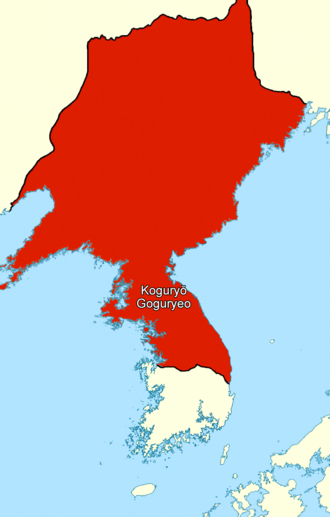
“Goguryeo was not merely a kingdom — it was a civilization that stretched from the Korean peninsula deep into Manchuria, shaping the culture, warfare, and identity of an entire region for seven centuries.”
Among the three great kingdoms of ancient Korea, Goguryeo stands apart. Fierce, expansive, and fiercely independent, it was a state that resisted the mightiest empires of its age — including the Sui and Tang dynasties of China — and left behind a cultural and political legacy that Koreans still claim as foundational to their national identity. From its origins in the mountainous northern reaches of the peninsula to its dramatic fall in 668 CE, Goguryeo’s story is one of ambition, warfare, artistry, and ultimately transformation.
Quick Facts: The Kingdom of Goguryeo
| Fact | Detail |
|---|---|
| Traditional Founding Date | 37 BCE |
| Fall of the Kingdom | 668 CE |
| Duration | Over 700 years |
| Location | Northern Korean peninsula and Manchuria |
| Capital (later period) | Pyongyang |
| Major Rivals | Han China, Sui Dynasty, Tang Dynasty, Baekje, Silla |
| Religion | Shamanism, later Buddhism and Taoism |
| Known For | Military power, tomb murals, resistance to Chinese invasions |
Origins: How Did Goguryeo Rise to Power?
According to Korean historical records, Goguryeo was founded in 37 BCE by Jumong, a legendary archer of extraordinary skill whose story blends mythology and political history in equal measure. Jumong is said to have fled from the northern state of Buyeo, gathered followers, and established his kingdom in the Yalu River region — a rugged, forested landscape that would shape the kingdom’s warrior culture for generations.
From these mountainous origins, Goguryeo grew steadily in power. In its early centuries, the kingdom expanded aggressively, absorbing neighboring tribal confederacies and pushing against the Chinese commanderies established by the Han dynasty in the northern peninsula. The conquest of the Chinese Lelang Commandery in 313 CE marked a decisive turning point — Goguryeo had announced itself as a major power capable of expelling Chinese authority from the Korean peninsula.
The kingdom’s population drew heavily from the Yemaek peoples, a group of northeastern tribes whose martial traditions infused Goguryeo culture. Horsemanship, archery, and military discipline were not simply skills — they were social values embedded in the kingdom’s aristocratic class system, known as the dae-ga.
At Its Height: A Northeast Asian Empire
By the 5th century CE, Goguryeo had reached its greatest territorial extent under King Gwanggaeto the Great (r. 391–413 CE) and his son Jangsu (r. 413–491 CE). Gwanggaeto, whose name literally means “broad expander of territory,” launched dozens of military campaigns that pushed Goguryeo’s borders deep into Manchuria and southward into the Korean peninsula, subduing Baekje and forcing tribute from Silla and even the Wa state in Japan.
The Gwanggaeto Stele, erected by King Jangsu in 414 CE to commemorate his father’s achievements, remains one of the most important historical inscriptions in East Asian history. Standing over six meters tall near the current Chinese city of Ji’an, it records military campaigns, territorial conquests, and the founding mythology of the kingdom in classical Chinese script — a monument to Goguryeo’s confidence in its own historical importance.
King Jangsu moved the capital from Gungnae (present-day Ji’an in China) to Pyongyang in 427 CE, signaling a shift in Goguryeo’s strategic orientation toward the Korean peninsula. Under his long reign of 79 years, the kingdom consolidated its dominance over northern Korea and maintained a careful balance of tribute diplomacy with both Chinese states and the emerging powers on the peninsula.
“The Gwanggaeto Stele, standing more than six meters tall, is a stone declaration of Goguryeo’s ambition — a kingdom that did not merely survive among great powers, but competed with them as an equal.”
3 Reasons Goguryeo Matters to Korean History
1. Military Resistance That Defined a National Character
Perhaps the most dramatic chapters of Goguryeo’s history involve its wars against the Sui and Tang dynasties of China — conflicts so significant that they arguably changed the course of East Asian history. In 612 CE, Emperor Yang of Sui launched what is estimated to have been one of the largest military invasions in the ancient world, reportedly mobilizing over a million soldiers against Goguryeo. The kingdom’s defense, led in part by the brilliant general Eulji Mundeok, resulted in a catastrophic Chinese defeat at the Battle of Salsu (Chongchon River). Korean accounts record that of 300,000 Sui soldiers who crossed into Goguryeo territory, fewer than 3,000 returned. The exhaustion caused by these repeated failed campaigns contributed directly to the collapse of the Sui dynasty itself.
The Tang dynasty, successor to the Sui, attempted further invasions in the 640s CE but also failed to break Goguryeo’s defenses. This military tradition — of a smaller Korean state successfully resisting vastly larger Chinese forces — became an enduring point of national pride referenced throughout subsequent Korean history.
2. A Sophisticated Culture Preserved in Tomb Murals
Goguryeo’s cultural legacy is perhaps most vividly preserved in its extraordinary tomb murals. Hundreds of aristocratic tombs, primarily located in the Ji’an region of China and around Pyongyang in North Korea, contain detailed painted scenes of daily life, hunting, feasting, Buddhist imagery, Taoist cosmological figures, and the famous ssireum (Korean wrestling). These murals represent the most extensive surviving visual record of ancient Korean life and are recognized by UNESCO as a World Heritage Site.
The paintings reveal a society that was cosmopolitan and culturally sophisticated — one that blended indigenous Korean traditions with Chinese, Central Asian, and Buddhist influences. Dancers in flowing robes, acrobats, celestial guardians painted in vivid mineral pigments: the tomb walls of Goguryeo speak across fifteen centuries with remarkable clarity and artistic confidence.
3. The Legacy Claimed by Successor States
When Goguryeo fell in 668 CE following a combined assault by Silla and Tang China, its territory and people did not simply disappear. Many Goguryeo nobles and refugees fled northward, and within decades a new state called Balhae (698–926 CE) arose in Manchuria, explicitly claiming the Goguryeo legacy. On the peninsula, the Later Three Kingdoms period (900–936 CE) saw the state of Goryeo — from which the modern name “Korea” derives — also claim descent from Goguryeo. Even today, North Korea invokes Goguryeo heritage as a source of national identity, while South Korean popular culture has produced numerous dramas and films celebrating the kingdom’s warrior kings.
Goguryeo vs. Its Rivals: A Comparison
| Kingdom | Region | Strength | Fall |
|---|---|---|---|
| Goguryeo | North Korea & Manchuria | Military power, strategic depth | 668 CE (Silla–Tang alliance) |
| Baekje | Southwest Korea | Maritime trade, refined culture | 660 CE (Silla–Tang alliance) |
| Silla | Southeast Korea | Diplomatic skill, Hwarang warrior elite | Unified peninsula, fell 935 CE |
The Fall of Goguryeo: Why Did the Kingdom Collapse?
By the mid-7th century, the political unity that had sustained Goguryeo through centuries of external pressure began to fracture from within. Following the death of the powerful regent Yeon Gaesomun in 666 CE — a strongman who had effectively ruled the kingdom for decades and orchestrated its defenses against Tang invasions — his sons fell into bitter rivalry. The succession struggle weakened central authority at a critical moment.
The Tang dynasty, now allied with the kingdom of Silla, seized upon this internal division. A coordinated military campaign from both the south (Silla) and the west (Tang naval and land forces) placed Goguryeo under simultaneous pressure it could no longer sustain. The capital Pyongyang fell in 668 CE, and the kingdom was extinguished after more than seven centuries of existence.
Tang China attempted to administer the former Goguryeo territory directly, establishing the Protectorate General to Pacify the East. However, Silla successfully expelled Tang forces from the peninsula within a decade, completing the unification of Korea under a single Korean state for the first time — though much of the northern Goguryeo heartland in Manchuria remained outside Silla’s control.
Why Is Goguryeo Still Disputed Today?
Few aspects of ancient Korean history generate as much contemporary controversy as the question of who “owns” Goguryeo’s legacy. In the early 2000s, the Chinese government’s Northeast Project (Dongbei Gongcheng) sparked intense diplomatic tension when it proposed classifying Goguryeo as an ancient Chinese regional state rather than a Korean kingdom — a position strongly rejected by both South and North Korea, as well as by most international historians of the period.
The debate touches on deep questions of ethnic identity, territorial history, and the political uses of the past. For Koreans, Goguryeo represents the ancestral source of Korean civilization’s northern, martial tradition. Its tomb murals, its warrior kings, and its defiance of Chinese imperial power are not abstract historical facts — they are living elements of a national narrative. This is why the UNESCO inscription of the Goguryeo tombs in 2004 (separately inscribed for both China and North Korea) carried such symbolic weight.
Continue Exploring
- Goguryeo — Wikipedia (comprehensive overview)
- Encyclopedia of Korean Culture — Academy of Korean Studies
- Goguryeo — Britannica
- UNESCO World Heritage: Complex of Koguryo Tombs (North Korea)
- UNESCO World Heritage: Capital Cities and Tombs of the Ancient Koguryo Kingdom (China)
- National Museum of Korea — Collections from the Three Kingdoms Period