Admiral Yi Sun-sin: The Undefeated Commander and His Turtle Ships
He won every naval battle he fought, once destroying a vast enemy fleet with barely a dozen ships, and he died in his final victory. This is the story of Yi Sun-sin, the sixteenth-century admiral Koreans honour as their greatest hero, and of the armoured turtle ship that became his emblem.
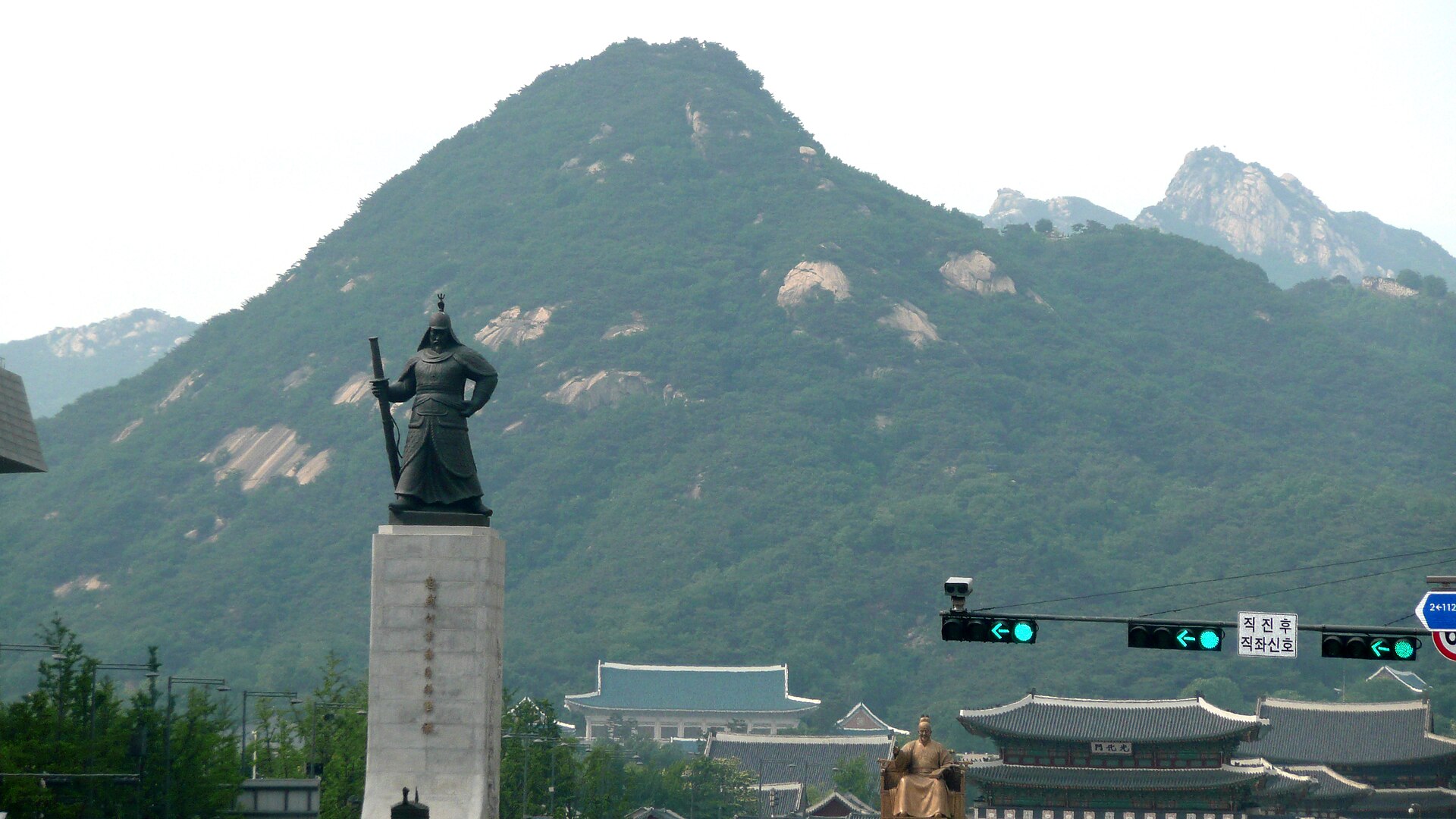
At the northern end of Gwanghwamun Square in Seoul, before the statue of King Sejong, stands an older and sterner figure in armour, sword at his side, gazing down the great avenue toward the river and the sea beyond. This is Admiral Yi Sun-sin, and his place of honour at the heart of the capital says much about how Koreans remember him. Where Sejong represents the wisdom of peace, Yi represents the courage of defence: the commander who, in the darkest hour of a devastating war, held the sea against overwhelming odds and never once lost.
His record is the kind that sounds like legend but is sober history. Across a series of naval battles during the Japanese invasions of the 1590s, Yi Sun-sin was never defeated, and in his most famous engagement he faced a fleet many times the size of his own and won. He did this through brilliant seamanship, careful preparation, deep knowledge of the coast, and the use of a warship, the turtle ship, that has become one of the most recognisable symbols of Korea. This is who he was, what he did, and why his memory endures.
Who Was Yi Sun-sin?
Yi Sun-sin was born in 1545 into a family of the scholarly gentry whose fortunes had declined. Rather than following the usual civil-service path, he trained as a military officer, passing the military examination in his early thirties, later than many, and served for years in frontier and provincial posts. He was known for an unbending integrity that repeatedly cost him advancement: he refused to bend rules for powerful superiors, and he was demoted and punished more than once for standing on principle. This reputation for stubborn honesty is part of why Koreans revere him, for his virtue as much as his victories.
In 1591, on the recommendation of a childhood friend who had risen high in government, Yi was appointed naval commander of a southern province, a crucial post on the coast facing Japan. There he set to work with characteristic diligence, drilling his crews, repairing ships, stockpiling supplies, and, according to tradition, overseeing the construction of turtle ships. When war came the following year, he was almost the only Korean commander who was ready. [VERIFY: birth year 1545, military exam, appointment 1591, provincial post name]
Quick Facts
| Lived | 1545–1598 [VERIFY: dates] |
|---|---|
| Role | Naval commander of the Joseon dynasty during the 1590s invasions |
| Record | Undefeated in naval battle across the war |
| Signature ship | The geobukseon, or turtle ship |
| Most famous battle | Myeongnyang (1597), a handful of ships against a vast fleet |
| Death | Killed at the Battle of Noryang, 1598, the war’s final sea battle |
The War at Sea
In 1592 Japan, newly unified under Toyotomi Hideyoshi, launched a massive invasion of Korea, intending to march through the peninsula and on to Ming China. On land the invading armies advanced with terrifying speed, taking the capital within weeks and driving the Korean court into flight. But the war had a second front, at sea, and there the story was entirely different.
While Korean land forces reeled, Yi Sun-sin’s fleet struck back along the southern coast. In a rapid series of engagements through 1592, he attacked and destroyed Japanese naval squadrons, winning battle after battle without losing a single one of his own ships in several of them. His victories were not luck but method: he chose his ground carefully, used the tides and narrow channels of the coast to his advantage, kept his heavier, cannon-armed ships at a distance where they could batter the enemy before boarding, and struck where the enemy was weakest. The effect was strategic as well as tactical. By controlling the sea, Yi cut the supply lines that the Japanese armies on land depended on, blunting the entire invasion. [VERIFY: 1592 invasion details, campaign specifics, Hideyoshi]
The Turtle Ship
The vessel most associated with Yi Sun-sin is the geobukseon, the turtle ship, one of the most famous warships in history. It was a Korean fighting ship, built on the sturdy, flat-bottomed design of the standard Korean warship but distinguished by a covered upper deck, a protective roof that, according to the records, was fitted with spikes to prevent enemy sailors from boarding and seizing the ship, the standard tactic of the time. Armed with cannon that could fire from the front, sides, and a dragon-headed prow, the turtle ship could drive into an enemy formation, resist boarding, and deliver fire from all directions.
The turtle ship was not the backbone of the fleet, which consisted mainly of the larger panokseon battleships, but it was a formidable shock weapon, a kind of armoured spearhead that could break into the heart of an enemy line. Its fearsome appearance and its role in Yi’s victories made it legendary, and it endures today as a national emblem of Korean ingenuity and defiance. Replicas can be seen at maritime museums along the southern coast. [VERIFY: turtle ship construction details, relationship to panokseon, number built]
Disgrace and the Miracle of Myeongnyang
Yi’s success and his refusal to play court politics made him enemies, and in 1597, through intrigue and a false accusation, he was stripped of command, arrested, tortured, and nearly executed. Spared, he was demoted to the rank of a common soldier and forced to serve in the ranks, an extraordinary humiliation for the man who had saved the country’s seas. The commander who replaced him then led the Korean fleet to catastrophe, losing almost all of its ships in a single disastrous battle.
With the navy all but destroyed, the court reinstated Yi Sun-sin, handing him command of the few ships that survived, around a dozen against a Japanese fleet of many times that number. What followed, the Battle of Myeongnyang in 1597, is the most celebrated moment in Korean military history. Yi lured the enemy into a narrow strait with treacherous, fast-reversing tidal currents that he knew intimately, positioned his tiny force to fight the enemy a few ships at a time, and used the turning tide to throw the crowded Japanese fleet into chaos. Against overwhelming odds he won a staggering victory, shattering the enemy advance and saving the campaign. It remains one of the most remarkable naval battles ever fought. [VERIFY: 1597 arrest, Myeongnyang numbers and tactics, the intervening defeat under his replacement]

The Last Battle
The war ground on until 1598, when the death of the Japanese ruler who had ordered the invasion led his forces to begin withdrawing from Korea. Yi Sun-sin, unwilling to let the invading fleet escape unpunished, led the allied Korean and Ming Chinese navies against the retreating Japanese in the Battle of Noryang, the last great sea battle of the war. In the fierce night-and-dawn fighting the enemy fleet was devastated, but Yi Sun-sin was struck by a bullet and mortally wounded.
According to the tradition recorded of his death, the admiral, knowing the battle was nearly won, told those around him to keep his death secret so that the fighting spirit of his men would not falter, and the battle was carried to victory before his loss was announced. Whether every detail is literal or shaped by later memory, the scene of a commander dying in the moment of his final triumph, thinking of his men rather than himself, sealed his place as the supreme Korean hero. He died as he had lived, in the service of the sea he had never surrendered. [VERIFY: 1598 Noryang, the circumstances and tradition of his death]
Why Yi Sun-sin Endures
Yi Sun-sin occupies a place in the Korean imagination that no other military figure approaches. Part of it is the sheer scale of his achievement: an undefeated record, victories against impossible odds, and a strategic brilliance that turned the tide of a war. Part of it is his character: his integrity in the face of injustice, his diligence, his willingness to serve humbly after being wronged, and the self-sacrifice of his death. He left behind war diaries, written in his own hand, that survive as a candid, moving record of a commander’s burdens, and these have made him feel close and human across the centuries.
In modern Korea he is everywhere: his statue commands the capital’s central square, his face appeared on currency, films and dramas retell his battles to huge audiences, and his name is given to streets, ships, and institutions. He stands as the embodiment of a people’s capacity to endure and prevail in their darkest hour, which is why, four centuries on, Koreans still look up at the armoured figure on Gwanghwamun Square with something close to reverence.
Where to See His Legacy
His statue on Gwanghwamun Square in central Seoul is the most prominent memorial, with an exhibition hall beneath the square telling his story. Hyeonchungsa, a shrine dedicated to him in Asan, preserves his memory and relics in a tranquil setting. Along the southern coast, where he fought his campaigns, naval and maritime museums display replicas of the turtle ship and relics of the war, and memorials mark the sites of his battles. His surviving war diaries are treasured as a national record. For a traveller, following his traces along the southern sea is a way to understand both the man and the dramatic coast he defended. [VERIFY: Hyeonchungsa location, turtle-ship replica museums, battle-site memorials]
Frequently Asked Questions
Who was Admiral Yi Sun-sin?
A Korean naval commander of the Joseon dynasty who led the navy during the Japanese invasions of the 1590s, famed for never losing a naval battle and for the turtle ship.
What was the turtle ship?
The geobukseon, a Korean warship with a protective covered deck, said to be spiked against boarders, and cannon on all sides, used as a powerful assault vessel.
How did he die?
He was killed by a gunshot at the Battle of Noryang in 1598, the war’s last sea battle. Tradition says he asked that his death be hidden until the victory was won.
Why is he so famous?
For an undefeated record, brilliant tactics against far larger fleets, most famously at Myeongnyang, and his integrity and self-sacrifice. He is a national symbol of resilience.
Where can I see his legacy?
His statue is on Gwanghwamun Square in Seoul; the Hyeonchungsa shrine honours him, and turtle-ship replicas stand at museums along the southern coast.
Continue Exploring
- 24-yi-sunsin-statue.jpg — Brücke-Osteuropa / CC0 / Wikimedia Commons source
- 24-yi-sunsin-turtle-ship.jpg — Moody75 / CC BY-SA 2.0 / Wikimedia Commons source
Disclosure: This article may contain affiliate links. Booking through them supports Coreaverse at no extra cost to you.