King Sejong the Great: The Scholar-King Who Gave Korea Its Alphabet
He is the face on the ten-thousand-won note and the statue at the heart of Seoul, the one Korean king everyone knows. But what did Sejong the Great actually do? This is the story of the ruler who invented an alphabet so that his people could read, and who presided over the golden age of the Joseon dynasty.
Of all the kings in Korea’s long history, only two are called “the Great,” and of those two, one stands far above the rest in the affection of Koreans today. King Sejong, who ruled in the first half of the fifteenth century, is honoured not for conquest or grand building but for something rarer: he gave his people the means to read and write their own language. The alphabet he created, Hangeul, is now used by every Korean every day, and it is widely regarded as one of the most logical and learnable writing systems ever devised. To understand why Koreans revere Sejong is to understand much about what Korea values in a leader.
Yet the alphabet was only the most famous of his achievements. His reign was a flowering of science, music, law, and good government, carried out by a king who thought the purpose of power was to improve the lives of ordinary people. This is the story of who Sejong was, what he accomplished, and where you can still encounter his legacy in Korea today.
Who Was King Sejong?
Sejong was born in 1397, the third son of King Taejong, the third ruler of the young Joseon dynasty. By the ordinary rules of succession he should never have become king; the throne would normally pass to the eldest son. But his two elder brothers were judged unsuited to rule, and the eldest in particular stepped aside, so that Sejong, recognised even in youth for his extraordinary love of learning, was named heir and took the throne in 1418 at the age of twenty-one. He would reign for thirty-two years, until his death in 1450.
What set Sejong apart was his intellect and his seriousness about the duties of a king. He read voraciously, surrounded himself with scholars, and founded the Hall of Worthies, a royal research institute where the finest minds of the age studied, advised, and carried out his projects. He treated governance as a scholarly and moral task, and he applied that same careful intelligence to everything from the calendar to the welfare of peasants and even prisoners. The reign he built was less the rule of a warrior than the work of a philosopher-king. [VERIFY: birth year, accession age, succession details]
Quick Facts
| Reign | 1418–1450, fourth king of the Joseon dynasty [VERIFY: reign dates] |
|---|---|
| Greatest achievement | Creation of Hangeul, the Korean alphabet, promulgated 1446 |
| Other fields | Science, astronomy, music, law, printing, medicine, agriculture |
| Institution | Founded the Hall of Worthies, a royal academy of scholars |
| Title | One of only two Korean kings called “the Great” |
| Legacy today | Statue on Gwanghwamun Square; face on the 10,000-won note; Hangeul Day |
The Creation of Hangeul
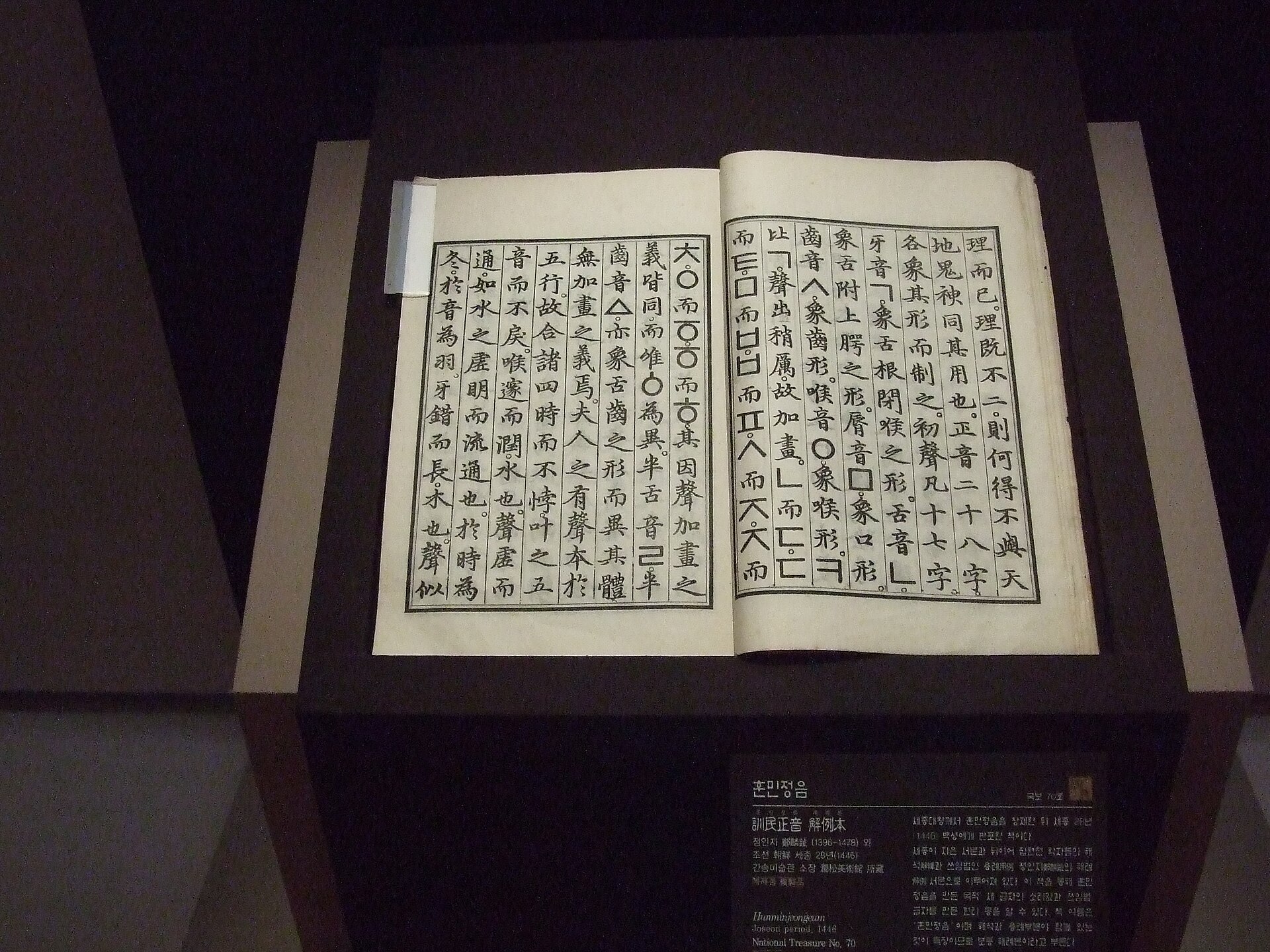
Before Sejong, written Korean did not exist as we know it. Educated Koreans wrote in classical Chinese, a foreign language whose thousands of characters took years of study to master. This meant that reading and writing were the preserve of a small, privileged class, and the great majority of Koreans, farmers, women, the poor, were shut out of the written world entirely. Sejong saw this as an injustice. He wanted a script so simple that anyone could learn it, one suited to the sounds of the Korean language rather than borrowed from Chinese.
The result, completed in 1443 and promulgated in 1446 in a document called the Hunminjeongeum, “The Correct Sounds for the Instruction of the People,” was Hangeul. Unlike most alphabets, which evolve over centuries, Hangeul was deliberately designed, and designed with a scientific logic that still astonishes linguists: its consonant shapes echo the position of the tongue and lips that make each sound, and its vowels are built from a few simple strokes. Sejong’s own preface explained the purpose plainly, that he had made it out of concern for ordinary people who had things to say but no way to write them. The elite scholars of the court resisted, fearing the loss of their monopoly on literacy and the break with Chinese tradition, but the king pressed ahead.
For centuries afterwards Hangeul was used alongside and often beneath Chinese writing, dismissed by the learned as a script for women and commoners. Only in the modern era did it come fully into its own, and today it is the sole writing system of Korea, celebrated for exactly the accessibility Sejong intended. Each year on Hangeul Day, Korea honours the king’s gift. [VERIFY: 1443 creation and 1446 promulgation dates, Hunminjeongeum details]
A Golden Age of Science and Culture
Hangeul alone would make Sejong remarkable, but his reign was a broad flowering of knowledge. Under his patronage, Korean scholars and craftsmen produced a stream of inventions and works, many aimed at practical benefit to the kingdom and its farmers.
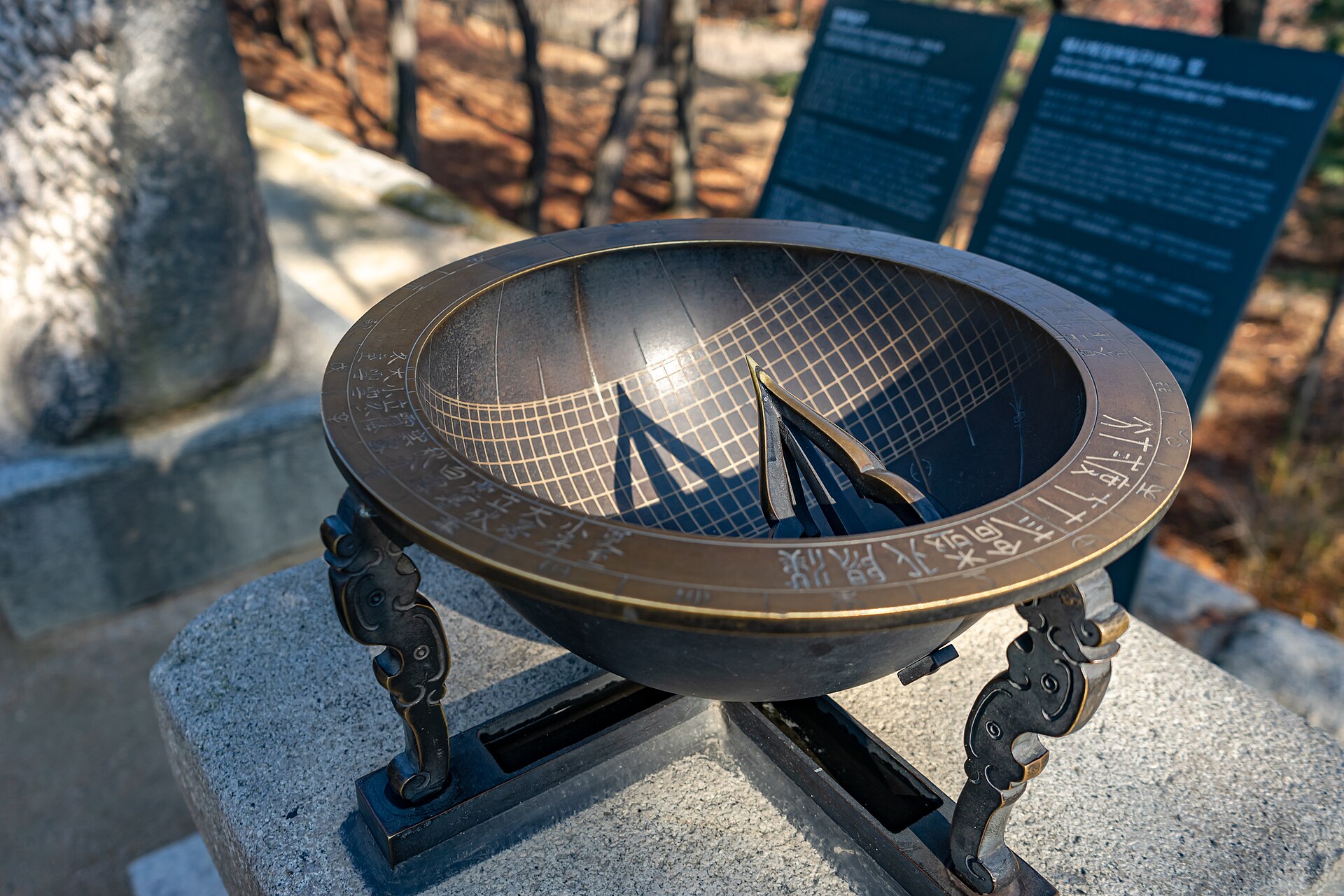
In science and technology, his court developed rain gauges to measure rainfall for agriculture, among the earliest in the world; water clocks that struck the hours automatically; sundials; and astronomical instruments to track the heavens and reform the calendar to Korean skies rather than Chinese. In printing, his reign improved the metal movable type that Korea had pioneered. In music, Sejong, himself musically gifted, oversaw the reform of court music and the invention of a system for notating it. In medicine and agriculture, his scholars compiled encyclopaedic works on Korean remedies and farming methods suited to local conditions. In law, he sought to temper punishments with fairness and even required that serious cases be reviewed carefully before judgment.
What links these varied achievements is a single philosophy: that knowledge should serve the people. The rain gauge helped the farmer, the medical text helped the sick, the alphabet helped everyone. This is why Sejong is remembered not merely as a clever king but as a good one.
The Man Behind the King
The records paint Sejong as a ruler of great diligence and some physical frailty. He worked long hours over documents, reportedly damaging his eyesight through years of reading, and suffered from illness in his later life, including conditions that may have been linked to his scholarly, sedentary habits. He was devoted to his family and to his duties, and he delegated increasingly to his talented eldest son and to the scholars of the Hall of Worthies as his health declined. He died in 1450, mourned as few kings have been.
His legacy was not entirely untroubled. The succession after him proved turbulent, and some of his grandsons’ reigns ended in violence and usurpation, the dark counterpoint to his golden age. But Sejong’s own reign stood, and still stands, as the measure against which Korean kingship is judged: learned, humane, and devoted to the welfare of the governed. [VERIFY: details of Sejong’s health and death, succession aftermath]
Where to See Sejong’s Legacy
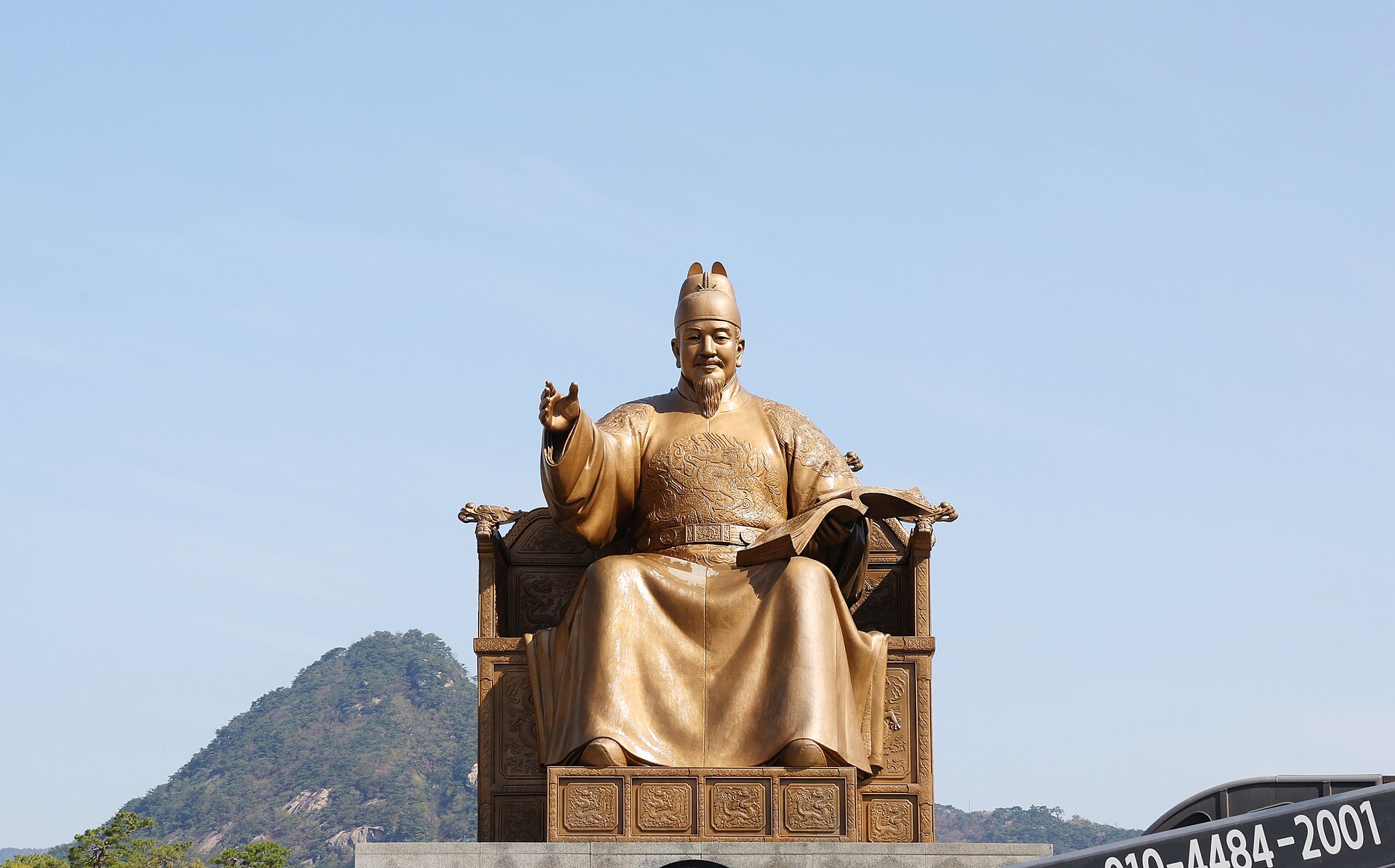
Sejong is more present in modern Korea than any other historical figure. His statue, a golden seated figure, dominates Gwanghwamun Square in central Seoul, directly in front of the main palace he governed from, and beneath the square an exhibition hall, “The Story of King Sejong,” displays his inventions and achievements. His face appears on the ten-thousand-won banknote, the note most Koreans handle daily. The Sejong the Great Memorial Hall elsewhere in Seoul holds further exhibits on his life and works, and his tomb, Yeongneung, lies among the Joseon royal tombs outside the city. The capital’s second city, the administrative hub, is even named Sejong in his honour. But his truest monument is intangible: every Korean who reads and writes does so in the alphabet he made. [VERIFY: Gwanghwamun exhibition, Memorial Hall location, tomb name and location]
Why Sejong Still Matters
Centuries after his death, Sejong remains a living presence in Korea because what he built is still in use and still cherished. In an age when most monarchs are remembered, if at all, for wars and monuments, he is remembered for an act of intellectual generosity, giving ordinary people a tool of empowerment that no later ruler could take away. His reign offers a model of leadership, curiosity joined to compassion, that resonates far beyond Korea. For a visitor, learning his story transforms a statue in a square and a face on a banknote into the memory of a man who believed that the measure of a king was whether his people could read.
Frequently Asked Questions
Who was King Sejong the Great?
The fourth king of the Joseon dynasty, who reigned from 1418 to 1450 and is regarded as Korea’s greatest ruler, famed above all for creating the Hangeul alphabet.
What did he invent?
He directed the creation of Hangeul, and under his patronage his court produced rain gauges, water clocks, sundials, astronomical instruments, improved printing, and new music and medical works.
Why did he create Hangeul?
So that ordinary Koreans, shut out by the difficulty of Chinese characters, could read and write. His preface says he made it out of concern for the common people.
Why is he called the Great?
He is one of only two Korean kings given the title, for the breadth of his achievements and the golden age of science and culture during his reign.
Where can I see his legacy?
His statue is on Gwanghwamun Square in Seoul, his face on the 10,000-won note, and Hangeul itself is used by all Koreans every day.
Continue Exploring
- 23-sejong-statue.jpg — Republic of Korea / CC BY-SA 2.0 / Wikimedia Commons source
- 23-sejong-hunminjeongeum.jpg — Kbarends / Public domain / Wikimedia Commons source
- 23-sejong-sundial.jpg — Nina R / CC BY 2.0 / Wikimedia Commons source
Disclosure: This article may contain affiliate links. Booking through them supports Coreaverse at no extra cost to you.