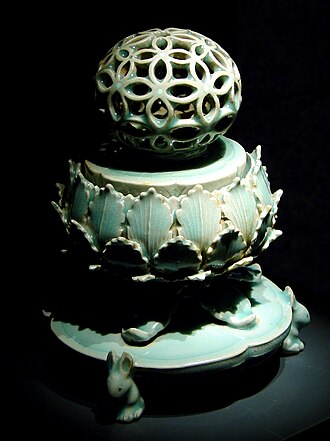
“Korean ceramics stand among the most refined achievements in the history of world art — a tradition stretching back thousands of years, shaped by nature, philosophy, and extraordinary human skill.”
Few artistic traditions in East Asia can rival the depth and beauty of Korean pottery and porcelain. From the earliest earthenware vessels of the Neolithic period to the luminous celadon of the Goryeo dynasty and the dignified white porcelain of Joseon, Korean ceramics have captivated collectors, scholars, and museum visitors around the world. More than decorative objects, these pieces are windows into the beliefs, values, and daily lives of the Korean people across more than five millennia.
This is the story of how clay, fire, and human creativity combined to produce one of the world’s great ceramic traditions.
Quick Facts: Korean Pottery and Porcelain at a Glance
| Category | Detail |
|---|---|
| Earliest Known Pottery | Jeulmun (Comb-pattern) ware, c. 8000–1500 BCE |
| Signature Goryeo Style | Celadon (cheongja) with jade-green glaze, 10th–14th centuries |
| Joseon Period Innovation | Buncheong ware and pure white porcelain (baekja) |
| Key Production Centers | Gangjin (Goryeo celadon), Gwangju (Joseon porcelain) |
| UNESCO Recognition | Goryeo celadon kilns listed as cultural heritage sites |
| Major Collections | National Museum of Korea, Leeum Samsung Museum of Art |
The Earliest Beginnings: Neolithic and Bronze Age Pottery
The story of Korean ceramics begins in the Neolithic period with Jeulmun pottery, named for the distinctive comb-pattern designs pressed into the surface of clay vessels. Dating as far back as approximately 8000 BCE, these early pots were used for storing and cooking food. Found throughout the Korean peninsula, Jeulmun ware reflects the life of semi-nomadic communities who relied on fishing, hunting, and gathering.
Around 1500 BCE, a new style emerged: Mumun pottery, characterized by plain, undecorated surfaces and thicker walls. Associated with the shift toward settled agricultural communities, Mumun ware was more functional in character — wide-mouthed jars, storage vessels, and steaming pots that speak to a society increasingly organized around rice cultivation and communal living.
These early traditions laid the technical and cultural foundations upon which later, more sophisticated ceramic arts would be built.
The Three Kingdoms Period: Grey Stoneware and Funerary Vessels
As Korea’s Three Kingdoms — Goguryeo, Baekje, and Silla — rose to power in the early centuries of the Common Era, ceramics evolved significantly. The introduction of the anagama kiln (a tunnel kiln fired at high temperatures) allowed potters to produce hard, dense grey stoneware capable of holding liquids without glazing.
Silla pottery in particular became renowned for its elaborate funerary vessels. Excavations of royal tumuli (burial mounds) around the ancient capital of Gyeongju have yielded extraordinary ceramic finds: tall-stemmed cups, duck-shaped vessels, and warrior figurines placed alongside the deceased as offerings for the afterlife. These pieces demonstrate not only technical mastery but also a rich cosmological belief system in which the dead required provisions for their journey beyond.
The Unified Silla period (668–935 CE) brought greater contact with Tang dynasty China, introducing new glaze techniques and vessel forms that would eventually contribute to one of Korea’s greatest ceramic achievements.
Why Is Goryeo Celadon Considered Among the World’s Finest Ceramics?
This is perhaps the most frequently asked question in any discussion of Korean art history — and the answer lies in a combination of technical brilliance and aesthetic philosophy that was uniquely Korean.
Goryeo celadon (고려청자, Goryeo cheongja) emerged during the Goryeo dynasty (918–1392) and quickly reached heights that astonished even Chinese observers, who were themselves masters of celadon production. The defining characteristic of Goryeo celadon is its jade-green glaze — a color achieved through precise control of iron oxide content in the glaze and careful management of the kiln atmosphere during firing. The result was a cool, luminous surface that seemed to glow from within, evoking the translucency of jade, a stone deeply revered across East Asia.
“The celadon color of Goryeo is the first under heaven.” — Xu Jing, Chinese envoy, 1124 CE
But Goryeo potters did not simply replicate Chinese techniques. They developed a revolutionary decorative method known as sanggam inlay: designs were carved into the clay body, filled with white or black slip (liquid clay), and then glazed and fired. The result was intricate patterns of cranes, clouds, lotuses, and scrolling vines that appeared beneath the glaze — a technique with no exact parallel in China or anywhere else in the ceramic world.
The main production center for Goryeo celadon was Gangjin in South Jeolla Province, where dozens of kiln sites have been identified and partially excavated. The finest pieces were produced for the royal court and aristocracy, used as wine vessels, incense burners, cosmetic boxes, and even roof tiles. A twelfth-century celadon prunus vase (maebyeong) inlaid with cranes and clouds is widely regarded as one of the masterpieces of world ceramic art.
Goryeo celadon production declined sharply in the late 13th and 14th centuries, disrupted by the Mongol invasions that devastated the peninsula and destabilized the aristocratic society that had sustained the kiln networks.
The Joseon Era: Buncheong Ware and the Triumph of White Porcelain
When the Joseon dynasty (1392–1897) replaced Goryeo, it brought with it a new philosophical outlook rooted in Neo-Confucian values: restraint, sincerity, and the rejection of excessive ornamentation. These ideals found direct expression in the ceramics of the period.
The early Joseon period saw the rise of buncheong ware (분청사기), a ceramic style that descended from late Goryeo celadon but with a distinctly freer, more spontaneous spirit. Potters applied white slip over a grey body and then stamped, carved, or brushed designs with remarkable energy and informality — fish, flowers, abstract patterns, and even the names of government offices. Buncheong has been celebrated by modern scholars and potters for its bold, almost playful character, standing in striking contrast to the refinement of Goryeo celadon.
Buncheong production largely ceased by the mid-16th century, partly displaced by the rise of white porcelain (백자, baekja), which became the definitive ceramic expression of the Joseon dynasty. Pure, unadorned white porcelain resonated perfectly with Neo-Confucian aesthetics: its whiteness symbolized moral purity, its simplicity reflected scholarly virtue. The royal court established official kilns at Gwangju in Gyeonggi Province to supply the palace and government offices with white porcelain of the highest quality.
Later Joseon white porcelain occasionally featured decoration in cobalt blue (청화백자, cheonghwa baekja), painted in underglaze with landscapes, bamboo, orchids, and dragons. The cobalt pigment was expensive and initially imported from abroad, making blue-and-white porcelain a luxury associated with the highest social ranks. Over time, the style became more widely produced and remains one of the most recognizable forms of Korean ceramics today.
3 Reasons Korean Ceramics Influenced the World Beyond Korea
- The Japanese Connection: During the Imjin War (Japanese invasions of 1592–1598), Japanese forces took thousands of Korean potters back to Japan. These captive craftspeople, known in Japan as tojin (pottery people), established kiln traditions in Kyushu that gave rise to celebrated Japanese ceramic styles including Arita ware and Satsuma ware. The impact of Korean ceramics on Japanese pottery culture was profound and lasting.
- Technical Innovation: The sanggam inlay technique developed in Goryeo had no precise precedent in China or elsewhere, demonstrating that Korean potters were not merely imitating continental models but actively innovating. This technical creativity influenced ceramic aesthetics across East Asia.
- Global Museum Presence: Today, masterpieces of Korean celadon and white porcelain are held in major collections worldwide — the British Museum, the Metropolitan Museum of Art, the Guimet Museum in Paris — introducing Korean aesthetic values to audiences far beyond the peninsula.
Comparing the Great Korean Ceramic Traditions
| Style | Period | Key Characteristics | Cultural Context |
|---|---|---|---|
| Jeulmun Ware | c. 8000–1500 BCE | Comb-pattern surface decoration | Neolithic hunter-gatherer communities |
| Silla Stoneware | 1st–7th century CE | Grey, high-fired; funerary forms | Three Kingdoms aristocratic burial rites |
| Goryeo Celadon | 10th–14th century | Jade-green glaze; sanggam inlay | Buddhist aristocratic culture |
| Buncheong Ware | 15th–16th century | Grey body, white slip; spontaneous decoration | Early Joseon transitional period |
| Joseon White Porcelain | 15th–19th century | Pure white; occasionally cobalt blue decoration | Neo-Confucian scholarly values |
Korean Ceramics Today: Living Tradition and Global Recognition
The ceramic traditions of Korea did not end with the Joseon dynasty. Today, a vibrant community of studio potters and traditional craftspeople continues to practice and reinvent Korean ceramic arts. The town of Icheon in Gyeonggi Province is recognized as a living center of celadon production, where master potters have spent decades recovering the lost techniques of Goryeo-era kilns. Icheon’s ceramic festival draws visitors and collectors from across the world each year.
At the scholarly level, institutions such as the National Museum of Korea in Seoul maintain world-class collections of Korean ceramics, while ongoing archaeological excavations at kiln sites in Gangjin and Gwangju continue to yield new insights into production methods, trade networks, and the social history embedded in clay and glaze.
For English-speaking visitors to Korea, the ceramics galleries of the National Museum of Korea offer an essential introduction to this extraordinary tradition — one that spans from Neolithic fishing communities to the refined courts of kings, and from humble village kilns to the great auction houses of the modern world.