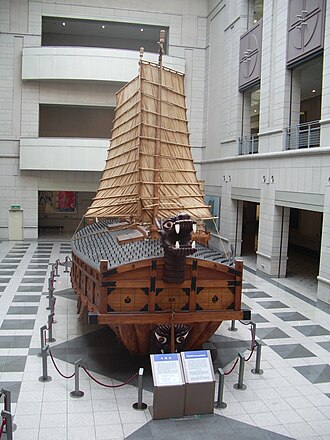
“The enemy will not easily attack a place that has such ships defending it.” — attributed to Admiral Yi Sun-sin, reflecting on the power of the turtle ship during the Imjin War
Few vessels in the long history of naval warfare have captured the imagination quite like the geobukseon — the turtle ship of Joseon Korea. Armored, fearsome, and uniquely designed to ram and devastate enemy fleets, the turtle ship stands as one of the most remarkable military innovations of the 16th century. Built under the supervision of Admiral Yi Sun-sin and deployed during the Japanese invasions of Korea (1592–1598), this extraordinary warship helped preserve the Joseon dynasty at one of the most critical moments in Korean history.
Quick Facts: The Turtle Ship at a Glance
| Feature | Details |
|---|---|
| Korean Name | Geobukseon (거북선) |
| Meaning | “Turtle ship” |
| Era of Use | Late 16th century, Joseon dynasty |
| Key Conflict | Imjin War (Japanese invasions of Korea, 1592–1598) |
| Associated Commander | Admiral Yi Sun-sin |
| Propulsion | Oars and sails |
| Distinctive Feature | Covered, spiked iron-plated deck |
| Primary Role | Ramming and artillery fire against enemy ships |
What Made the Turtle Ship So Revolutionary?
The turtle ship earned its name from its most defining characteristic: a covered, domed deck that resembled the shell of a turtle. This iron-reinforced roof set it apart from virtually every other warship of its time. While most naval battles in the 16th century were decided by boarding actions — soldiers leaping from ship to ship to engage in hand-to-hand combat — the turtle ship was designed to make that tactic impossible.
The covered deck was reportedly studded with iron spikes or blades, preventing enemy sailors from climbing aboard. Some historical accounts suggest that the covering could be disguised with straw matting to conceal the spikes beneath, making any attempt to board the vessel lethally dangerous. Below the protective shell, Korean oarsmen powered the ship forward with tremendous force, allowing it to ram directly into enemy vessels.
The ship was also equipped with multiple cannon ports on its sides and at the bow, allowing it to deliver devastating artillery fire while remaining largely protected from return attack. A dragon-shaped figurehead at the prow could emit smoke — likely from burning materials inside — helping to obscure the ship’s movements or intimidate enemies during battle. The combination of speed, armor, and firepower made the turtle ship a weapon without clear parallel in its era.
Admiral Yi Sun-sin and the Birth of the Geobukseon
The turtle ship cannot be separated from the man most responsible for bringing it into battle: Admiral Yi Sun-sin, widely regarded as one of the greatest naval commanders in world history. Yi was appointed as a naval commander in the years before the Japanese invasions, and he used that time to prepare rigorously — training crews, building new vessels, and improving existing ones.
Historical records indicate that the turtle ship was not entirely Yi’s invention. Earlier Korean records from the reign of King Taejong in the early 15th century mention a vessel resembling a turtle ship used in naval exercises, suggesting that the concept had existed in some form for generations. However, it was Yi Sun-sin who refined the design, oversaw its construction, and deployed it with devastating tactical effectiveness during the Imjin War.
The first turtle ship is believed to have been completed just days before the Japanese invasion fleet arrived in 1592, making its deployment one of history’s most dramatic last-minute military preparations. Under Yi’s command, the turtle ship participated in a series of decisive naval engagements that disrupted Japanese supply lines and prevented Japan from achieving complete control of Korean waters.
“Among Yi Sun-sin’s many contributions to Korean defense, the turtle ship remains the most iconic — a symbol of ingenuity under pressure and the will to protect one’s homeland against overwhelming odds.”
3 Key Battles Where the Turtle Ship Made History
1. The Battle of Sacheon (May 1592)
The Battle of Sacheon is believed to be the first engagement in which the turtle ship was deployed in combat. Yi Sun-sin led his fleet against a Japanese force anchored in Sacheon harbor. The turtle ship’s armored deck allowed it to approach enemy vessels under fire and unleash cannon fire at close range. The battle was a decisive Korean victory and proved the effectiveness of Yi’s new warship in real combat conditions.
2. The Battle of Dangpo (June 1592)
Following the success at Sacheon, Yi’s fleet engaged Japanese ships at Dangpo. The turtle ship again played a central role, using its ramming capability and cannon fire to break apart the enemy formation. Korean forces sank a significant number of Japanese vessels during this engagement, further establishing the turtle ship’s fearsome reputation among Japanese commanders.
3. The Battle of Hansan Island (August 1592)
Considered Yi Sun-sin’s masterpiece of naval strategy, the Battle of Hansan Island did not rely solely on the turtle ship but demonstrated the broader tactical genius that made the Korean navy so effective. Yi lured the Japanese fleet into open water before deploying his famous “crane wing” formation to encircle and destroy the enemy. The victory at Hansan Island is often cited as one of the most decisive naval battles in East Asian history, effectively halting Japan’s northward advance by sea and safeguarding Korea’s western supply routes.
How Did the Turtle Ship Compare to Other Warships of Its Time?
| Feature | Turtle Ship (Geobukseon) | Typical Japanese Warship (Atakebune) | European Galleon (16th century) |
|---|---|---|---|
| Deck Protection | Covered iron-plated shell with spikes | Wooden sides, open upper deck | Raised castles, largely open |
| Primary Combat Role | Ramming and cannon fire | Troop transport and boarding | Cannon broadsides |
| Propulsion | Oars and sails | Oars and sails | Primarily sails |
| Boarding Defense | Excellent — spikes prevented boarding | Minimal | Limited |
| Maneuverability | High (oar-powered) | Moderate | Lower in confined waters |
The Legacy of the Turtle Ship in Korean Culture and History
The Imjin War ended in 1598 with the death of Admiral Yi Sun-sin in the final naval battle at Noryang, where he was struck by a bullet even as his fleet achieved victory. The turtle ship’s active combat history was relatively brief, but its cultural and historical legacy proved enduring far beyond the conflict itself.
In the centuries that followed, the turtle ship became a powerful symbol of Korean resilience, ingenuity, and national identity. During the Japanese colonial period (1910–1945), when expressions of Korean pride were often suppressed, the memory of Yi Sun-sin and his turtle ships served as a source of quiet national inspiration. After Korea’s liberation, Yi was elevated to the status of a national hero, and the turtle ship became one of the most recognized symbols of Korean heritage worldwide.
Today, replicas of the turtle ship are displayed at museums and naval bases across South Korea, and the vessel appears on everything from Korean currency to commercial branding. The ship is studied in military history curricula around the world as an example of how innovative design and tactical brilliance can overcome numerical disadvantage.
Historians continue to debate the precise specifications of the original turtle ships. No original vessel has survived, and the historical sources — while rich in narrative detail — leave some technical questions unresolved. Scholars disagree, for example, on the exact nature of the iron plating: whether the entire deck was iron-covered or whether iron was used more selectively alongside wooden planking. These debates, far from diminishing the ship’s significance, reflect the deep scholarly interest that the vessel continues to attract.
Why Does the Turtle Ship Still Matter Today?
The turtle ship’s story is ultimately not just a story about technology. It is a story about what can be achieved when innovation, leadership, and determination come together under pressure. Admiral Yi Sun-sin designed and deployed the turtle ship not from a position of comfort and abundance, but against a backdrop of political intrigue, insufficient resources, and a surprise invasion that threatened to overwhelm his country entirely.
For modern readers, the turtle ship offers a compelling lesson in creative problem-solving. Japan’s invasion strategy in 1592 relied heavily on the ability to land and supply troops along Korea’s coastline. Yi Sun-sin recognized that if he could deny Japan control of Korean waters, he could undermine the entire invasion. The turtle ship was his instrument for doing exactly that — a purpose-built solution to a specific strategic problem, executed with precision and courage.
Korea’s naval heritage, of which the turtle ship is the crown jewel, remains one of the most fascinating chapters in East Asian military history. From the narrow straits of the southern coast to the open waters off Hansan Island, the geobukseon helped determine the fate of a nation — and in doing so, earned its place among the most celebrated warships in the history of the world.
Continue Exploring
On Coreaverse
- Admiral Yi Sun-sin: The Undefeated Commander of the Joseon Navy
- The Imjin War: Japan’s Invasion of Korea and Its Lasting Impact
- The Joseon Dynasty: Five Centuries of Korean Civilization