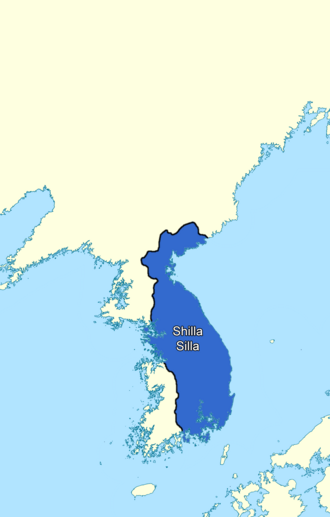
“From a small tribal confederation in the southeastern corner of the peninsula, Silla rose to become the unifying force of ancient Korea — a kingdom whose legacy endured for nearly a thousand years.”
Few kingdoms in world history can claim the kind of longevity that Silla achieved. Lasting from 57 BC to 935 AD, the Korean kingdom of Silla stood for roughly 992 years, making it one of the longest-lasting dynasties in recorded history. It began as one of three rival powers competing for dominance on the Korean peninsula and ended as the force that — with Tang Chinese support — brought those rivals under a single rule. Its story is one of political cunning, military ambition, cultural flowering, and eventual decline.
For English-speaking readers curious about the deep roots of Korean civilization, Silla offers an extraordinary window into the ancient world that shaped the peninsula. Its capital at Gyeongju, now a UNESCO World Heritage site, still holds the tombs, temples, and artifacts that whisper of a kingdom that once dazzled the ancient world.
Quick Facts: The Kingdom of Silla
| Founded | 57 BC (traditional date) |
| Dissolved | 935 AD |
| Capital | Gyeongju (Seorabeol) |
| Founding figure | Bak Hyeokgeose (traditional) |
| Period of unification | 668 AD (defeat of Goguryeo) |
| Major ally | Tang Dynasty China |
| Religion | Buddhism (state religion from 6th century) |
| Succeeded by | Goryeo Dynasty |
Origins: How Did Silla Begin?
The traditional founding of Silla dates to 57 BC, when the six villages of the Jinhan confederacy in the southeastern region of the Korean peninsula came together and recognized a young leader, Bak Hyeokgeose, as their ruler. Like many founding myths of ancient kingdoms, the story involves miraculous origins — Bak Hyeokgeose was said to have hatched from an egg found near a well, a legend that signals his divine legitimacy to later generations.
In its early centuries, Silla was one of three major powers on the peninsula, alongside Goguryeo in the north and Baekje in the southwest. This era — roughly the first through seventh centuries AD — is known in Korean history as the Three Kingdoms period. For much of this time, Silla was the smallest and most isolated of the three kingdoms, hemmed in to the southeast and lacking the direct trade connections with China that its rivals enjoyed. This isolation, however, also forced Silla to develop a uniquely cohesive internal structure.
One of the most distinctive features of early Silla society was the bone rank system, a rigidly hierarchical social order that determined a person’s rights, privileges, and government roles based entirely on their bloodline. At the top sat those of “sacred bone” rank, followed by “true bone,” and then lower ranks below. This system shaped everything from what colors a person could wear to what size house they could build. While deeply restrictive, it gave the ruling elite a strong sense of cohesion and identity that would serve Silla well during its long competition with its rivals.
3 Turning Points That Defined Silla’s Rise to Power
1. The Adoption of Buddhism as a State Religion
In the sixth century, Silla officially adopted Buddhism as its state religion. The process was not without controversy — court tradition held that the monk Ichadon was martyred in 527 AD when he publicly advocated for Buddhism, and his death is said to have been accompanied by miraculous signs that convinced the court to reverse its opposition. Once Buddhism took hold, it became a powerful ideological glue for the kingdom, inspiring magnificent temple construction and providing a shared cultural identity that transcended clan loyalty. Temples such as Bulguksa and the nearby Seokguram Grotto — both now UNESCO World Heritage sites near Gyeongju — stand as enduring monuments to this era of faith.
2. The Hwarang: Forging Elite Warriors and Scholars
Among Silla’s most celebrated institutions was the hwarang, an elite group of young male aristocrats trained in martial arts, poetry, music, and Confucian ethics. The hwarang, whose name translates roughly as “flowering knights” or “flower youth,” became both a military force and a cultural institution. They embodied a set of values — loyalty to the king, filial piety, fidelity to friends, and courage in battle — that helped bind the aristocratic class to the project of a unified, powerful kingdom. Many of Silla’s greatest generals emerged from hwarang training, and the institution left a lasting mark on Korean ideas of honor and service.
3. The Tang Alliance and the Unification of the Peninsula
The decisive turning point in Silla’s history came in the seventh century, when Silla’s rulers made the bold strategic decision to seek an alliance with the Tang Dynasty of China. The partnership was mutually beneficial: Tang wanted to neutralize the powerful kingdom of Goguryeo in the north, and Silla wanted to eliminate both its rivals. The alliance first defeated Baekje in 660 AD, then turned north to defeat Goguryeo in 668 AD. Silla then had to fight the Tang forces themselves, who had designs on controlling the peninsula directly, and managed to push them back by 676 AD, establishing what historians call the Unified Silla period.
“Silla did not simply survive the Three Kingdoms period — it outmaneuvered every rival, including its own Chinese allies, to emerge as the sole ruler of the Korean peninsula.”
The Golden Age: Unified Silla and the Flourishing of Korean Culture
The Unified Silla period, spanning from 668 to 935 AD, is often described as a golden age of Korean culture. With the peninsula largely pacified and trade routes open to Tang China and beyond, Silla’s capital at Gyeongju — sometimes described by contemporaries as a city of gold — became a vibrant center of Buddhist art, scholarship, and commerce.
The population of Gyeongju during this era is estimated to have reached into the hundreds of thousands, making it one of the largest cities in the ancient world. Aristocratic mansions lined the streets, artificial lakes were constructed for pleasure boating, and Buddhist temples dotted the surrounding hills. Korean monks traveled to Tang China and as far as India to study Buddhist texts, and foreign merchants brought goods and ideas from across Asia.
Among the cultural achievements of this era, the Emille Bell — formally known as the Divine Bell of King Seongdeok — stands out. Cast in 771 AD, it is one of the largest and most beautifully decorated bronze bells in Asia. The stone observatory Cheomseongdae, built during the reign of Queen Seondeok in the seventh century, is considered one of the oldest surviving astronomical observatories in East Asia. These monuments speak to a civilization of considerable sophistication.
Queen Seondeok herself deserves special mention. Reigning from 632 to 647 AD, she was the first woman to rule Silla in her own right, and her reign saw significant cultural and political achievements. Her ability to hold power in a deeply hierarchical society reflects both the flexibility of Silla’s bone rank system — which in some circumstances allowed women of the highest rank to rule — and her own considerable political skill.
Comparison: Silla vs. Its Three Kingdoms Rivals
| Kingdom | Location | Key Strength | Relationship with China | Fate |
|---|---|---|---|---|
| Silla | Southeastern peninsula | Internal cohesion, strategic alliances | Allied with Tang Dynasty | Unified the peninsula; succeeded by Goryeo in 935 |
| Goguryeo | Northern peninsula and Manchuria | Military power, large territory | Frequently at war with China | Defeated by Silla-Tang alliance in 668 AD |
| Baekje | Southwestern peninsula | Maritime trade, cultural exports to Japan | Diplomatic ties with Southern China dynasties | Defeated by Silla-Tang alliance in 660 AD |
Why Did Silla Fall?
Even kingdoms of a thousand years must end. By the late ninth century, Unified Silla was fracturing under the strain of aristocratic rivalry and regional rebellion. The bone rank system, once a source of strength, had become a cage — ambitious men outside the highest ranks had little hope of advancement through legitimate channels. Regional strongmen, known as hojok, began carving out autonomous territories. Peasant uprisings added to the instability as the central government’s ability to collect taxes and maintain order weakened.
Two rebel kingdoms emerged to challenge Silla’s authority: Later Baekje in the southwest and Later Goguryeo (also called Taebong) in the north. This era — the late ninth and early tenth centuries — is known in Korean history as the Later Three Kingdoms period. Out of this chaos, a figure named Wang Geon, a general who had served Later Goguryeo, emerged to found the Goryeo Dynasty. Goryeo systematically defeated its rivals, and in 935 AD, Silla’s last king, Gyeongsun, peacefully surrendered to Wang Geon, ending nearly a millennium of Silla rule.
The peaceful nature of the surrender was itself historically notable. Gyeongsun, recognizing that further resistance was futile and would only cause suffering to his people, chose negotiation over battle. Wang Geon reportedly treated him with considerable respect, and the former Silla nobility was integrated into the new Goryeo order rather than destroyed — a pragmatic act of reconciliation that helped Goryeo consolidate its rule over a unified peninsula.
Silla’s Legacy in Korean History
Silla’s greatest gift to Korean history may simply be the idea of a unified Korean peninsula. Before Silla, the peninsula was a patchwork of competing kingdoms and tribal confederacies. After Silla — and through the Goryeo and Joseon dynasties that followed — the Korean peninsula was understood as a single political and cultural unit. That sense of unity, however contested and complex in reality, traces a direct line back to Silla’s unification in the late seventh century.
Culturally, Silla’s Buddhist heritage left an indelible mark on Korean art, architecture, and philosophy. The temples of Gyeongju, the Seokguram Buddha, the Emille Bell — these are not merely historical artifacts. They are touchstones of Korean identity, things Koreans point to when explaining what their civilization has achieved. The hwarang tradition, too, has echoed through Korean history, influencing later ideas about military virtue and national service.
Today, Gyeongju — the ancient Silla capital — is often called “the museum without walls” because the entire city and its surrounding landscape are dotted with tombs, temple ruins, and stone monuments. Visitors can walk among the great burial mounds of Silla kings in Daereungwon, explore the reconstructed Donggung Palace complex, or make the short journey to Bulguksa temple, whose elegant stone staircases and pagodas have stood since the eighth century.
Continue Exploring
On Coreaverse
- Gyeongju: Walking Through the Ancient Capital of Silla
- The Three Kingdoms of Korea: Goguryeo, Baekje, and Silla
- How Wang Geon Founded the Goryeo Dynasty
- Bulguksa Temple: A UNESCO Treasure of the Silla Era