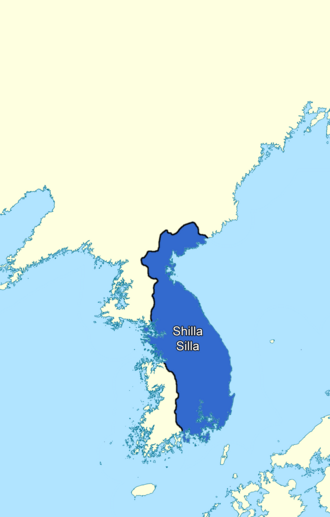
“From a small tribal state in the southeastern corner of the peninsula, Silla rose to unify Korea and usher in a golden age of Buddhist art, scholarship, and royal splendor.”
Few kingdoms in world history can claim a lifespan approaching a millennium, yet that is precisely the legacy of Silla — one of the Three Kingdoms of Korea. Founded, according to tradition, in 57 BC, and enduring until 935 AD, Silla stood for nearly a thousand years, outlasting countless dynasties across Asia and Europe. At its height it controlled the entire Korean peninsula south of the Taedong River, forging a civilization that left behind golden crowns, stone pagodas, and a rich Buddhist heritage that still captivates visitors to the ancient capital of Gyeongju today.
Quick Facts: The Kingdom of Silla
| Fact | Detail |
|---|---|
| Traditional founding date | 57 BC |
| Dissolution | 935 AD |
| Capital | Geumseong (modern Gyeongju) |
| Peak territory | Korean peninsula south of Taedong River (after 668 AD) |
| State religion | Buddhism (officially adopted 6th century) |
| Dynasty name after unification | Unified Silla (668–935 AD) |
| Succeeded by | Goryeo Dynasty |
Origins: How Did Silla Begin?
Korean historical records trace Silla’s origins to the confederation of six villages in the Gyeongju basin of the southeastern peninsula. According to tradition, a man named Bak Hyeokgeose became the first ruler in 57 BC, founding a royal line that would eventually evolve into a powerful centralised monarchy. In its earliest centuries, Silla was the least prominent of the Three Kingdoms — sandwiched between the aggressive military power of Goguryeo to the north and the culturally sophisticated Baekje to the west.
Silla’s geography both constrained and protected it. The southeastern corner of the peninsula was relatively isolated by mountain ranges, giving the kingdom time to develop its own distinct institutions. Among the most remarkable of these was the hwarang — an elite corps of young aristocratic men trained in martial arts, Confucian ethics, and Buddhist thought. The hwarang became a defining institution of Silla society and produced many of the military commanders who would later drive the kingdom’s expansion.
Silla also developed an unusually rigid bone-rank system (golpum jedo) that determined a person’s social status, political office, and even the style of their home and clothing by hereditary rank. The highest rank — seonggol, or “sacred bone” — was reserved for those of pure royal lineage, and only sacred-bone individuals could rule as monarch. This system shaped Silla society for centuries, providing both stability and, eventually, tension as the aristocracy grew more powerful than the throne.
The Road to Unification: 3 Turning Points
1. The Alliance with Tang China (648 AD)
Silla’s transformation from a regional power into the dominant force on the Korean peninsula began with a calculated diplomatic gamble. Facing pressure from both Goguryeo and Baekje, Queen Jindeok dispatched envoys to the Tang court in China to negotiate a military alliance. The resulting Silla-Tang alliance gave Silla access to one of the most powerful armies in the world, and the Chinese gained a reliable eastern partner against Goguryeo, which had repeatedly repelled Tang invasions. It was a partnership born of mutual necessity — and it would redraw the map of East Asia.
2. The Conquest of Baekje (660 AD)
The alliance bore its first fruit in 660 AD, when combined Silla-Tang forces overwhelmed Baekje. A massive Tang naval fleet landed troops on the western coast while Silla’s armies, led by the legendary general Kim Yushin, marched overland. Baekje fell after the Battle of Hwangsanbeol, a fierce engagement in which a Silla force defeated a larger Baekje army through discipline and the sacrifice of its soldiers. The Baekje king surrendered, and the kingdom that had once threatened Silla’s survival ceased to exist.
3. The Defeat of Goguryeo and Expulsion of Tang Forces (668–676 AD)
Goguryeo, weakened by decades of war against the Sui and Tang dynasties, fell in 668 AD as combined forces pressed from north and south. However, the alliance almost immediately fractured. Tang China sought to absorb the Korean peninsula into its own administrative system rather than cede it to Silla. In a remarkable reversal, Silla began supporting remnant Goguryeo and Baekje resistance forces against its former ally and launched direct military confrontations with Tang garrisons. By 676 AD, Tang forces had been pushed off the peninsula entirely, and Silla stood as the sole Korean kingdom — an achievement won first by diplomacy and then by defiance.
The Unified Silla Period: A Golden Age?
“Gyeongju, the Silla capital, was once described by Tang visitors as a city without a single thatched roof — a place of aristocratic splendor unmatched in the East.”
The century and a half following unification is often called Silla’s golden age. The capital Geumseong — modern Gyeongju — became one of the great cities of East Asia. Contemporary accounts suggest a population that made it one of the largest cities in the world at the time. The aristocracy built elaborate tile-roofed mansions, and the royal court patronised Buddhist monasteries, temples, and artworks on a grand scale.
Buddhism reached its artistic and institutional peak during this era. The Bulguksa Temple, constructed during the reign of King Gyeongdeok in the mid-8th century, stands as one of the masterpieces of Korean religious architecture. Nearby, the Seokguram Grotto — carved into the granite of Mount Toham — houses a serene stone Buddha regarded as one of the finest examples of Buddhist sculpture in East Asia. Both sites are today UNESCO World Heritage Sites, a testament to the lasting significance of Silla’s cultural output.
Scholarship flourished alongside art. The monk Wonhyo (617–686 AD) became one of the most influential Buddhist thinkers in Korean history, writing commentaries that spread Korean interpretations of Buddhism to China and Japan. Choe Chiwon (857–?), another Silla scholar, studied and served in Tang China before returning home to write works that remain classics of Korean literary culture. These figures illustrate how Unified Silla positioned itself not merely as a military power but as a civilisational centre participating in the broader Buddhist world of East Asia.
Comparison: Silla Before and After Unification
| Aspect | Early Silla (57 BC – 660 AD) | Unified Silla (668–935 AD) |
|---|---|---|
| Territory | Southeastern peninsula only | Entire peninsula south of Taedong River |
| Political structure | Aristocratic confederation evolving into monarchy | Centralised monarchy modeled partly on Tang institutions |
| Religion | Buddhism officially adopted in 6th century; shamanic traditions coexisted | Buddhism dominant; major state patronage of temples and monasteries |
| Economy | Primarily agrarian and tributary | Expanded trade, including maritime routes to Tang China and Japan |
| Cultural output | Distinctive goldwork, tumulus tombs, hwarang culture | Bulguksa, Seokguram, major Buddhist scholarship |
| External relations | Conflict and alliance with Goguryeo, Baekje, China, Japan | Tributary relationship with Tang; trade with Abbasid world via intermediaries |
Why Did Silla Fall?
The very institutions that made Silla strong ultimately contributed to its unraveling. The bone-rank system, which had provided order and identity, became a source of bitter competition as the supply of “sacred bone” royals dwindled and aristocratic clans vied for influence over increasingly weak monarchs. The 9th century was marked by a rapid succession of rulers, many of whom came to power through intrigue or outright assassination rather than orderly succession.
Provincial strongmen — known as hojok or powerful local clans — carved out autonomous territories as central authority eroded. Two of these figures, Gung Ye and Gyeon Hwon, declared new successor states to the old Three Kingdoms, inaugurating a chaotic period historians call the Later Three Kingdoms era (900–936 AD). Gung Ye founded Later Goguryeo (later renamed Taebong), while Gyeon Hwon established Later Baekje, each claiming to avenge old grievances against Silla.
It was Wang Geon — a general who overthrew Gung Ye and founded Goryeo in 918 AD — who ultimately reunified the peninsula. The last Silla king, Gyeongsun, surrendered peacefully to Wang Geon in 935 AD, bringing nearly a thousand years of Silla history to a close. Wang Geon treated the former king generously, marrying him into the Goryeo royal family and preserving Silla’s aristocratic lineages within the new dynasty’s social order.
Silla’s Lasting Legacy
The legacies Silla bequeathed to later Korean history are profound and still visible. Buddhism, elevated and systematised during the Unified Silla period, remained the dominant religion of the Korean peninsula through the subsequent Goryeo Dynasty. The cultural prestige of Gyeongju — sometimes called “the museum without walls” — endures to this day, with its burial mounds, temple complexes, and stone monuments drawing visitors from around the world.
Politically, Silla’s achievement of unifying the peninsula under a single Korean-ruled state set a precedent that shaped how later dynasties and, indeed, modern Koreans understand their national identity. The idea of a unified Korea, distinct from China and Japan, owes something fundamental to the precedent set in the late 7th century when Silla expelled Tang garrisons and asserted Korean sovereignty.
The goldwork recovered from Silla tumulus tombs — intricate crowns, belts, and earrings of hammered gold — ranks among the finest metalwork of the ancient world, and pieces from these tombs are now displayed in the National Museum of Korea and the Gyeongju National Museum. These objects remind us that Silla was not merely a political entity but a civilization of remarkable aesthetic accomplishment.
Continue Exploring
- On Coreaverse:
- External Sources: