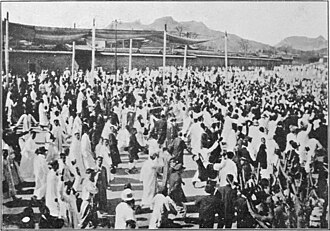
“We herewith proclaim the independence of Korea and the liberty of the Korean people.” — Opening words of the Korean Declaration of Independence, March 1, 1919
On a cold spring morning in Seoul, something remarkable happened. Thousands of Koreans gathered in Tapgol Park and listened as a student read aloud a declaration that their nation was free — even though it was not yet. That act of defiance on March 1, 1919, sparked one of the largest and most significant independence movements in Asian colonial history. Known in Korean as the Samil Undong (삼일운동), the March First Movement was a nationwide, largely nonviolent uprising against Japanese imperial rule that would echo far beyond the Korean peninsula.
Quick Facts: The March First Movement
| Fact | Detail |
|---|---|
| Date | March 1, 1919 (demonstrations continued for months) |
| Location | Korean Peninsula (then under Japanese rule) |
| Also Known As | Samil Movement (삼일운동); March 1st Movement |
| Key Document | Korean Declaration of Independence |
| Signatories | 33 representatives (the “33 Patriots”) |
| Trigger | Death of Emperor Gojong and influence of Woodrow Wilson’s Fourteen Points |
| Colonial Power | Empire of Japan (annexed Korea in 1910) |
| Legacy | Led to establishment of the Provisional Government of the Republic of Korea |
The World Korea Woke Up In: Japanese Colonial Rule
To understand the March First Movement, we must first understand what Korea had endured in the years leading up to it. Japan formally annexed Korea in 1910 through the Japan–Korea Annexation Treaty, ending the five-century-old Joseon Dynasty and erasing Korea as a sovereign state. What followed was a period of harsh military governance known as the Budan Jeongchi (무단정치), or “rule by military force.”
Under this system, Japanese authorities exercised sweeping powers over everyday Korean life. Korean-language newspapers were shut down. Korean cultural organizations were disbanded or placed under strict surveillance. Korean landowners found their property rights undermined by systematic land surveys that often transferred ownership to Japanese interests. Korean schools were reshaped to promote Japanese language and culture above all else. Even Korean officials and teachers were required to wear military-style uniforms and carry swords — a deliberate symbol of subjugation.
By 1919, nearly a decade of this suppression had built enormous reserves of frustration, grief, and national longing among the Korean people. All that was needed was a spark.
Why Did the March First Movement Begin in 1919?
Several converging forces made 1919 the year Korea rose up. First, the death of the former Emperor Gojong in January 1919 provoked an outpouring of public grief. Gojong had been the last ruler of the Joseon Dynasty and the first emperor of the short-lived Korean Empire before Japanese annexation stripped him of real power. Rumors circulated that he had been poisoned by Japanese authorities, though this was never proven. His funeral, scheduled for March 3, drew enormous crowds to Seoul from across the country — crowds that organizers of the independence movement recognized as a historic opportunity.
Second, the end of World War I had introduced a powerful new idea into global politics: national self-determination. United States President Woodrow Wilson’s Fourteen Points, announced in January 1918, included the principle that peoples under imperial rule had the right to determine their own political futures. Korean intellectuals, students, and religious leaders seized on this idea, hoping that the international community — particularly the Paris Peace Conference then underway — might support their cause.
Third, a network of Korean religious leaders, primarily from the Cheondogyo faith and Protestant Christianity, had been quietly organizing. These 33 men, later celebrated as the “33 Patriots,” drafted and signed the Korean Declaration of Independence. Rather than presenting the movement as a violent revolt, they carefully framed it as a peaceful, principled appeal to both the Japanese government and the international community.
“This is not a movement born of hatred toward any people. It is an affirmation of the right of every nation to determine its own destiny.” — Paraphrasing the spirit of the 1919 Declaration of Independence
March 1, 1919: The Day That Changed Korea
On the morning of March 1, the 33 signatories gathered not at Tapgol Park as originally planned, but at the Taehwagwan restaurant in Seoul. Concerned about possible violence if a large crowd gathered, they chose to read the Declaration of Independence among themselves, then notify Japanese authorities of their action before surrendering peacefully to police. Their intention was to demonstrate the movement’s nonviolent character from the very first moment.
Meanwhile, at Tapgol Park in central Seoul, a large crowd had gathered in anticipation. When news arrived that the 33 had not come, a student took the initiative and read the Declaration aloud to the assembled thousands. The crowd erupted. Shouting Daehan Dongnip Manse! (대한독립만세 — “Long live Korean independence!”), demonstrators poured into the streets of Seoul. Similar scenes played out in cities, towns, and villages across the Korean peninsula simultaneously, as organizers had coordinated the uprising to erupt nationwide on a single day.
The demonstrations spread with breathtaking speed. Over the following weeks and months, protests erupted in virtually every corner of Korea. Historians estimate that between one and two million Koreans participated in some form of demonstration during the movement, out of a total population of roughly 17 million. The protests crossed lines of religion, class, age, and gender. Farmers, merchants, students, monks, and Christian congregations marched together under a shared banner of national identity.
Japan’s Response: Suppression and Its Consequences
The Japanese colonial government’s initial response was bewilderment, followed swiftly by brutal force. Police and military units dispersed crowds with swords, rifles, and eventually artillery. Demonstrators were arrested by the thousands. In some instances, Japanese authorities locked protesters inside churches or community buildings and set them ablaze. Villages suspected of supporting the movement were burned to the ground.
The massacre at Jeam-ri (제암리학살사건) in April 1919 became one of the most notorious atrocities of the suppression. Japanese soldiers ordered the male villagers of Jeam-ri to gather inside a local church, ostensibly for a meeting. They then barricaded the doors and set the building on fire, killing those inside. The international press, including foreign missionaries in Korea, reported on the massacre, drawing global attention to Japan’s methods of colonial control.
Estimates of the total casualties from the suppression of the March First Movement vary, but Korean historical records suggest thousands were killed, tens of thousands were injured, and approximately 46,000 to 47,000 people were arrested.
Comparison: Korean Independence Goals vs. International Response
| What Korea Hoped For | What Actually Happened |
|---|---|
| International recognition of Korean independence at the Paris Peace Conference | Korea’s case was not taken up; Japan was an Allied power |
| US support based on Wilson’s self-determination principle | US did not intervene on Korea’s behalf |
| Nonviolent demonstrations would persuade Japan to reform | Japan responded with military suppression |
| Unified national movement to pressure colonial authorities | Movement was suppressed but demonstrated Korean national consciousness |
| Formation of a recognized Korean government in exile | Provisional Government of the Republic of Korea established in Shanghai, April 1919 |
A Movement That Planted the Seeds of a Nation
Despite its failure to achieve immediate independence, the March First Movement produced lasting and transformative consequences. Most significantly, it directly inspired the establishment of the Provisional Government of the Republic of Korea, founded in Shanghai in April 1919. This government-in-exile, which included figures who would later shape modern Korean history, maintained the formal claim of Korean sovereignty throughout the colonial period and into World War II.
The movement also forced a significant shift in Japanese colonial policy. Embarrassed by international criticism of its heavy-handed response, Japan replaced military-style governance with what it called Munhwa Jeongchi (문화정치), or “cultural rule.” Though still deeply repressive in practice, this new approach allowed limited Korean-language publishing, created more space for Korean cultural expression, and acknowledged — even if grudgingly — that Korea could not be governed purely through force.
Perhaps most profoundly, the March First Movement crystallized a modern Korean national identity. For the first time in the colonial period, Koreans from every walk of life had acted together as a people. The shared experience of participation, grief, and resistance created a collective memory that would sustain the independence movement through the remaining 26 years of Japanese rule until liberation in August 1945.
Today, March 1 is celebrated as a national holiday in South Korea — Samiljeol (삼일절) — one of the country’s most solemn and significant commemorative days. Ceremonies are held at Tapgol Park in Seoul and at memorial sites across the country. The 33 signatories of the Declaration of Independence are honored as national heroes. The Gwaneumsa Temple in Jeju, Seodaemun Prison — where many independence activists were held and executed — and the Jeam-ri massacre site are all designated heritage locations connected to this history.
3 Reasons the March First Movement Still Matters Today
- It defined modern Korean national identity. The Samil Movement demonstrated that a Korean national consciousness existed and was powerful enough to mobilize millions of people across geographic, religious, and class lines. That sense of shared nationhood became the foundation upon which both North and South Korea would later build their national narratives.
- It established the legal and symbolic basis for Korean sovereignty. The Provisional Government of the Republic of Korea, born directly from the movement, is recognized in South Korea’s constitution as the legitimate precursor to the modern Republic of Korea. The Declaration of Independence remains one of the most important documents in Korean history.
- It demonstrated the power and the limits of nonviolent protest under colonial rule. The March First Movement is studied globally as an example of mass nonviolent resistance — and as a case study in how colonial powers could suppress such movements with violence while still suffering significant long-term political costs. Japan’s reputation internationally was damaged, and the movement’s memory sustained Korean resistance for decades.
Continue Exploring
Deepen your understanding of the March First Movement and the broader sweep of Korean history with these resources:
- March First Movement — Wikipedia: A comprehensive overview of the movement, its causes, events, and aftermath.
- Encyclopedia of Korean Culture (AKS): Scholarly Korean and English-language entries on the Samil Movement and related independence figures.
- March First Movement — Britannica: A concise authoritative summary of the 1919 uprising.
- Korea Heritage Service: Information on designated heritage sites connected to the independence movement, including Seodaemun Prison and the Jeam-ri massacre memorial.
- Asia Society: Resources on Korean history and the broader context of colonialism and independence movements in Asia.
- National Museum of Korea: Collections and exhibitions relating to the late Joseon period, Japanese colonial era, and independence movement artifacts.