“From the ashes of the Three Kingdoms, a new Korea arose — one that would give the entire world its name.”
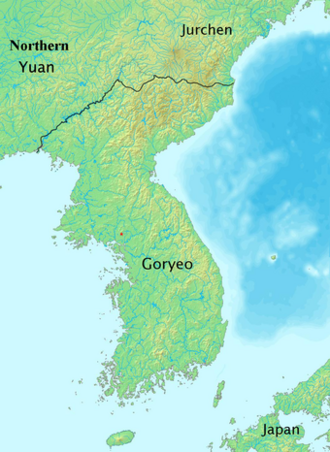
When Marco Polo and Arab traders spoke of a distant eastern land of extraordinary refinement, they were speaking of Goryeo — the medieval Korean kingdom whose very name became the origin of the word “Korea.” Lasting nearly five centuries, from 918 to 1392 CE, Goryeo was one of the most culturally vibrant, politically complex, and artistically accomplished states in all of East Asian history. It unified the Korean peninsula after the fragmentation of the Three Kingdoms era, endured devastating Mongol invasions, and still managed to produce some of the most celebrated achievements in ceramic art, printing technology, and Buddhist scholarship the world has ever seen.
To understand Korea today — its identity, its geography, its name — you must understand Goryeo.
Quick Facts: The Goryeo Dynasty at a Glance
| Fact | Detail |
|---|---|
| Founded | 918 CE by Wang Geon (Taejo of Goryeo) |
| Dissolved | 1392 CE, replaced by the Joseon Dynasty |
| Capital | Gaegyeong (modern-day Kaesong, North Korea) |
| Religion | Buddhism (state religion) |
| Notable Achievement | First metal movable type printing in the world |
| Major Conflict | Mongol invasions (1231–1259) |
| Legacy | Origin of the name “Korea” |
How Did Wang Geon Unite a Fractured Korea?
The story of Goryeo begins in a period of violent fragmentation. By the late 9th century, the great Unified Silla Kingdom had crumbled under the weight of aristocratic infighting and regional rebellions. The peninsula descended into chaos during what historians call the Later Three Kingdoms period, with rival warlords carving out competing states — Later Baekje, Later Goguryeo (also called Taebong), and the remnants of Silla.
Into this tumult stepped Wang Geon, a military commander of Later Goguryeo. Born into a prosperous maritime trading family on the western coast, Wang Geon was shrewd, disciplined, and politically gifted. He rose through the ranks, eventually overthrowing his own king in 918 CE and establishing a new state he called Goryeo — a deliberate echo of the ancient kingdom of Goguryeo, signaling his ambition to reclaim a broader Korean heritage.
Wang Geon’s genius lay not just in military conquest but in reconciliation. Rather than crushing his rivals, he absorbed them. When the last Silla king surrendered peacefully in 935 CE, Wang Geon treated him with honor, incorporating the Silla aristocracy into his new ruling class. Later Baekje was defeated militarily in 936 CE, completing the unification of the Korean peninsula under a single ruler for the first time in generations. Wang Geon would later be canonized as Taejo — “Grand Progenitor” — a title that reflected the reverence his successors held for him.
Taejo issued a famous document known as the Ten Injunctions, a set of advisory principles for future kings. Among them was the strong endorsement of Buddhism as the spiritual foundation of the state — a policy that would define Goryeo culture for centuries.
3 Achievements That Made Goryeo Extraordinary
1. Celadon Ceramics: Beauty the World Had Never Seen
Ask any art historian about Goryeo, and they will almost certainly begin with the ceramics. Goryeo celadon — a type of glazed stoneware celebrated for its distinctive blue-green color and extraordinarily refined technique — is considered among the finest pottery ever produced anywhere in the world. Chinese potters of the Song Dynasty, no strangers to ceramic excellence, reportedly marveled at the Korean craftsmen’s mastery.
What made Goryeo celadon unique was not just the glaze but an innovative decorative technique called sanggam, or inlaid decoration. Artisans would carve delicate patterns — cranes, clouds, chrysanthemums, willow trees — into the clay body, then fill those incisions with white or black slip before applying the glaze. The result was a surface of breathtaking intricacy. Bowls, vases, wine cups, and even roof tiles were produced in this style, and they graced the tables and shrines of Goryeo’s aristocratic elite.
Today, Goryeo celadon pieces are among the most treasured objects in Korean national collections, and surviving examples command extraordinary attention in the world’s great museums.
2. The Tripitaka Koreana: A Monument of Faith and Printing
Perhaps no single object better embodies the spirit of Goryeo than the Tripitaka Koreana — a complete collection of Buddhist scriptures carved onto more than 81,000 wooden printing blocks with astonishing precision and uniformity. The project was undertaken not once but twice: the first set was destroyed during the Mongol invasions, and the Goryeo court, in an act of extraordinary determination and faith, commissioned an entirely new set between 1237 and 1248 CE.
The surviving blocks are housed at Haeinsa Temple in South Gyeongsang Province, a UNESCO World Heritage Site. Each block was carved on both sides, producing a total of approximately 52 million individual Chinese characters — all executed with remarkable consistency by teams of skilled craftsmen working over more than a decade. Scholars have marveled that there are virtually no errors across this vast corpus of text, a testament to the organizational genius and religious devotion of the Goryeo state.
“The Tripitaka Koreana represents not merely a religious text but one of humanity’s supreme achievements in the art of the book — a labor of faith measured in 81,000 wooden blocks and millions of flawless characters.”
Goryeo also holds the distinction of developing the world’s first metal movable type printing system, predating Gutenberg’s press in Europe by approximately two centuries. This innovation, developed during the 13th century, allowed texts to be reproduced with greater speed and flexibility than the woodblock method permitted.
3. A Sophisticated Civil Examination System
Goryeo established and refined a civil service examination system modeled on Chinese practice but adapted to Korean conditions. The gwageo examinations tested candidates on classical Chinese literature, Confucian texts, and administrative knowledge. While in practice the system still favored candidates from established aristocratic families — and a hereditary aristocracy known as the gwonmun wielded enormous power — the examination system nonetheless provided a framework for meritocratic governance that would be further developed in the subsequent Joseon Dynasty.
Why Did Goryeo Survive the Mongol Invasions?
In 1231 CE, the armies of the Mongol Empire — the most formidable military force the medieval world had ever seen — swept into Goryeo. The invasions that followed, continuing in successive waves through 1259 CE, were catastrophic. Cities were burned, populations were massacred or enslaved, and the countryside was ravaged. The Goryeo court famously relocated to Ganghwa Island off the western coast, where the sea — which the Mongol cavalry could not cross — provided a measure of protection for the royal family and aristocracy while the population of the mainland suffered terribly.
It was during this desperate period of resistance, between 1237 and 1248, that the second Tripitaka Koreana was carved — an act that combined religious supplication with cultural defiance. The court prayed that the power of the Buddhist scriptures would help repel the invaders.
Eventually, Goryeo submitted to Mongol overlordship in 1259 CE, becoming a vassal state of the Mongol-ruled Yuan Dynasty. Goryeo kings were required to marry Mongol princesses, and Mongol influence permeated the court culture. And yet Goryeo survived as a distinct political entity — something that many other kingdoms conquered by the Mongols did not. The dynasty retained its royal line, its institutions, and its cultural traditions even while acknowledging Mongol suzerainty.
As Mongol power waned in the 14th century, Goryeo attempted to reassert its independence, but the dynasty had been weakened internally. Factional struggles between reformist officials and entrenched aristocratic families, combined with the rise of the brilliant but ultimately revolutionary general Yi Seonggye, brought the dynasty to an end in 1392 CE. Yi Seonggye founded the new Joseon Dynasty — but that is another story entirely.
Comparing Goryeo and Joseon: Two Faces of Korean Civilization
| Category | Goryeo (918–1392) | Joseon (1392–1897) |
|---|---|---|
| State Religion | Buddhism | Neo-Confucianism |
| Ruling Elite | Aristocratic clans (gwonmun) | Scholar-officials (yangban) |
| Capital | Gaegyeong | Hanyang (Seoul) |
| Key Cultural Export | Celadon ceramics, printed texts | Hangul script, Confucian scholarship |
| International Relations | Tribute to Song China; Mongol vassalage | Tribute to Ming and Qing China |
| Writing Tradition | Classical Chinese | Classical Chinese + Hangul (from 1443) |
The Name That Outlasted the Kingdom
Of all the legacies Goryeo left to the world, perhaps the most durable is simply its name. Medieval Arab traders, who reached Korean shores through maritime routes, rendered the kingdom’s name in their own script — and from that rendering, through Persian and eventually European languages, came Cauli, Coree, and finally Korea. The Joseon Dynasty replaced Goryeo in 1392, but the name persisted in the vocabulary of the outside world long after the kingdom itself had passed into history.
Within Korea, the legacy is equally profound. The Tripitaka Koreana still rests at Haeinsa Temple, its wooden blocks preserved through centuries by careful stewardship. Goryeo celadon continues to inspire Korean ceramic artists. And the administrative and cultural frameworks that Goryeo established laid crucial groundwork for the Joseon Dynasty that followed and, ultimately, for the Korea that exists today.
To visit the great temples of Korea’s southwest, to hold in your gaze a celadon vase in a museum display, or to stand before the cool storage halls of Haeinsa is to stand in the long shadow of Goryeo — a kingdom that shaped a civilization and gave a country its name.
Continue Exploring
On Korea Through Time
- The Tripitaka Koreana: Faith Carved in Wood
- Goryeo Celadon: The Most Beautiful Pottery in the World
- The Joseon Dynasty: Five Centuries of Korean Civilization
- Haeinsa Temple: A UNESCO World Heritage Journey