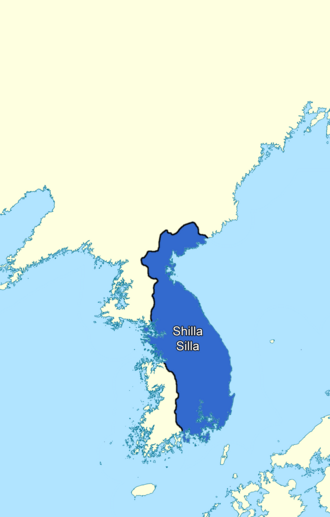
“From a humble confederation of clans in the southeastern corner of the peninsula, Silla grew to become the kingdom that defined what it meant to be Korean.”
Few stories in East Asian history are as dramatic or as consequential as the rise of Silla. Founded, according to tradition, in 57 BCE in the southeastern region of the Korean peninsula, Silla endured for nearly a millennium — outlasting its rivals, absorbing their cultures, and eventually forging the first unified Korean state. To understand Korea today — its Buddhist heritage, its aristocratic traditions, its deeply rooted sense of cultural identity — one must understand Silla.
Quick Facts: The Kingdom of Silla
| Fact | Detail |
|---|---|
| Founded (traditional) | 57 BCE |
| Dissolved | 935 CE |
| Duration | Nearly 1,000 years |
| Capital | Geumseong (modern-day Gyeongju) |
| Period | Three Kingdoms era → Unified Silla |
| Ruling clan | Park (Bak), Seok, Kim |
| Religion | Buddhism (state religion from 527 CE) |
| Succeeded by | Goryeo Dynasty |
Origins: A City-State Among Rivals
Silla began as one of the twelve chiefdoms of the Jinhan confederacy in the southeastern part of the Korean peninsula. According to traditional Korean accounts, the kingdom was founded in 57 BCE by Park Hyeokgeose, who is said to have hatched from a large egg discovered near a forest — a founding myth that blends heaven-sent legitimacy with the deep animist traditions of ancient Korea.
In its earliest centuries, Silla was the least powerful of the Three Kingdoms. To the northwest lay Goguryeo, a vast and militarily formidable state stretching into Manchuria. To the west was Baekje, a kingdom with sophisticated cultural connections to China and Japan. Silla, hemmed in to the southeast, developed more slowly — but this relative isolation also allowed it to cultivate internal cohesion and a remarkably durable political system.
The kingdom’s early social structure was organized around the bone rank system (golpum jedo), a rigid hereditary hierarchy that classified the aristocracy into ranks based on bloodline. At the top sat the “sacred bone” (seongol) rank, from which kings were traditionally drawn, followed by the “true bone” (jingol) rank and lower grades that determined what offices, clothing, and even house sizes a person could have. This system shaped Silla society for centuries, ensuring that royal and aristocratic power remained tightly concentrated — but also that elite families had a strong stake in the kingdom’s stability.
Why Did Silla Succeed Where Others Failed?
By the 7th century CE, the Korean peninsula had been locked in conflict among the Three Kingdoms for generations. Goguryeo had repelled massive Chinese Sui Dynasty invasions. Baekje had cultivated alliances with Japan. And yet it was Silla — once the most peripheral of the three — that emerged victorious. Several factors explain this remarkable outcome.
1. The Tang Alliance
Silla’s rulers made a decisive strategic choice: rather than resist the rising Tang Dynasty of China, they sought alliance with it. In the 660s, combined Silla-Tang forces crushed Baekje, and then turned north to defeat Goguryeo in 668 CE. Silla then had to fight a second, largely forgotten war — this time against Tang China itself — to prevent the peninsula from becoming a Chinese protectorate. By the 670s, Silla had successfully pushed Tang forces back and established control over the peninsula south of the Taedong River, achieving what historians call the Unification of the Three Kingdoms.
2. The Hwarang Institution
Among Silla’s most distinctive contributions to Korean culture was the hwarang, an elite corps of young male aristocrats who trained in martial arts, arts, music, and Confucian and Buddhist ethics. The hwarang produced many of Silla’s greatest military commanders and became a symbol of disciplined, virtue-driven leadership. Their ethos — loyalty to the king, filial piety, trustworthiness in friendship, courage in battle, and discrimination in the taking of life — echoed Buddhist and Confucian values simultaneously.
3. Buddhism as State Ideology
Buddhism was officially adopted as Silla’s state religion in 527 CE, following the martyrdom of the monk Ichadon, who is said to have died proclaiming that a miracle would follow his execution — and, according to tradition, his severed head spurted white milk rather than blood. Whether or not one accepts the miraculous element, the story reflects how deeply transformative the adoption of Buddhism was for Silla. Buddhist temples, monasteries, and pagodas proliferated. The great temple of Bulguksa and the stone grotto of Seokguram, both near the capital Gyeongju, stand today as UNESCO World Heritage Sites and testify to the artistic heights Silla achieved under Buddhist influence.
“Silla’s embrace of Buddhism was not merely religious — it was political, artistic, and philosophical. The dharma became the ideological foundation of a unified Korean identity.”
The Golden Age of Unified Silla
The period from the late 7th century through the 8th century is often called the golden age of Silla. With the peninsula largely unified and Tang China as a trading and cultural partner rather than a military threat, Silla enjoyed an era of relative peace and remarkable cultural flourishing.
The capital, Geumseong — modern Gyeongju — became one of the great cities of East Asia. Contemporary Tang sources suggest it was a city of enormous prosperity, with tile-roofed houses so numerous that there was said to be no thatched roof to be seen. Royal tombs, or tumuli, still dot the Gyeongju landscape today, their grassy mounds concealing treasures of gold crowns, jade ornaments, and bronze vessels that rank among the finest metalwork of the ancient world.
Silla’s scholars traveled to Tang China for education. Korean Buddhist monks such as Wonhyo and Uisang became major theological figures whose influence spread across East Asia. The monk Wonhyo, who never formally traveled to China himself, developed a uniquely Korean synthesis of Buddhist thought that emphasized universal accessibility of enlightenment — a profoundly democratic idea within a rigidly hierarchical society.
Comparing the Three Kingdoms: How Did Silla Differ?
| Kingdom | Location | Key Strength | Cultural Legacy | Fate |
|---|---|---|---|---|
| Goguryeo | North Korea / Manchuria | Military power; repelled Chinese invasions | Tomb murals; warrior culture | Defeated 668 CE; legacy claimed by Goryeo |
| Baekje | Southwest Korea | Maritime trade; cultural diplomacy with Japan | Transmitted Buddhism to Japan; fine craftsmanship | Defeated 660 CE by Silla-Tang alliance |
| Silla | Southeast Korea | Strategic alliances; internal cohesion | Bulguksa, Seokguram; gold crown tradition; hwarang | Unified the peninsula; lasted until 935 CE |
Decline and the End of a Millennium
No kingdom lasts forever, and Silla was no exception. By the late 8th and 9th centuries, the bone rank system — once a source of stability — had become a source of paralysis. Aristocratic factions competed violently for the throne; between 780 and 935 CE, Silla had more than twenty monarchs, many of whom died violently or were deposed. The countryside, burdened by heavy taxation and neglected by a court consumed by factional intrigue, became fertile ground for rebellion.
Regional strongmen rose to challenge central authority. Two of them — Gung Ye in the north and Gyeon Hwon in the southwest — declared new kingdoms, reviving the names of Goguryeo and Baekje respectively and plunging the peninsula into a period historians call the Later Three Kingdoms. It was Wang Geon, a general who overthrew Gung Ye and founded the Goryeo Dynasty, who ultimately reunified the peninsula. In 935 CE, the last Silla king, Gyeongsun, peacefully surrendered to Wang Geon — a remarkably bloodless end to a thousand-year kingdom.
Wang Geon treated the Silla royal family generously, allowing them to retain status and absorbing Silla’s administrative traditions and Buddhist culture into the new Goryeo state. In a very real sense, Goryeo was built on Silla’s foundations — and it is from “Goryeo” that the name “Korea” itself derives.
What Is Silla’s Legacy for Korea Today?
Silla’s influence on Korean civilization is difficult to overstate. The kingdom’s patronage of Buddhism shaped Korean spiritual life for centuries and produced masterpieces of architecture and sculpture that still draw visitors to Gyeongju today. The city of Gyeongju itself is often called “the museum without walls” — an open-air landscape of royal tombs, temple ruins, stone pagodas, and carvings that collectively earned UNESCO World Heritage recognition.
The hwarang tradition fed into later Korean martial and ethical ideals. The bone rank system, for all its rigidity, established patterns of hereditary aristocratic culture that influenced the later Goryeo and Joseon dynasties’ own elite hierarchies. And the very concept of a unified Korean peninsula — a single political entity sharing language, culture, and territory — owes its first realization to Silla’s 7th-century unification.
Even Korea’s rich tradition of Buddhist art — the stone Buddhas, bronze bells, celadon ceramics that evolved in later centuries — traces a direct lineage back to the craftsmen and monks of Unified Silla. When visitors walk through the National Museum of Korea in Seoul or stand before the serene Buddha of Seokguram, they are encountering a civilization that Silla built.
Continue Exploring
On Coreaverse
- The Three Kingdoms of Korea: Goguryeo, Baekje, and Silla Explained
- Bulguksa Temple: Silla’s Greatest Monument
- How Wang Geon Founded Goryeo on Silla’s Ruins
- The Hwarang: Silla’s Elite Youth Corps