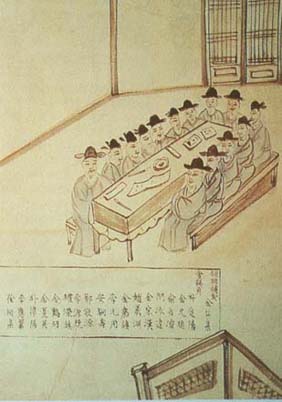
“In one dramatic year, the reformers of 1894 attempted to dismantle a thousand years of Confucian social order and rebuild Korea as a modern nation.”
Few events in Korean history compressed so much change into so little time. Between July 1894 and February 1896, the government of Joseon pushed through more than 200 individual reform measures — abolishing the centuries-old civil service examination system, dismantling the rigid class hierarchy, outlawing child marriage, and restructuring the entire machinery of the state. Known as the Kabo Reform (갑오개혁, Gabo Gaehyeok), this sweeping modernization program remains one of the most consequential — and most contested — chapters in Korean history.
To understand why the Kabo Reform happened, and why it unfolded the way it did, we need to step back into the turbulent world of late nineteenth-century East Asia, where empires competed, old dynasties wobbled, and reformers argued passionately about how to save their nations.
Quick Facts: The Kabo Reform at a Glance
| Fact | Detail |
|---|---|
| Period | July 1894 – February 1896 |
| Korean Name | 갑오개혁 (Gabo Gaehyeok) |
| Named After | The year Gabo (갑오) in the traditional sexagenary cycle, corresponding to 1894 |
| Dynasty | Joseon (조선) |
| Reigning Monarch | King Gojong |
| Number of Reforms | Over 200 individual measures |
| Key Reforming Body | Deliberative Council (Gun국기무처, Gunguk Gimucheo) |
| External Influence | Japan, following the outbreak of the First Sino-Japanese War |
The World That Made Reform Necessary
By the early 1890s, the Joseon dynasty had ruled Korea for five centuries, governed by Confucian principles that placed scholars above merchants, men above women, and hierarchical loyalty above individual rights. It was a system that had provided stability — but it had also left Korea ill-equipped for the brutal geopolitics of the modern world.
Japan had already undergone its own dramatic reinvention with the Meiji Restoration of 1868, transforming itself from a feudal society into an industrializing power with startling speed. China’s Qing dynasty, meanwhile, remained the traditional suzerain power over Joseon, expecting deference and tribute. Korea was caught between these two giants, and its own internal tensions were building rapidly.
In 1894, those tensions exploded. The Donghak Peasant Movement — a mass uprising rooted in social grievances, economic hardship, and anti-foreign sentiment — swept across the southern provinces. The Joseon court, unable to suppress the revolt with its own forces, requested military assistance from China. Japan, citing a treaty that gave it the right to send troops whenever China did, dispatched its own forces to the peninsula. Suddenly Korea was occupied by two rival armies, and the stage was set for the First Sino-Japanese War.
Japan moved quickly to leverage its military presence for political ends. Japanese forces effectively took control of the royal palace in Seoul in July 1894, and Japanese advisors began pressing the Joseon government to undertake sweeping domestic reforms. What followed was the Kabo Reform — shaped partly by genuine Korean reformist ambitions, and partly by the hand of Japan.
What Did the Kabo Reforms Actually Change?
The scope of the reforms was extraordinary. Working through the newly created Deliberative Council (Gunguk Gimucheo), reformers issued decree after decree across almost every area of public and private life.
The End of the Bone-Rank Class System
Perhaps the most socially radical of all the reforms was the formal abolition of Korea’s traditional class hierarchy. The bone-rank inspired Confucian social order had long divided society into the yangban (scholar-aristocracy), the chungin (middle class of technical specialists), commoners, and the baekjeong (the lowest social group, associated with occupations considered ritually impure). The Kabo reformers declared legal equality among all social classes — a revolutionary move that, at least on paper, ended hereditary social discrimination.
Slavery, which had persisted in various forms in Joseon Korea, was also formally abolished as part of this package of social reforms.
The Abolition of the Gwageo Examination System
For centuries, the gwageo — the Confucian civil service examination — had been the primary pathway to government office and social prestige. Success required mastery of Chinese classical texts and was theoretically open to men of appropriate social standing, though in practice the yangban class dominated. The Kabo reformers abolished this system entirely, declaring that government officials would henceforth be appointed on the basis of ability rather than examination results in classical Chinese literature.
This was not merely an administrative change. The gwageo had been the cultural backbone of the Joseon elite for generations. Abolishing it severed a direct link between Korea’s educated class and the Chinese classical tradition that had defined Korean high culture for half a millennium.
Reforms in Law, Marriage, and Administration
The Kabo Reform package also addressed deeply personal aspects of Korean society. Child marriage — a practice by which young children, particularly girls, could be betrothed and married — was outlawed. Widows, who under Confucian convention had been expected never to remarry, were now legally permitted to take a second husband. These reforms represented a direct challenge to the patriarchal Confucian family system.
On the administrative side, the old system of government was restructured. The central government was reorganized into a cabinet-style system of ministries, each with clearly defined responsibilities. Local administration was also overhauled. The military and the police were reorganized along more modern lines.
“The Kabo reformers did not just tinker with Korea’s institutions — they attempted to replace the very philosophical foundations on which Joseon society rested.”
Why Is the Kabo Reform So Historically Controversial?
Few chapters in Korean history provoke more complex feelings than the Kabo Reform, and the reason is inseparable from context: Japan.
Many of the individual reforms were ideas that Korean modernizers — influenced by exposure to Japan’s Meiji transformation and to Western political thought — had themselves been advocating for years. The reformist faction that had attempted the short-lived Gapsin Coup of 1884 had called for many similar changes. In this sense, the Kabo Reform represented the triumph, at last, of a genuinely Korean reformist tradition.
But the reforms were also undeniably implemented under Japanese military pressure, with Japanese advisors playing a powerful role in shaping both the pace and the content of the changes. Critics — then and now — have argued that this external pressure tainted the process, making the Kabo Reform less a Korean achievement than an early step in Japan’s gradual subjugation of Korea, which would culminate in the annexation of 1910.
Comparing the Kabo Reform to Other Asian Modernization Movements
| Reform Movement | Country | Period | Key Features | Outcome |
|---|---|---|---|---|
| Meiji Restoration | Japan | 1868 onward | Industrialization, Western-style institutions, abolition of samurai class | Successful modernization; Japan becomes a major power |
| Kabo Reform | Korea (Joseon) | 1894–1896 | Class abolition, legal reforms, administrative overhaul, end of gwageo exams | Partial implementation; reversed after Japanese influence waned temporarily |
| Hundred Days’ Reform | China (Qing) | 1898 | Western-style education, military reform, government restructuring | Reversed by Empress Dowager Cixi after 103 days |
The Three Phases of the Kabo Reform
1. The First Phase (July–December 1894)
The initial and most radical phase was driven by the Deliberative Council, operating under significant Japanese guidance. This phase produced the core social reforms: the abolition of the class system, the end of slavery, the gwageo examination abolition, and the restructuring of the central government. The pace was feverish — dozens of decrees were issued in rapid succession over just a few months.
2. The Second Phase (December 1894–July 1895)
The second phase saw the reform process consolidated and expanded under a new cabinet structure. The Japanese government sent Inoue Kaoru as its minister to Seoul, and Japanese influence over the reform agenda deepened. Additional legal and administrative reforms were enacted during this phase, and efforts were made to implement the earlier decrees more systematically across the country.
3. The Third Phase (July–February 1896)
The final phase was marked by both continued reform and rising tension. The assassination of Queen Min (Empress Myeongseong) by Japanese agents in October 1895 — an act that shocked Korean society and the watching world — dramatically undermined the legitimacy of the reform project in Korean eyes, associating it irreparably with Japanese aggression. When King Gojong fled to the Russian legation in February 1896 in what became known as the Agwan Pacheon, the reform process effectively came to an end.
What Did the Kabo Reform Actually Achieve?
The honest answer is: a great deal on paper, and rather less in practice — at least in the short term.
The formal abolition of the class system did not immediately transform Korean society. Yangban families retained their social prestige and economic resources even without legal backing. The new appointment system for government officials took time to take root. In rural areas, many traditional practices continued largely unchanged for years after the reform decrees were issued.
But the longer-term significance of the Kabo Reform should not be underestimated. The legal framework it established — social equality before the law, the illegality of slavery, the right of widows to remarry — planted seeds that shaped Korean society’s evolution through the colonial period and beyond. Korean reformers and nationalists in the early twentieth century would draw on the Kabo Reform’s legacy as they articulated visions of a modern, independent Korea.
The abolition of the gwageo system, meanwhile, was essentially permanent. When the Joseon government was reorganized under Japanese colonial rule and later when the Republic of Korea took shape after 1945, no attempt was ever made to restore the classical examination system. In this sense, the Kabo Reform’s break with the Confucian past proved irreversible.
Continue Exploring
Related Articles on Korea Through Time
- The Donghak Peasant Movement: The Uprising That Triggered an Era
- King Gojong and the Twilight of the Joseon Dynasty
- Queen Min (Empress Myeongseong): A Life and a Brutal Death
- The Gapsin Coup of 1884: Korea’s First Reform Revolution