The Korean Empire (1897–1910): The Rise and Fall of Korea’s Last Monarchy
For thirteen years at the turn of the twentieth century, Korea was not a kingdom but an empire, and its king an emperor. This is the story of the Korean Empire: why Joseon transformed itself, what it tried to achieve, its two emperors, and how more than two thousand years of Korean monarchy came to an end.
Between the five-century span of the Joseon dynasty and the modern age lies a brief, intense, and often overlooked chapter: the Korean Empire. For thirteen years, from 1897 to 1910, the Korean state styled itself not as a kingdom but as an empire, and its ruler took the title of emperor, equal in rank to the emperors of China, Japan, and Russia who pressed in around him. It was a bold assertion of sovereignty at the most dangerous moment in Korea’s history, and a final attempt to modernise the country and preserve its independence.
The Korean Empire is a story of ambition against overwhelming odds. Its emperors and reformers tried to build a modern state, with new institutions, technologies, and symbols, while the great powers of the region manoeuvred for control of the peninsula. Understanding this period is essential to understanding how traditional Korea gave way to the modern nation. This is an account of what the Korean Empire was, what it attempted, and how it ended.
Why Joseon Became an Empire
By the late nineteenth century, the old order of East Asia was collapsing. For centuries Korea had existed within a regional system in which it acknowledged the ceremonial seniority of the Chinese emperor while governing itself as an independent kingdom. That framework crumbled as China weakened and as Japan and the Western powers forced the region open to trade and rivalry. Korea found itself the object of competition among China, Japan, and Russia, each seeking influence over the strategically placed peninsula.
In this precarious situation, King Gojong and his advisers made a decisive symbolic move. In 1897, Gojong proclaimed the founding of the Daehan Jeguk, the “Great Han Empire,” and took the title of emperor. The act declared, in the clearest possible language of the age, that Korea was no longer anyone’s subordinate kingdom but a fully sovereign empire, the equal of its neighbours. The new name, “Daehan,” would endure: the modern South Korean state is still officially called Daehan Minguk, the “Great Han Republic,” carrying the name forward from the empire. [VERIFY: 1897 proclamation, Daehan Jeguk naming, regional context]
Quick Facts
| Period | 1897–1910, Korea’s last monarchy [VERIFY: dates] |
|---|---|
| Founded by | Emperor Gojong, proclaimed 1897 |
| Official name | Daehan Jeguk, the “Great Han Empire” |
| Emperors | Two: Gojong (1897–1907) and Sunjong (1907–1910) |
| Flag | The Taegeukgi, ancestor of today’s South Korean flag |
| Capital | Seoul (Hanseong); Deoksugung became the imperial palace |
The Two Emperors
Emperor Gojong
Gojong had come to the throne as a boy in 1863, the twenty-sixth king of Joseon, during a period when real power lay first with his father, acting as regent, and later with his queen and her family. His long reign spanned the entire crisis of Korea’s opening to the world. In 1897 he reinvented himself and his state as emperor, and from the imperial palace at Deoksugung he presided over the empire’s reforms and its struggle to survive. He reigned as emperor until 1907. [VERIFY: Gojong’s accession 1863, regency, reign as emperor to 1907]
Emperor Sunjong
Sunjong, Gojong’s son, succeeded him in 1907 and became the second and last emperor of Korea. His reign was brief and increasingly constrained, and it ended with the empire itself in 1910. With Sunjong the Korean monarchy, an institution that reached back through Joseon, Goryeo, Silla, and the Three Kingdoms to the legendary founders of the first kingdom, came to its close. He was the last in a line of Korean monarchs more than two thousand years long. [VERIFY: Sunjong reign 1907–1910]
The Reforms of the Empire
The Korean Empire was not merely a change of title; it was a platform for an ambitious programme of modernisation, sometimes called the Gwangmu Reforms after Gojong’s imperial era name. The aim was to build the apparatus of a modern state quickly enough to secure Korea’s independence in a dangerous world.
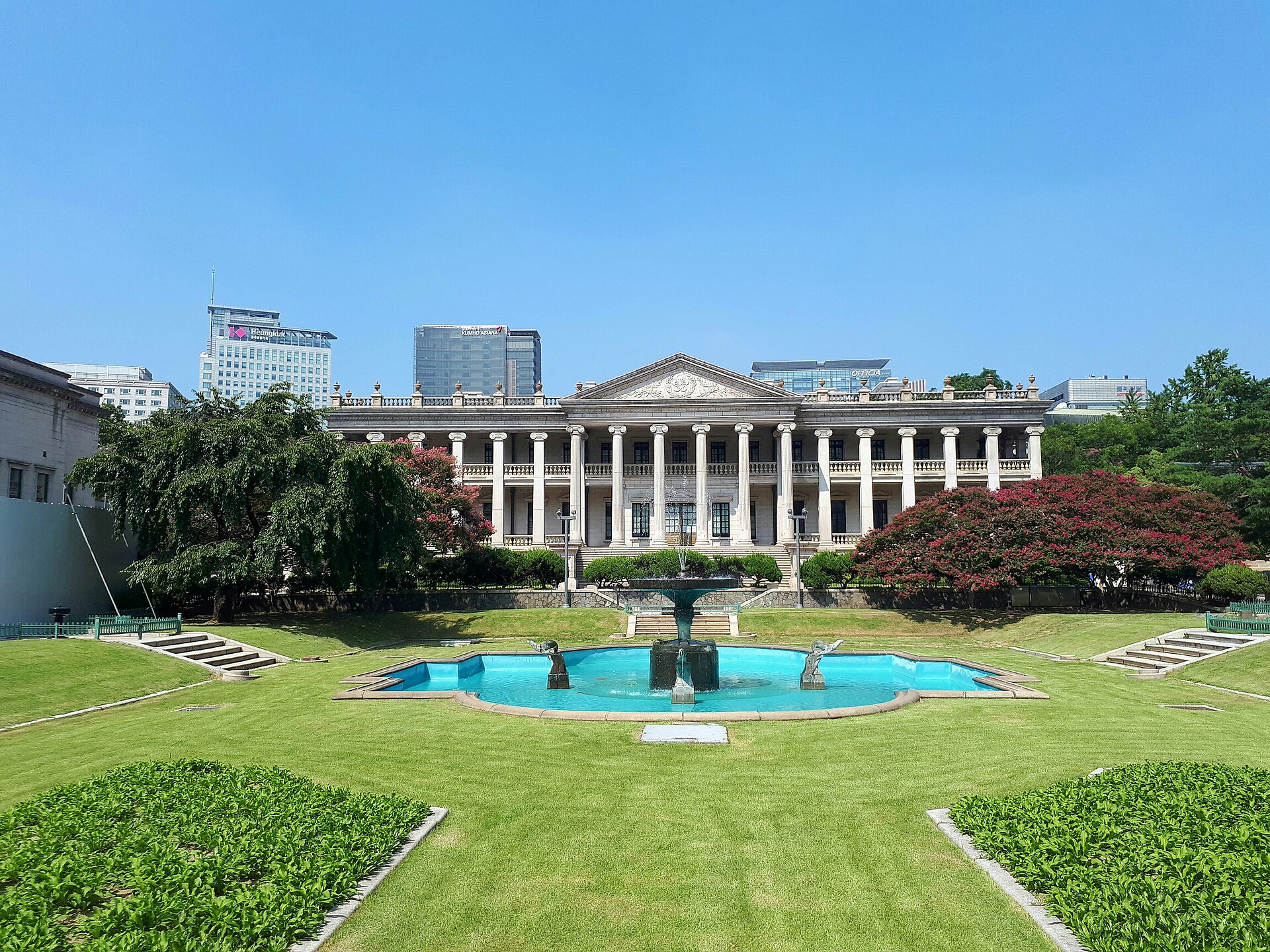
The reforms reached across many fields. The government undertook a modern land survey to reform taxation and property records. It promoted industry and commerce, encouraging factories, companies, and new enterprises. It built modern infrastructure: Seoul gained electric lighting, a streetcar system, telephone and telegraph lines, and railways began to link the country. New schools were founded to teach modern subjects alongside the classics, and students were sent abroad. The military was reorganised on modern lines. The empire also cultivated the symbols of a modern sovereign state, adopting national ceremonies, honours, and emblems. Deoksugung Palace, the imperial residence, became a showcase of this fusion, mixing traditional Korean halls with new Western-style stone buildings.
These were real and in places rapid changes, and they show a state straining to modernise on its own terms. But they were carried out under enormous external pressure and with limited time, resources, and freedom of action, as the surrounding powers increasingly constrained Korea’s choices. [VERIFY: Gwangmu reforms, land survey, Seoul modernisation, specific infrastructure]
The Flag and Symbols
The Korean Empire is closely tied to one of Korea’s most enduring symbols, the Taegeukgi. The flag, with its red-and-blue taegeuk circle representing cosmic balance and its four sets of black trigrams drawn from the ancient Book of Changes, had been adopted in the 1880s, in the last decades of the kingdom, and it served the empire as a national flag. In refined and standardised form it remains the flag of South Korea today, a direct thread from the last monarchy to the modern state. The empire also adopted an imperial era name, Gwangmu, meaning “bright and martial,” and the trappings of an imperial court, all part of the project of standing as a sovereign empire among empires. [VERIFY: Taegeukgi adoption in the 1880s, taegeuk and trigram symbolism, Gwangmu era name]
The End of the Monarchy
For all its ambition, the Korean Empire existed in an impossible strategic position, caught among powerful neighbours competing for dominance over the peninsula at the height of the age of empire. Over the empire’s short life, Korea’s freedom of action was progressively narrowed by external pressure, until its sovereignty was overtaken by forces it could not withstand. In 1910, after years of mounting constraint, Korea’s independent monarchy came to an end during the reign of Emperor Sunjong.
The fall of the Korean Empire closed an era of extraordinary length. The institution of Korean monarchy, which had endured through dynasty after dynasty across more than two millennia, ceased with the last emperor. The members of the former imperial house, the descendants of the royal and imperial line, lived on into the modern era, and some of their descendants are alive today, though the throne itself was gone. The empire’s thirteen years thus stand as the final chapter of monarchical Korea and the threshold of the modern nation that followed. [VERIFY: 1910 end of monarchy, fate of the imperial house, modern descendants]
Where to See the Korean Empire Today
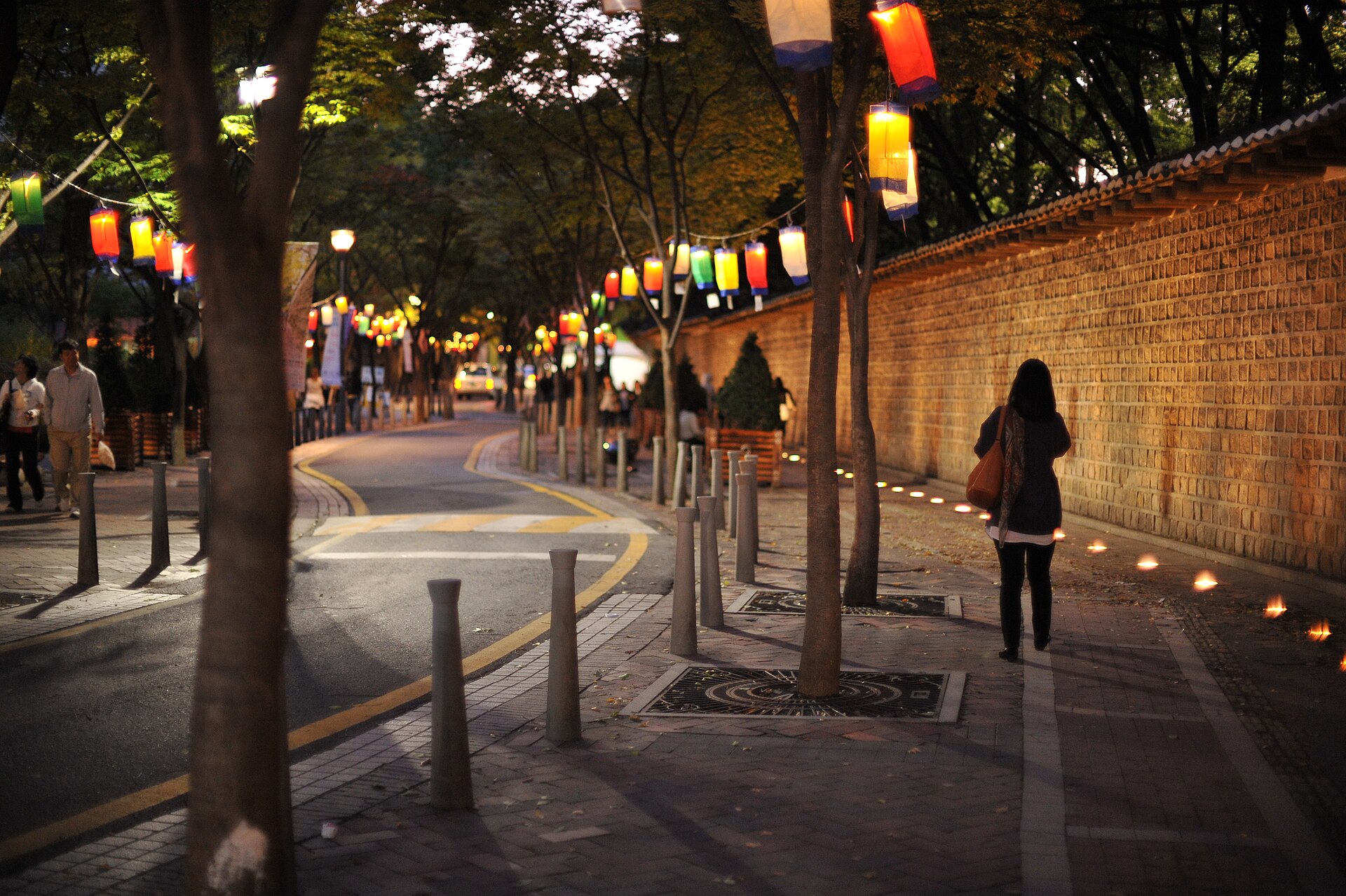
The physical heart of the Korean Empire survives in Seoul at Deoksugung Palace, the imperial residence, where traditional wooden halls stand beside early Western-style stone buildings, a vivid image of a country reaching between two worlds. The palace’s evening stone-wall road is one of the city’s most atmospheric walks. Nearby stood Hwangudan, the altar where Gojong performed the rite of proclaiming the empire, parts of which remain. Museums in Seoul display the court dress, honours, photographs, and objects of the imperial era, and the royal and imperial tombs around the capital include those of the last monarchs. For a visitor, Deoksugung is the single best place to feel the brief, poignant world of Korea’s last empire. [VERIFY: Deoksugung as imperial palace, Hwangudan altar remains, imperial-era museum collections]
Why the Korean Empire Matters
The Korean Empire is often passed over quickly, squeezed between the grandeur of Joseon and the drama of the twentieth century. But it deserves attention on its own terms. It was the moment when Korea consciously stepped onto the modern stage, asserting its sovereignty in the language of the age and racing to modernise. Its reforms laid groundwork that outlasted the monarchy, its name lives on in the official title of South Korea, and its flag still flies over the country. To understand the Korean Empire is to understand the hinge between the Korea of kings and the Korea of today, a small, determined chapter that forms the bridge between the two.
Frequently Asked Questions
What was the Korean Empire?
Korea’s last independent monarchy, from 1897 to 1910, when the Joseon dynasty was reconstituted as an empire and its king, Gojong, became emperor, during a period of modernisation and intense foreign pressure.
Why did Joseon become an empire?
Gojong proclaimed the empire in 1897 to assert Korea’s full sovereignty and equality with the empires around it, and as a platform for modernising reforms.
Who were the emperors?
Two: Gojong, who proclaimed the empire in 1897 and reigned to 1907, and his son Sunjong, who reigned from 1907 until the empire ended in 1910.
What was the flag?
The Taegeukgi, with the red-and-blue taegeuk circle and four trigrams, adopted in the 1880s and still, in refined form, the flag of South Korea.
How did it end?
Korea’s independent monarchy came to an end in 1910 after years of mounting foreign pressure, closing more than two thousand years of Korean monarchy.
Continue Exploring
- 25-korean-empire-deoksugung.jpg — Kimhs5400 / CC BY-SA 4.0 / Wikimedia Commons source
- 25-korean-empire-stone-wall.jpg — Sungslim / CC BY-SA 4.0 / Wikimedia Commons source
Disclosure: This article may contain affiliate links. Booking through them supports Coreaverse at no extra cost to you.