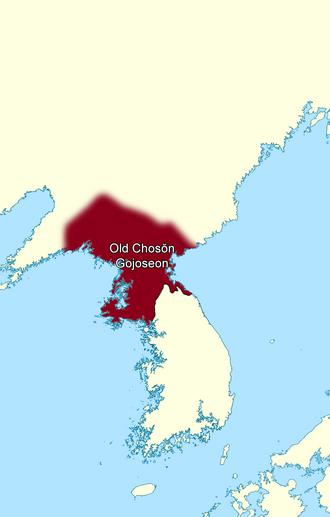
“Before there was a Korea, there was Gojoseon — the ancient kingdom that gave a people their first name, their founding myth, and their earliest sense of who they were.”
Long before the dynasties of Silla, Goguryeo, or Joseon shaped the Korean peninsula, there existed a kingdom known today as Gojoseon — or Old Joseon (Old Chosŏn). This is the story of Korea’s first recorded state: a polity shrouded in myth, contested by historians, and yet absolutely central to Korean cultural identity. From the legendary bear-woman who gave birth to a god-king, to the eventual military confrontation with the Han dynasty of China, Gojoseon’s arc spans centuries of ancient northeast Asian history.
Understanding Gojoseon means navigating the boundary between myth and archaeology, between national pride and scholarly debate. It is a subject that continues to animate historians, archaeologists, and ordinary Koreans alike — and for good reason. Whatever its precise contours, Gojoseon was real, it was significant, and it set the stage for everything that followed in Korean history.
Quick Facts: Gojoseon at a Glance
| Fact | Detail |
|---|---|
| Also Known As | Old Joseon, Old Chosŏn, Gojoseon (고조선) |
| Traditional Founding Date | 2333 BCE (according to the Dangun myth) |
| Fall of the Kingdom | 108 BCE, following conquest by the Han dynasty of China |
| Legendary Founder | Dangun Wanggeom |
| Core Territory | Northwestern Korean peninsula and southern Manchuria |
| Primary Historical Sources | Samguk Yusa (13th century CE), Chinese dynastic records |
| Successor States | Four Han Commanderies (Chinese), Proto–Three Kingdoms period polities |
The Dangun Myth: Where History Meets Legend
Every nation has a founding story, and Korea’s is among the most evocative in all of East Asia. According to the Samguk Yusa — a 13th-century compilation of Korean history and legend compiled by the Buddhist monk Iryeon — the kingdom of Gojoseon was founded by Dangun Wanggeom, a figure of divine origin.
The story goes like this: Hwanung, the son of the Heavenly Lord Hwanin, descended from heaven to Mount Taebaek, bringing with him 3,000 followers and the gifts of wind, rain, and clouds. There, a bear and a tiger both wished to become human. Hwanung told them to remain in a cave for one hundred days, eating only mugwort and garlic. The tiger gave up and left, but the bear persevered and was transformed into a woman — known as Ungnyeo. Hwanung married Ungnyeo, and from their union was born Dangun Wanggeom, who went on to establish the kingdom of Joseon in 2333 BCE, with his capital at Asadal.
This myth, however poetic, carries real cultural weight. It has been used for centuries as the foundation of Korean national identity. The year 2333 BCE is still commemorated in South Korea as National Foundation Day, known as Gaecheonjeol, celebrated every October 3rd. The myth encodes values of perseverance, divine mandate, and a distinct Korean origin — separate from and prior to Chinese civilization.
Scholars debate how literally to read the Dangun myth. Most historians treat it as an origin legend rather than recorded history, noting that it was written down more than two thousand years after the events it purports to describe. However, the myth is not dismissed outright — it preserves cultural memory and may encode real social realities of ancient Korean society, such as the integration of different tribal groups (represented by the bear and tiger clans) under a single ruling authority.
Why Is Gojoseon So Difficult to Study Historically?
Gojoseon presents historians with a genuine challenge: the evidence is fragmentary, the sources are late, and the political stakes are high. Here are three core reasons why reconstructing Gojoseon’s history remains so complex.
1. The Earliest Korean Sources Are Very Late
The most important Korean text describing Gojoseon, the Samguk Yusa, was written in the 13th century CE — roughly 1,400 years after Gojoseon fell. Another key text, the Samguk Sagi, compiled in 1145 CE, offers limited information. This means Korean accounts of Gojoseon were composed long after the fact, drawing on oral traditions, earlier texts now lost, and religious narratives. They cannot be taken as straightforward historical records.
2. Chinese Sources Are Politically Biased
The most contemporaneous written records of Gojoseon come from Chinese dynastic histories, particularly the Shiji (Records of the Grand Historian) by Sima Qian, written in the early Han dynasty. These texts document Gojoseon’s final phase — particularly the kingdom ruled by Wiman (Weiman in Chinese), a figure of contested origin who seized power around 194 BCE. Chinese sources naturally frame events from a Sinocentric perspective, portraying the conquest of Gojoseon as the civilizing of a peripheral state. Historians must read these sources critically.
3. Archaeological Evidence Is Open to Interpretation
Archaeology has identified Bronze Age cultures in the northwestern Korean peninsula and southern Manchuria that are plausibly linked to Gojoseon — most notably through the distinctive mandolin-shaped bronze daggers (also called Liaoning-type daggers) and dolmen burial practices. However, connecting specific archaeological cultures to specific political entities named in texts is inherently uncertain. Different scholars draw the boundaries of Gojoseon’s territory differently, and this has become entangled with modern nationalist politics in both South Korea and North Korea.
“Gojoseon occupies a unique space in Korean consciousness — it is simultaneously a historical state, a founding myth, and a symbol of Korean civilization’s deep antiquity. To study it honestly is to hold all three dimensions at once.”
Wiman Joseon: The Kingdom’s Final Phase
Whatever the origins of Gojoseon in the Bronze Age, the kingdom’s final and best-documented phase centers on a ruler named Wiman (衛滿 in Chinese). According to Chinese sources, Wiman was a refugee from the state of Yan in northern China who arrived in Gojoseon territory around 195–194 BCE, during the collapse of the Qin dynasty and the early Han period. He was initially welcomed by the reigning Joseon king, Jun, and given land near the border. Wiman used this position to build up military power, eventually overthrowing King Jun and seizing the throne for himself.
Under Wiman and his successors, the kingdom — now often called Wiman Joseon — grew considerably in power. It came to dominate trade routes between China and the Korean peninsula and Japan, controlling access to valuable goods. This economic power brought it into conflict with the Han dynasty, which saw a strong, independent Gojoseon as a strategic threat and a rival for influence over surrounding tribal peoples.
The final confrontation came during the reign of Emperor Wu of Han (Han Wudi), one of China’s most expansionist rulers. In 109 BCE, Han launched a two-pronged military campaign against Wiman Joseon — by sea and by land. The campaign was not the swift victory the Han expected. Gojoseon’s capital, Wanggeom-seong, held out for over a year. Internal divisions within the Joseon court — with some factions favoring resistance and others seeking a negotiated peace with Han — ultimately proved fatal. In 108 BCE, the capital fell, and Gojoseon was destroyed. The Han dynasty established four commanderies — administrative districts — in the former Joseon territory, the most important of which was Lelang (Nangnang in Korean).
The Four Han Commanderies and Their Legacy
| Commandery | Chinese Name | Korean Name | Fate |
|---|---|---|---|
| Lelang | 樂浪 | Nangnang | Survived until 313 CE; center of Han cultural influence |
| Xuantu | 玄菟 | Hyeondo | Repeatedly pushed back by Goguryeo; eventually absorbed |
| Lintun | 臨屯 | Imdun | Abolished within decades; merged into other commanderies |
| Zhenfan | 真番 | Jinbeon | Abolished within decades; merged into other commanderies |
The commanderies, especially Lelang, served as conduits for Chinese culture, technology, and goods into the Korean peninsula for several centuries. Archaeological excavations at the Lelang site near modern Pyongyang have uncovered remarkable Han-dynasty artifacts — lacquerware, bronze goods, and texts — demonstrating the depth of Chinese cultural presence. However, Korean tribal polities outside the commanderies continued to develop independently, eventually coalescing into the kingdoms that would define the Three Kingdoms period: Goguryeo, Baekje, and Silla.
Gojoseon’s Place in Korean National Identity
The significance of Gojoseon in modern Korea cannot be overstated. In both South Korea and North Korea, Gojoseon has been mobilized as a symbol of national origin and civilizational pride. North Korea, in particular, made dramatic claims in the 1990s, asserting that archaeologists had discovered the actual tomb of Dangun near Pyongyang — a claim met with deep skepticism by mainstream scholars outside North Korea.
In South Korea, the October 3rd holiday of Gaecheonjeol (National Foundation Day) commemorates the legendary founding of Gojoseon by Dangun in 2333 BCE. This date is not treated as literally historical by most scholars, but its cultural and symbolic power is immense. Statues of Dangun can be found across South Korea, and his image appears in textbooks, temples, and public spaces.
The debate over Gojoseon also intersects with broader questions about the relationship between Korean and Chinese civilization. Some Korean nationalist historians have argued for a very expansive Gojoseon — one that covered vast swaths of Manchuria and even parts of northern China — in an effort to establish Korean civilization as ancient and territorially impressive as Chinese civilization. Mainstream academic historians, both Korean and international, generally view these maximalist claims with caution, preferring to work from archaeological and textual evidence rather than nationalist aspiration.
What is not in dispute is that Gojoseon was real, that it was significant enough to warrant military confrontation with one of the ancient world’s great powers, and that its memory has shaped Korean culture for more than two millennia. That is a legacy few ancient states can claim.
Continue Exploring
On Coreaverse
- The Three Kingdoms of Korea: Goguryeo, Baekje, and Silla
- The Dangun Myth: Reading Korea’s Founding Legend
- Gaecheonjeol: Celebrating Korea’s National Foundation Day