“Between the great kingdoms of Silla and Baekje, a confederation of iron-masters forged one of the ancient world’s most sophisticated metalworking civilizations — and left behind a legacy that history nearly forgot.”
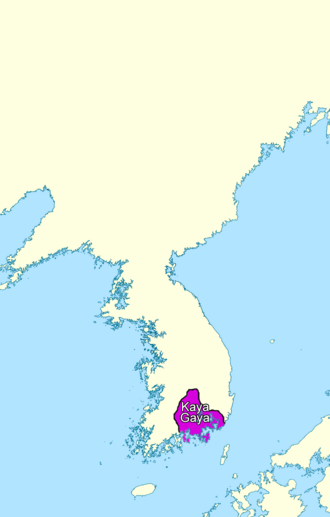
When most people think of the Three Kingdoms of Korea, they picture Goguryeo in the north, Baekje in the southwest, and Silla in the southeast. Yet nestled along the fertile valleys of the Nakdong River basin, a fourth power quietly shaped the peninsula’s destiny for over five centuries. This was Kaya — a loose but formidable confederacy of chiefdoms and statelets that mastered iron production, cultivated rich burial traditions, and maintained trade networks stretching from the Korean peninsula to Japan and beyond.
The Kaya Confederacy (also romanized as Gaya) is sometimes called Korea’s forgotten kingdom — overshadowed in classical texts by its more powerful neighbors, absorbed politically by Silla in 562 CE, and only recently receiving the international recognition it deserves. In 2023, its ancient tumuli were inscribed on the UNESCO World Heritage List, finally bringing global attention to a civilization that had long remained in the shadows of Korean historiography.
Quick Facts: The Kaya Confederacy at a Glance
| Detail | Information |
|---|---|
| Period Active | Approximately 42 CE – 562 CE |
| Location | Southern Korean peninsula, Nakdong River basin (modern South Gyeongsang and North Gyeongsang provinces) |
| Type of Polity | Tribal confederacy of semi-independent chiefdoms |
| Key Members | Geumgwan Kaya (Gimhae), Daegaya (Goryeong), Ara Kaya (Haman), Seongsan Kaya, Sogar Kaya |
| Primary Strength | Iron production, trade, and military equipment manufacturing |
| Absorbed By | Silla Kingdom, 562 CE |
| UNESCO Status | Kaya Tumuli inscribed as World Heritage Site, 2023 |
Origins Along the Nakdong River
The origins of the Kaya Confederacy are intertwined with both archaeology and legend. According to the Samguk Yusa — the 13th-century collection of Korean historical lore compiled by the Buddhist monk Ilyeon — the founding ancestor of Geumgwan Kaya was King Suro, said to have descended from the heavens in a golden egg around 42 CE. While modern historians treat the mythological elements with appropriate caution, the archaeological record confirms that complex chiefdom societies were forming along the lower Nakdong River basin during the early centuries of the Common Era.
These early communities developed out of the Byeonhan culture of the Proto–Three Kingdoms period. The Byeonhan people were already known to Chinese chroniclers for their iron production, and it is from this foundation that the Kaya polities grew into some of the most sophisticated ironworking states in ancient East Asia.
Unlike their neighbors Goguryeo, Baekje, and Silla — each of which eventually centralized into a unified monarchy — Kaya never fully consolidated into a single state. Instead, it remained a shifting coalition of regional powers, with leadership alternating between dominant members at different historical moments. Geumgwan Kaya (centered on modern Gimhae) led the early confederacy, while Daegaya (centered on modern Goryeong) rose to prominence in the later period, particularly from the 5th century onward.
Why Did Iron Make Kaya So Powerful?
Iron was the defining resource of the ancient Korean peninsula, and Kaya sat atop some of the richest iron deposits in the region. The confederacy’s mastery of iron production was not merely an economic advantage — it was a geopolitical one. Kaya supplied iron ingots to kingdoms across the peninsula and to Japan, acting as a critical node in the regional trade network.
“Kaya’s iron was the currency of an age — traded across seas, forged into weapons and tools that shaped the destinies of kingdoms far beyond its own borders.”
Chinese historical records, including the Wei Zhi (a section of the Records of the Three Kingdoms), describe the Byeonhan people — the cultural predecessors of Kaya — as exporting iron to the commanderies of the Han dynasty in the north, as well as to the Wa people of Japan. By the time Kaya had fully formed as a confederacy, this iron trade had become the backbone of its prosperity.
Archaeological excavations at sites across the Nakdong River basin have uncovered enormous quantities of iron artifacts: weapons, armor, farming tools, and the distinctive iron ingots that served as a form of currency. The iron armor produced by Kaya smiths was among the most advanced of its era, and examples have been found in burial mounds not only in Korea but also across the Korean Strait in Japan, testifying to the reach of Kaya’s commercial and cultural influence.
The Art of the Tomb: Kaya’s Burial Culture
Perhaps the most visible legacy of the Kaya Confederacy today is its monumental burial mounds, known as tumuli. Scattered across hillsides in South Gyeongsang and North Gyeongsang provinces, these great earthen mounds served as the resting places of Kaya’s rulers and elites. Their contents offer an extraordinary window into Kaya society, religion, and artistry.
The tomb complexes of Kaya are characterized by a distinctive burial style. The deceased were interred in wooden chambers sealed within large earthen mounds, accompanied by elaborate grave goods. These included iron weapons and armor, finely crafted pottery (particularly the distinctive grey stoneware known as Kaya pottery, which is technically sophisticated and aesthetically striking), horse trappings, and ornaments of gold and bronze. Some burials also included evidence of ritual practices, including the interment of individuals alongside the primary occupant — a practice that speaks to the hierarchical social structures of Kaya society.
The UNESCO World Heritage inscription of the Kaya Tumuli in 2023 recognized seven clusters of burial mounds across the region. These sites — including the Goryeong Jisandong Tumuli (associated with Daegaya), the Gimhae Daeseong-dong Tumuli (associated with Geumgwan Kaya), and the Haman Malisan Tumuli (associated with Ara Kaya) — were inscribed as outstanding examples of the unique burial traditions of the Kaya Confederacy and their significance in understanding the cultural landscape of ancient East Asia.
Kaya and Its Neighbors: A Comparison of the Southern Korean Kingdoms
| Feature | Kaya | Silla | Baekje |
|---|---|---|---|
| Political Structure | Decentralized confederacy | Centralized monarchy | Centralized monarchy |
| Primary Economy | Iron production and trade | Agriculture, trade, Buddhism | Agriculture, crafts, maritime trade |
| Relation to China | Indirect; traded iron with Chinese commanderies | Diplomatic missions, tribute | Strong cultural and diplomatic ties |
| Relation to Japan | Strong trade links; iron exports to Wa | Complex; eventually allied | Cultural transmission of Buddhism and arts |
| Fate | Absorbed by Silla (562 CE) | Unified the peninsula (668 CE) | Conquered by Silla-Tang alliance (660 CE) |
The Decline and Absorption of Kaya
The Kaya Confederacy’s decentralized structure, which had allowed its member chiefdoms considerable autonomy and flexibility, ultimately became a source of vulnerability as the surrounding kingdoms centralized and militarized. The 5th century brought increasing pressure from Goguryeo to the north and growing competition from Silla to the east. A major blow came in 400 CE, when the Goguryeo king Gwanggaeto the Great led a military campaign into the southern peninsula, reportedly in support of Silla against a combined force of Baekje, Kaya, and the Wa of Japan. The campaign devastated Geumgwan Kaya, whose power never fully recovered.
Leadership within the confederacy gradually shifted to Daegaya, which attempted to build alliances and resist Silla’s encroachment. Despite diplomatic efforts — including a marriage alliance with Silla in the early 6th century — Daegaya and the remaining Kaya chiefdoms were absorbed one by one into the Silla kingdom. The last Kaya chiefdom fell in 562 CE, bringing the confederacy’s history to an end.
Yet Kaya’s people and culture did not simply disappear. Many Kaya nobles were integrated into the Silla aristocracy, and Kaya’s ironworking traditions, musical culture (including the gayageum, a stringed instrument traditionally attributed to the Kaya musician Ureuk), and artistic styles continued to influence Korean civilization long after the confederacy’s political extinction.
3 Reasons Kaya Deserves a Central Place in Korean History
- It was an iron age superpower. Kaya’s control of iron production and its trade networks made it one of the most economically significant polities in ancient East Asia. Its iron exports shaped the development of neighboring societies in ways that historians are still tracing through archaeological evidence.
- It represents a different model of Korean statecraft. Unlike the centralized monarchies of Goguryeo, Baekje, and Silla, Kaya operated as a confederacy — a more horizontal and pluralistic political arrangement. Understanding Kaya enriches our picture of the diverse political experiments of ancient Korea.
- Its cultural contributions endure. From the gayageum to distinctive pottery traditions, from monumental burial mounds to metalworking techniques, Kaya’s cultural legacy filtered into the broader stream of Korean and East Asian civilization. Its tumuli, now a UNESCO World Heritage Site, stand as permanent monuments to a civilization that history had nearly erased.
Continue Exploring
Deepen your knowledge of the Kaya Confederacy and its place in Korean history with these resources:
- Kaya Confederacy — Wikipedia: A comprehensive overview of the confederacy’s history, member states, and legacy.
- Encyclopedia of Korean Culture (AKS): Authoritative Korean academic entries on Kaya history and culture.
- UNESCO World Heritage — Kaya Tumuli: Information on the 2023 inscription of the Kaya burial mounds as a World Heritage Site.
- Kaya — Britannica: A concise academic overview of the Kaya kingdoms.
- National Museum of Korea: Explore Kaya artifacts including iron ingots, armor, and pottery in the museum’s collections.
- Visit Korea — Kaya Heritage Sites: Plan a visit to the tumuli and heritage landscapes of the former Kaya territories in South Gyeongsang Province.