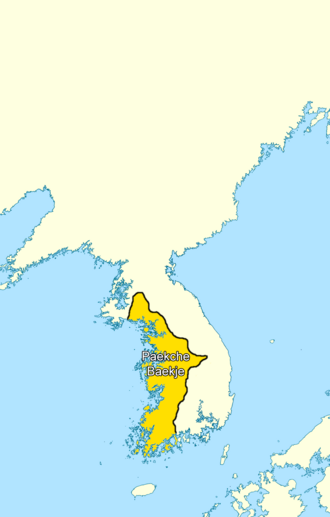
“Of the Three Kingdoms, Baekje was perhaps the most outward-looking — a maritime civilization that carried Korean culture to the shores of Japan and beyond.”
When most people think of ancient Korea, names like Silla or Goguryeo often come to mind first. Yet for nearly seven centuries, the kingdom of Baekje (also romanized as Paekche) stood as one of the most culturally sophisticated and diplomatically active states in all of East Asia. From its founding in 18 BC to its dramatic fall in 660 AD, Baekje shaped the art, religion, and governance of a region far beyond its own borders — and its legacy continues to resonate in South Korea, Japan, and China today.
Quick Facts: The Kingdom of Baekje
| Fact | Detail |
|---|---|
| Founded | 18 BC (traditional date) |
| Dissolved | 660 AD |
| Founder | Onjo (legendary founder, son of Jumong) |
| First Capital | Wiryeseong (near modern Seoul) |
| Later Capitals | Ungjin (Gongju), Sabi (Buyeo) |
| Era | Three Kingdoms Period |
| Religion | Buddhism (introduced 384 AD), Shamanism |
| Conquered by | Silla–Tang alliance, 660 AD |
Origins: How Was the Kingdom of Baekje Founded?
According to Korean tradition, Baekje was founded in 18 BC by Onjo, a son of Jumong — the legendary founder of Goguryeo. After a dispute over succession, Onjo led a group of followers southward and established a new state in the Han River basin, in the region corresponding roughly to modern-day Seoul and its surroundings. The founding capital, Wiryeseong, placed Baekje at the heart of one of the Korean peninsula’s most fertile and strategically important regions.
Historians note that Baekje emerged from the broader Mahan confederacy, a loose grouping of chiefdoms that dominated the southwestern Korean peninsula in the early centuries of the Common Era. Over time, Baekje absorbed and consolidated these smaller polities, gradually transforming from a local power into a centralized kingdom with a complex bureaucratic structure, a royal aristocracy, and a flourishing material culture.
The kingdom’s early centuries were marked by competition with its neighbors — Goguryeo to the north and the emerging power of Silla to the east — as well as by diplomatic engagement with Chinese states on the continent. This balance of rivalry and outreach would define Baekje’s character throughout its history.
3 Reasons Baekje Was One of Korea’s Most Important Ancient Kingdoms
1. It Was a Maritime Cultural Bridge to Japan
Perhaps Baekje’s most enduring contribution to East Asian history was its role as a cultural transmitter to the Japanese archipelago. From at least the fourth century AD onward, Baekje maintained close diplomatic and cultural ties with the Wa kingdoms of Japan. Baekje scholars, artisans, and Buddhist monks carried writing, Confucian texts, Buddhist scriptures, and advanced craft techniques — including metalworking, tile-making, and temple architecture — across the sea to Japan. The kingdom’s influence on early Japanese court culture was so profound that later Japanese chronicles record Baekje envoys and immigrants as foundational figures in the development of Japanese civilization. The famous Buddhist temple architecture of Asuka-period Japan bears unmistakable hallmarks of Baekje craftsmanship.
2. It Produced Some of the Finest Art in Ancient Korea
Baekje’s artistic legacy is celebrated for its elegance, refinement, and technical sophistication. Unlike the bold, dynamic imagery associated with Goguryeo tomb murals, Baekje art tends toward a graceful, serene aesthetic. The kingdom’s Buddhist sculptures — including the famous Baekje Smile, a gentle, enigmatic expression found on stone Buddha images — are considered among the most beautiful in all of Korean art history. Gold crowns, ornamental belt fittings, and intricately crafted bronze incense burners recovered from Baekje sites testify to a royal culture of extraordinary luxury and artistic ambition. The Baekje Historic Areas, a UNESCO World Heritage Site inscribed in 2015, preserves key remnants of this civilization at Gongju, Buyeo, and Iksan.
3. It Adapted and Survived Repeated Crises
Baekje’s seven-century history was not one of easy dominance. The kingdom faced existential pressure from Goguryeo, which in 475 AD sacked and destroyed the capital at Wiryeseong, killing King Gaero in the process. Rather than collapse, Baekje relocated its capital southward — first to Ungjin (modern Gongju) and later to Sabi (modern Buyeo) in 538 AD. Each relocation brought a degree of renewal: new urban planning, new palace and temple construction, and new diplomatic initiatives. Baekje’s resilience in the face of repeated military and political shocks speaks to the strength of its institutions and the loyalty of its ruling elite.
“The Baekje Smile — that serene, knowing expression carved into stone Buddhas across the southwest — captures something essential about a kingdom that faced catastrophe and yet kept creating beauty.”
Buddhism and the Cultural Life of Baekje
Buddhism arrived in Baekje in 384 AD, introduced by the monk Marananta from the Eastern Jin dynasty of China. The royal court embraced the new religion enthusiastically, sponsoring the construction of temples and pagodas and sending monks to study on the continent. Buddhism in Baekje was not merely a private spiritual practice — it was a state ideology, a diplomatic tool, and a catalyst for the arts.
The kingdom’s Buddhist temples were architectural marvels of their time. Remains of the Mireuksa Temple complex at Iksan — the largest Buddhist temple ever built on the Korean peninsula — still impress visitors today, including the surviving west stone pagoda, one of the oldest and largest stone pagodas in Korean history. The Jeongnimsaji Temple site in Buyeo, with its elegant five-story stone pagoda, offers another glimpse of Baekje’s sacred architecture.
It was through Baekje that Buddhism first reached Japan. In 552 AD (or 538 AD according to some sources), the Baekje king sent a delegation to the Yamato court in Japan bearing Buddhist scriptures and a gilt-bronze Buddha image — an event traditionally regarded as the official introduction of Buddhism to Japan. This single act of cultural diplomacy had consequences that would shape Japanese civilization for over a millennium.
Comparison: Baekje and Its Rivals in the Three Kingdoms Period
| Kingdom | Location | Key Strength | Cultural Legacy | Fate |
|---|---|---|---|---|
| Baekje | Southwest Korea | Maritime trade, diplomacy, arts | Buddhism to Japan, refined art | Conquered by Silla–Tang, 660 AD |
| Goguryeo | Northern Korea, Manchuria | Military power, large territory | Tomb murals, martial culture | Conquered by Silla–Tang, 668 AD |
| Silla | Southeast Korea | Alliance-building, gold work | Unified Korean culture, Buddhism | Unified the peninsula, 676 AD |
The Fall of Baekje: 660 AD
By the mid-seventh century, the geopolitical balance of East Asia was shifting decisively. The Tang dynasty of China, newly consolidated and aggressively expansionist, forged a military alliance with the kingdom of Silla. Together they mounted a campaign against both Baekje and Goguryeo. In 660 AD, a combined Silla–Tang force overwhelmed Baekje’s defenses. The capital at Sabi fell, and the last Baekje king, Uija, was captured and taken to the Tang capital in China, where he died in exile.
A desperate attempt to restore the kingdom followed. Baekje loyalists, aided by a Japanese naval force, fought back in what became known as the Battle of Baekgang (663 AD) — one of the largest naval engagements in early East Asian history. The restoration effort ultimately failed, and Baekje was absorbed into the territory that would become unified Silla. Eight years later, in 668 AD, Goguryeo too would fall, leaving Silla as the dominant power on the Korean peninsula.
The fall of Baekje sent shockwaves through Japan. Many Baekje aristocrats and refugees fled across the sea, bringing their skills, knowledge, and traditions with them. Their arrival in Japan accelerated the pace of cultural development in the Japanese court and contributed significantly to the administrative and artistic achievements of the Asuka and Nara periods.
Why Does Baekje Still Matter Today?
The regions that once formed the heartland of Baekje — centered on modern Chungcheongnam-do and Jeollabuk-do provinces — preserve an extraordinary wealth of archaeological and architectural heritage. The Baekje Historic Areas, inscribed as a UNESCO World Heritage Site in 2015, encompass eight distinct sites across Gongju, Buyeo, and Iksan. These include royal tombs, palace ruins, fortress walls, Buddhist temples, and ancient pagodas that together tell the story of a civilization at its peak.
In Japan, the legacy of Baekje is woven into the very fabric of early cultural history. Temples, artistic conventions, and even certain clan lineages trace their origins to Baekje immigrants. Scholars in both Korea and Japan continue to excavate and reinterpret the evidence, deepening our understanding of how deeply interconnected ancient East Asia truly was.
For visitors to South Korea, cities like Gongju and Buyeo offer an immersive encounter with Baekje’s past — through world-class museums, atmospheric ruins, and landscapes that have changed little in a thousand years. The National Museum of Korea in Seoul also holds remarkable Baekje artifacts, including the legendary Baekje Gilt-Bronze Incense Burner (Baekje Geumdongyongbongnosegeori), one of the masterpieces of Korean metalwork.
Continue Exploring
On Korea Through Time
- The Baekje Historic Areas: A UNESCO World Heritage Guide
- The Three Kingdoms of Korea: An Introduction
- How Buddhism Transformed Ancient Korea