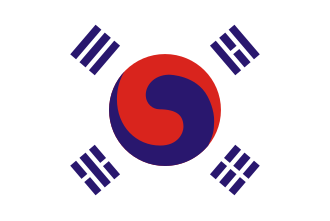
“We hereby proclaim to all the countries of the world that the name of our country is the Great Han Empire.” — Emperor Gojong, proclamation of the Korean Empire, October 1897
What Was the Korean Empire, and Why Did It Matter?
For five centuries, Korea had existed as the Joseon Dynasty — a Confucian kingdom that maintained formal tributary ties with China and kept the wider world largely at arm’s length. But by the late nineteenth century, that world had broken through the gates. Imperial Japan, Qing China, and the great Western powers were all competing for influence on the Korean peninsula. Against this turbulent backdrop, King Gojong made a dramatic move: in October 1897, he declared himself Emperor and proclaimed the founding of the Daehan Jeguk — the Great Han Empire.
It was a bold assertion of full, independent sovereignty. By adopting the title of Emperor — equal in rank to the emperors of China and Japan — Gojong signaled that Korea was no subordinate kingdom but a nation standing on its own terms. The Korean Empire lasted only thirteen years, from 1897 to 1910, but in that brief span it attempted sweeping reforms, grappled with foreign interference, and ultimately fell to Japanese annexation. Understanding it is essential to understanding modern Korean history.
| Official Name | Daehan Jeguk (대한제국, Great Han Empire) |
|---|---|
| Established | 12 October 1897 |
| Dissolved | 29 August 1910 (Japan–Korea Annexation Treaty) |
| Capital | Hanseong (present-day Seoul) |
| Head of State | Emperor Gojong (r. 1897–1907); Emperor Sunjong (r. 1907–1910) |
| Preceded By | Joseon Dynasty (1392–1897) |
| Followed By | Japanese Korea (1910–1945) |
| Reform Program | Gwangmu Reform (광무개혁) |
From Joseon Kingdom to Empire: The Road to 1897
The founding of the Korean Empire did not happen in a vacuum. It was a response to decades of mounting pressure that had steadily eroded the Joseon court’s ability to manage its own affairs. The opening of Korea to foreign trade in the 1870s and 1880s, forced by unequal treaties with Japan and Western nations, had exposed the kingdom to new economic and political realities it was ill-equipped to handle.
The decisive catalyst came with the First Sino-Japanese War (1894–1895). Japan’s swift and comprehensive defeat of Qing China effectively ended the centuries-old tributary relationship between Korea and China, removing the suzerain power that had long provided Korea with a degree of external legitimacy and protection. Korea was suddenly exposed, caught between an aggressive Japan and a weakened China, with Russia lurking in the background as another imperial contender.
The situation became acutely personal for King Gojong in October 1895, when Japanese-backed agents murdered his wife, Queen Min (later honored as Empress Myeongseong), inside Gyeongbokgung Palace. Fearing for his own life, Gojong and the crown prince took refuge in the Russian legation in early 1896 — an episode known as the Agwan Pacheon — where they remained for approximately a year. When Gojong finally emerged and returned to Deoksugung Palace, he did so with a new resolve. Pressure from Korean reformers and from public sentiment led him to make the proclamation that would transform his kingdom into an empire.
The proclamation ceremony took place at the Hwangudan — the Altar of Heaven — in Hanseong. By performing the ritual sacrifice at this altar, Gojong adopted the cosmic symbolism previously reserved for Chinese emperors, asserting that Korea, too, stood in direct relationship with Heaven and owed deference to no earthly superior power.
The Gwangmu Reforms: Modernization on Korean Terms
The new empire immediately launched what became known as the Gwangmu Reform program, named after Gojong’s imperial reign title. These reforms were driven by a philosophy sometimes described as gubon sinchamp — preserving the Korean foundation while selectively adopting new methods. The government was not seeking to wholesale westernize Korea in the manner of Meiji Japan; rather, it sought a modernization that kept Korean values and institutions at its core.
Among the most significant practical steps taken during the Gwangmu era were efforts to modernize the military, establish new schools, develop telegraph and railroad infrastructure, and carry out a nationwide land survey. The land survey was particularly ambitious: it aimed to create accurate cadastral records that would clarify land ownership, rationalize taxation, and give the imperial government firmer fiscal footing.
The empire also worked to attract foreign investment and expertise selectively, negotiating concessions and contracts with American, French, and other interests for projects such as electric streetcar lines in Seoul and the development of electric lighting. These projects gave Hanseong a strikingly modern face, even as deeper institutional reforms remained incomplete.
“The Korean Empire represented a genuine attempt by Koreans to chart their own course into the modern world — on their own terms, not those dictated by foreign powers.”
3 Key Challenges That Undermined the Empire
- Unrelenting Japanese pressure. Japan had emerged from the First Sino-Japanese War as the dominant external power on the peninsula, and it had no intention of allowing a truly independent, modernizing Korea to thrive on its doorstep. Japanese advisors, merchants, and soldiers steadily expanded their influence, and after Japan’s victory in the Russo-Japanese War (1904–1905), Korea was effectively reduced to a Japanese protectorate under the Eulsa Treaty of November 1905. The treaty stripped Korea of its right to conduct its own foreign policy and installed a Japanese Resident-General in Seoul.
- Internal political divisions. Korean reformers themselves were deeply divided. Some advocated rapid, comprehensive Westernization; others clung to Confucian traditionalism; still others sought a middle path. These divisions prevented the formation of a unified political will capable of resisting foreign encroachment. Factional struggles at court and differing visions of what reform should look like paralyzed decision-making at critical moments.
- Financial weakness. The empire’s modernization projects required capital that the Korean government struggled to generate. Tax revenues were insufficient, administrative capacity was limited, and foreign loans came with political strings attached. Without a solid fiscal foundation, the Gwangmu reforms could not be sustained or expanded at the pace required to build genuine state capacity before Japan moved to absorb the country entirely.
The Hague Secret Emissary Affair and the Emperor’s Abdication
Even after the imposition of the protectorate, Emperor Gojong refused to accept the situation passively. In 1907, he dispatched a secret diplomatic mission to the Second Hague Peace Conference in the Netherlands, attempting to bring Korea’s plight to the attention of the international community and to have the Eulsa Treaty declared invalid on the grounds that it had been signed under coercion. The three emissaries — Yi Sang-seol, Yi Jun, and Yi Wi-jong — traveled to The Hague but were denied official participation in the conference. Yi Jun died in The Hague, becoming a martyr in Korean national memory.
The Japanese authorities used the Hague mission as a pretext to force Emperor Gojong to abdicate. In July 1907, Gojong was compelled to step down in favor of his son, Crown Prince Yi Cheok, who became Emperor Sunjong. The Japan–Korea Treaty of 1907 that followed gave Japan direct control over Korea’s internal administration. Three years later, on 29 August 1910, the Japan–Korea Annexation Treaty formally dissolved the Korean Empire and made Korea a colony of the Japanese Empire. The era known in Korean as the Gyeongsul Gukchi — the national humiliation of 1910 — had arrived.
| Feature | Joseon Dynasty (1392–1897) | Korean Empire (1897–1910) |
|---|---|---|
| Head of State Title | King (Wang) | Emperor (Hwangje) |
| Relationship with China | Tributary state | Formally independent, no tribute |
| State Ideology | Neo-Confucianism | Neo-Confucian base + selective modernization |
| Military | Traditional Joseon army | Modernizing imperial army (Gwangmu reforms) |
| Land Administration | Traditional land registers | Modern cadastral survey attempted |
| Infrastructure | Limited | Railroads, telegraph, electric streetcars in Seoul |
| End | Self-transformation into Empire | Japanese annexation (1910) |
Legacy: How Koreans Remember the Empire Today
The Korean Empire occupies a complicated place in Korean memory. On one hand, it is remembered as a period of genuine national striving — a moment when Koreans attempted to modernize on their own terms and assert their place among the sovereign nations of the world. Emperor Gojong’s proclamation at the Hwangudan is seen as an act of national dignity. The Gwangmu reformers are recognized as patriots who understood the stakes and tried to meet them.
On the other hand, the empire’s failure is impossible to overlook. The reforms came too late, moved too slowly, and were undermined by both internal divisions and the overwhelming pressure of Japanese imperialism. The empire’s thirteen-year existence ended in the most complete form of national loss imaginable: colonial annexation and the erasure of Korean statehood for thirty-five years.
Physical remnants of the empire survive in Seoul today. Deoksugung Palace, where Emperor Gojong held court after returning from the Russian legation, retains its distinctive blend of Korean traditional and Western Neoclassical architecture — a built metaphor for the hybrid ambitions of the Gwangmu era. The site of the Hwangudan, where the empire was proclaimed, is today partly occupied by the Westin Chosun Hotel, though a small ceremonial structure survives. These places are tangible connections to one of the most consequential and poignant chapters in Korean history.
The name chosen for the empire — Daehan, Great Han — lives on in the modern Republic of Korea, whose official Korean name is Daehan Minguk. Every time a Korean passport is issued, the legacy of the empire that tried and failed to preserve Korean sovereignty is quietly invoked.