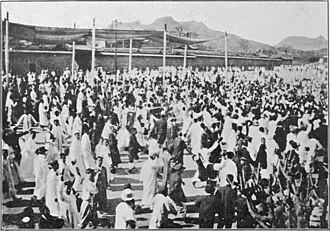
“We herewith proclaim the independence of Korea and the liberty of the Korean people.” — Opening words of the Korean Declaration of Independence, March 1, 1919
On the first day of March 1919, something extraordinary happened across the Korean peninsula. In cities, towns, and rural villages alike, ordinary Koreans — students, farmers, religious leaders, merchants, and mothers — stepped into the streets and declared, in one collective voice, that they were a free people and would not remain under Japanese colonial rule. The movement that erupted that day, known as the March First Movement (삼일운동, Samilundong), became one of the most significant moments in Korean history: a nationwide uprising that challenged empire, inspired a generation, and echoed far beyond Korea’s borders.
Quick Facts: The March First Movement at a Glance
| Detail | Information |
|---|---|
| Korean Name | 삼일운동 (Samilundong) / 기미독립운동 |
| Date | March 1, 1919 (protests continued for months) |
| Location | Throughout the Korean peninsula |
| Context | Japanese colonial rule of Korea (1910–1945) |
| Key Document | Korean Declaration of Independence |
| Signatories | 33 representatives (the “33 patriots”) |
| Legacy | Inspired formation of the Provisional Government of the Republic of Korea |
| Commemoration | March 1 is a national public holiday in South Korea |
Background: A Peninsula Under Colonial Rule
To understand March 1, 1919, we must first understand what Korea had endured in the years preceding it. Japan formally annexed Korea in 1910 through the Japan–Korea Annexation Treaty, bringing an end to the five-century-old Joseon Dynasty and extinguishing Korean sovereignty. What followed was a period of harsh colonial administration known as the “Dark Period” (암흑기). Japanese authorities banned Korean political organizations, suppressed the Korean press, controlled education, and worked systematically to erode Korean cultural identity. Korean landowners lost property rights under new cadastral surveys, and the Japanese military police — the kenpeitai — enforced order with a heavy and often brutal hand.
By the end of the 1910s, resentment had been building for nearly a decade. Korean students who had studied abroad, particularly in Japan and China, were exposed to the ideas of nationalism and self-determination that were reshaping the post-World War I world. United States President Woodrow Wilson’s Fourteen Points speech, delivered in January 1918, spoke of the right of peoples to determine their own political futures — words that Korean intellectuals and activists heard and took seriously, even if Wilson’s vision was not ultimately extended to colonized Asian peoples.
Why Did the March First Movement Happen in 1919?
The timing of the movement was no coincidence. Several forces converged at the start of 1919 to create the conditions for a mass uprising.
First, the death of former Korean Emperor Gojong on January 21, 1919, became a galvanizing event. Gojong had been the last reigning monarch of the Joseon Dynasty and the first emperor of the short-lived Korean Empire. His death — and widespread rumors that he had been poisoned by Japanese agents, though this was never confirmed — transformed grief into fury. Tens of thousands of Koreans had already gathered in Seoul to mourn, and the state funeral, scheduled for March 3, provided both an occasion and a ready-made crowd.
Second, the Paris Peace Conference had opened in January 1919, and Korean activists hoped to place Korea’s case for independence before the international community. Representatives and petitions were prepared, though their access to the conference would ultimately be blocked.
Third, Korean students in Tokyo had issued their own Declaration of Independence on February 8, 1919 — known as the 2·8 Declaration — electrifying activists back home and demonstrating that Koreans abroad were ready to speak out openly.
The Declaration and the 33 Patriots
At the heart of the March First Movement was the Korean Declaration of Independence (기미독립선언서), a document drafted largely by the historian and independence activist Choe Nam-seon. The declaration was signed by 33 prominent Koreans who came to be known as the “33 patriots” or “33 representatives.” These individuals represented a remarkable cross-section of Korean religious leadership, drawing from both Christian and Cheondogyo (a Korean-born religion with roots in the 19th-century Donghak movement) communities. Their willingness to put their names to the document — knowing full well it would lead to their arrest — gave the movement moral authority and demonstrated solidarity across religious lines.
On the afternoon of March 1, the 33 signatories gathered at Taehwagwan Restaurant in Seoul rather than at Tapgol Park, where a massive crowd had assembled. They read the declaration, toasted Korean independence, and then telephoned the Japanese authorities themselves to report what they had done — an act that was at once defiant and deliberately nonviolent. They were arrested and taken away, but the declaration had already been distributed across the country.
“This is not an action taken out of enmity toward others. It is a declaration of our own right to exist — nothing more, nothing less.” — Paraphrased spirit of the 1919 Korean Declaration of Independence
At Tapgol Park in Seoul, a young student read the declaration aloud to the assembled crowd, and demonstrators poured into the streets carrying Korean flags and shouting “Manse!” (만세 — meaning “long live” or “ten thousand years”), a rallying cry that would define the movement. From Seoul, the demonstrations spread with extraordinary speed to every corner of the peninsula.
A Nation Rises: The Scale and Spread of the Protests
What began in Seoul on March 1 rapidly became a nationwide phenomenon. Demonstrations broke out across Korean cities, towns, and villages throughout March and into April and May of 1919. The protests were, in their original conception and in the spirit of the declaration, explicitly nonviolent. Demonstrators marched, sang, and shouted; they waved the Taegukgi (Korean flag) and distributed printed copies of the declaration. The movement drew participants from virtually every class and profession — religious communities, students, farmers, merchants, and laborers all took part.
The Japanese colonial authorities responded with increasing force. Military and police units were deployed across the peninsula. Demonstrators were beaten, shot, and arrested in large numbers. Villages suspected of harboring independence activists were subjected to collective punishment. In one of the most notorious episodes of Japanese repression during this period, the massacre at Jeam-ri (제암리) in April 1919 saw Japanese soldiers lock villagers inside a church and set it on fire, killing more than two dozen people. This atrocity, documented by foreign missionaries and reported internationally, brought global attention to the brutality of Japan’s response.
Casualties and Consequences
| Aspect | Korean Account | Japanese Official Account |
|---|---|---|
| Participants | Estimated over 1 million | Significantly lower figures |
| Killed | Thousands (Korean sources: 7,500+) | Hundreds |
| Arrested | Tens of thousands | Approximately 19,000 |
| Demonstrations | Spread across entire peninsula | Characterized as limited unrest |
The exact casualty figures remain a subject of historical debate, reflecting both the chaos of the events and the competing interests of the parties involved. What is beyond dispute is that the Japanese response was severe, and that thousands of Koreans were killed, wounded, or imprisoned for participating in what was, at its core, a peaceful declaration of national identity.
What Did the March First Movement Achieve?
In the immediate term, the March First Movement did not win Korean independence. Japan retained control of the peninsula until 1945. However, the movement’s significance cannot be measured solely in whether it achieved its stated goal. Its achievements were multiple, profound, and lasting.
1. The Provisional Government of the Republic of Korea
In April 1919, just weeks after the March First Movement began, Korean independence leaders in Shanghai established the Provisional Government of the Republic of Korea (대한민국 임시정부). This government-in-exile, which operated in China throughout the colonial period, became the institutional backbone of the Korean independence movement and is recognized in South Korea’s constitution as a founding ancestor of the modern Korean state.
2. A Shift in Japanese Colonial Policy
The scale and determination of the March First Movement shocked the Japanese authorities. In its aftermath, Japan replaced the harsh military-style governance of General Terauchi Masatake’s era with what was called a “cultural policy” (文化政治, bunka seiji), which permitted limited Korean-language newspapers and somewhat relaxed cultural restrictions. These reforms were modest and ultimately reversible — and Japan’s rule remained colonial and often brutal — but the movement had forced an acknowledgment that pure repression was insufficient.
3. An Enduring National Symbol
Perhaps most importantly, the March First Movement became the foundational myth and moral touchstone of modern Korean national identity. The image of unarmed Koreans peacefully but defiantly declaring their freedom — and enduring violence rather than abandoning their cause — became a source of collective pride and a template for resistance. March 1 is today one of South Korea’s most important national holidays, known as Samiljeol (삼일절), and the movement is taught to every Korean child as a defining moment in the nation’s story.
Global Context and International Reactions
The March First Movement did not occur in a vacuum. It was part of a global wave of anticolonial sentiment that followed World War I, as subject peoples around the world took Woodrow Wilson’s rhetoric of self-determination seriously — often to find that it was not intended to apply to them. The movement inspired and was inspired by similar stirrings in China (the May Fourth Movement of 1919 was partly influenced by news from Korea), India, and elsewhere in Asia.
Foreign missionaries in Korea, particularly American and Canadian Protestants, witnessed the demonstrations and the Japanese crackdown firsthand and reported what they saw to audiences in North America and Europe. Their testimonies, along with those of Korean diaspora communities, brought international attention to Korea’s situation, though this did not translate into meaningful diplomatic intervention on Korea’s behalf at the Paris Peace Conference.
Key Figures of the March First Movement
While the March First Movement was fundamentally a mass, popular uprising rather than the work of any single leader, certain individuals played central roles. Son Byong-hui, the leader of the Cheondogyo religion, was the most prominent of the 33 signatories and a driving organizational force behind the movement. Yoo Gwan-sun, a sixteen-year-old Christian student who organized demonstrations in her home region of Cheonan after schools were closed, became one of the most celebrated martyrs of the movement; she died in prison in 1920 after enduring severe mistreatment. Han Yong-un, a Buddhist monk and poet who was also among the 33 signatories, contributed a moving postscript to the declaration affirming the movement’s nonviolent character.
The March First Movement’s Legacy Today
More than a century after those first cries of “Manse!” rang out through the streets of Seoul, the March First Movement remains a living presence in Korean culture and politics. Its centennial in 2019 was commemorated with ceremonies across South Korea, attended by the president and broadcast nationally. The declaration’s language of dignity, self-determination, and peaceful resistance continues to resonate, and the 33 signatories are honored as national heroes.
For historians, the movement raises enduring questions about the nature and limits of nonviolent resistance, the relationship between religious community and nationalist politics, and the ways in which colonial peoples adapted global ideas of self-determination to their own circumstances. For Koreans, it is something simpler and more fundamental: proof that even under the weight of empire, the desire for freedom could not be silenced.