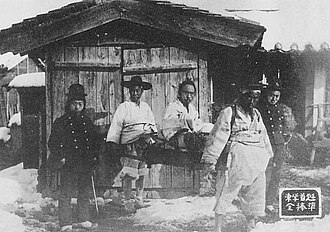
“We are not rebels. We rise to save the people and stabilize the nation.” — Declaration of the Tonghak Peasant Army, 1894
In the spring of 1894, something extraordinary stirred across the Korean peninsula. Tens of thousands of farmers, laborers, and common people took up arms against a government they believed had failed them utterly. Driven by hunger, crushed by corrupt officials, and inspired by a new religious movement called Donghak — meaning “Eastern Learning” — they launched one of the most significant uprisings in Korean history. The Tonghak Peasant Revolution, also known as the Donghak Peasant Revolution, did not ultimately topple the Joseon dynasty, but its consequences rippled far beyond Korea’s borders, triggering a war between China and Japan that would permanently reshape East Asia.
Quick Facts: The Tonghak Peasant Revolution
| Fact | Detail |
|---|---|
| Date | 1894 (January – December) |
| Location | Joseon Korea, primarily the Jeolla and Chungcheong provinces |
| Key Leader | Jeon Bongjun (전봉준), known as “Green Bean” for his small stature |
| Ideology | Donghak religious movement; anti-corruption; anti-foreign influence |
| Outcome | Suppressed by Joseon government with Japanese military assistance |
| Consequence | Triggered the First Sino-Japanese War (1894–1895) |
| Legacy | Regarded as a precursor to modern Korean democracy and nationalism |
What Was the Donghak Movement and Why Did It Inspire Revolution?
To understand the revolution, one must first understand the religious and philosophical movement that gave it its name. Donghak — “Eastern Learning” — was founded in 1860 by Choe Je-u, a scholar from the southern provinces who sought to create a distinctly Korean spiritual tradition in opposition to what he saw as the encroachment of “Western Learning,” meaning Catholicism and Western ideology. Donghak blended elements of Confucianism, Buddhism, and Taoism with a radically egalitarian vision of society. Its core teaching, innaecheon — “humans are heaven” — held that every person possessed an inherent divine dignity. This was a profoundly subversive idea in a rigidly hierarchical Joseon society.
Choe Je-u was executed by the Joseon government in 1864, accused of spreading dangerous heterodox ideas. But rather than extinguishing the movement, his martyrdom helped it spread. By the 1890s, Donghak had won hundreds of thousands of followers, particularly among the rural poor of the Jeolla and Chungcheong provinces in the south and southwest of the peninsula. These were communities ground down by decades of misrule, and Donghak offered them not just spiritual comfort but a language of resistance.
The second Donghak patriarch, Choe Si-hyeong, continued to build the movement’s organization, though he counseled a more cautious approach than the eventual revolutionaries would take. It was the third-generation leaders and local organizers — men like Jeon Bongjun — who ultimately transformed a religious movement into a revolutionary force.
The Conditions That Made Revolution Inevitable
The Joseon dynasty in the late nineteenth century was a state under siege from multiple directions simultaneously. Internally, the system of local governance had become deeply corrupt. County magistrates — known as suryeong — were infamous for extorting taxes far beyond what was legally owed, pocketing the surplus while peasants starved. The three major forms of exploitation — land taxes, military service levies, and the grain loan system — had all been systematically abused for generations. The grain loan system, originally conceived as a welfare measure to help farmers survive lean seasons, had become a mechanism for extracting illegal interest from the poor.
Externally, Korea found itself increasingly squeezed between imperial powers. Japan had forced Korea to sign the unequal Treaty of Ganghwa in 1876, opening Korean ports to Japanese trade on deeply unfavorable terms. Japanese merchants flooded the Korean market, buying up rice and driving up prices at a time when harvests were already poor. Chinese influence, exercised through the Qing dynasty’s representative Yuan Shikai, remained strong at the Joseon court. Ordinary Koreans felt the consequences of this foreign economic penetration acutely — particularly in the southern coastal and agricultural provinces where the revolution would eventually ignite.
The immediate spark came from Gobu County in North Jeolla Province. The local magistrate, Jo Byeong-gap, had constructed an illegal reservoir and then charged farmers for the water it supplied, on top of all the other taxes he was extracting. Jeon Bongjun, a local Donghak leader and the son of a minor government official, had been petitioning for relief. When petitions failed, he organized an armed occupation of the county office in January 1894. The Gobu Uprising, as this initial action is known, was suppressed, but it lit the fuse for something far larger.
“The people are the root of the nation. When the root withers, the nation falls.” — From the Tonghak Peasant Army’s proclamation at Baeksan, 1894
Three Turning Points That Defined the Revolution
1. The Battle of Hwangnyong Village and the March on Jeonju
After the initial Gobu incident, government forces moved to crush the movement, but their harsh reprisals only swelled the ranks of the rebellion. By March and April 1894, Jeon Bongjun had assembled a genuine peasant army. At the Battle of Hwangnyong Village in late March, the Tonghak forces demonstrated that they could defeat government troops in open combat. This was a watershed moment — it proved that the rebellion was not simply a local disturbance but a genuine military challenge to the state. The peasant army then marched northward, capturing the provincial capital of Jeonju in late May 1894. Jeonju was not just any city — it was the ancestral home of the Joseon royal Yi clan and a place of enormous symbolic importance. Its fall sent shockwaves through the government in Seoul.
2. The Jeonju Agreement and the Autonomous Governance Experiment
Alarmed by the fall of Jeonju and facing the possibility that the rebellion might spread to the capital, the Joseon government entered into negotiations with the peasant army. The result was the Jeonju Agreement of June 1894, in which the government made a series of concessions and the peasant army agreed to withdraw from the city. Crucially, the agreement included the establishment of the Jipgang-so — local administrative councils — in which the Tonghak forces would participate in governance across the southern provinces. For a brief but remarkable period, peasant leaders sat alongside local officials to manage taxation, adjudicate disputes, and attempt to implement their reformist agenda. This was an experiment in popular governance unprecedented in Korean history, a fleeting glimpse of what the revolutionaries had been fighting for.
3. The Second Uprising and Final Defeat at Ugeumchi
The Jeonju Agreement’s promise was quickly overtaken by geopolitical catastrophe. The Joseon government’s request for Chinese military assistance to help suppress the rebellion — made before the agreement was reached — had set in motion a chain of events that neither side could control. Japan, citing the 1885 Convention of Tientsin which gave it equal rights to intervene in Korea, dispatched its own forces. By the summer of 1894, both Chinese and Japanese armies were on Korean soil, and in July they went to war with each other. The First Sino-Japanese War had begun, and Korea was its battleground.
Jeon Bongjun, recognizing that Japanese domination now posed a far greater threat than the corrupt Joseon government, launched a second uprising in the autumn of 1894. This time the peasant army’s enemy was explicitly Japan and the Japanese-backed forces that had effectively taken control of the Korean government. The decisive engagement came at the Battle of Ugeumchi, fought near present-day Gongju in South Chungcheong Province in November 1894. The Tonghak peasant army, armed largely with traditional weapons and captured firearms, faced a combined force of Joseon government troops and Japanese soldiers equipped with modern rifles and artillery. After days of fighting, the peasant army was catastrophically defeated. Jeon Bongjun was captured in December 1894 and executed in Seoul in March 1895.
Why Did the Revolution Fail — and What Did It Achieve?
The military defeat of the Tonghak Peasant Revolution was, in retrospect, almost foreordained. The peasant army, however large and motivated, could not match the firepower of Japanese-equipped forces. The revolution also lacked unified leadership and a consistent political program beyond its opposition to corruption and foreign influence. The Joseon government’s decision to invite foreign intervention — first Chinese, then Japanese — proved fatal not only to the revolution but ultimately to Joseon itself.
Yet to measure the revolution solely by its military outcome is to miss its deeper significance. The Tonghak uprising forced a brief acknowledgment from the Joseon government that reform was necessary, contributing to the Gabo Reforms of 1894, which abolished the rigid social hierarchy of the bone rank system, ended legal discrimination based on social class, and introduced other modernizing measures. These reforms were implemented under Japanese pressure but drew on reform ideas that had been circulating in Korean intellectual circles — ideas that the Donghak movement had helped popularize.
More broadly, the revolution planted seeds that would bear fruit in later generations. The Donghak tradition of popular sovereignty, of the inherent dignity of ordinary people, fed directly into the Korean independence movement of the early twentieth century. The March First Movement of 1919, in which millions of Koreans peacefully demonstrated against Japanese colonial rule, drew on the same wellsprings of Korean popular nationalism that the Tonghak revolutionaries had first articulated. Jeon Bongjun and his comrades are today honored in South Korea as pioneers of democracy and national self-determination.
The Revolution’s Global Consequences
The Tonghak Peasant Revolution did not occur in isolation. Its immediate consequence — the arrival of Chinese and then Japanese forces on Korean soil — triggered the First Sino-Japanese War of 1894–1895, one of the most consequential conflicts in modern Asian history. Japan’s decisive victory in that war ended Chinese suzerainty over Korea, established Japan as the dominant power in Northeast Asia, and set in motion the process that would culminate in Japan’s formal annexation of Korea in 1910. In this sense, the desperate uprising of Korean peasants in the Jeolla countryside in 1894 had consequences that stretched from the halls of the Qing dynasty to the peace negotiations at Shimonoseki and ultimately to the transformation of the entire regional order in East Asia.
Remembering the Revolution Today
In contemporary South Korea, the Tonghak Peasant Revolution occupies an honored place in national memory. Jeon Bongjun is commemorated with statues and museums, most notably in the town of Jeongeup in North Jeolla Province, near the site of the original Gobu Uprising. The Donghak Peasant Revolution Memorial Hall preserves artifacts, documents, and the stories of the ordinary men and women who participated in the uprising. Every year, descendants of the revolution and scholars of Korean history gather to mark the anniversary of key battles and to reflect on what the revolution means for Korea’s understanding of itself.
The revolution also continues to be the subject of active historical scholarship and cultural production. Korean novels, films, and television dramas have repeatedly returned to the events of 1894, finding in them themes of injustice, sacrifice, and the enduring desire for a more just society that resonate with contemporary audiences. The Tonghak Peasant Revolution was defeated, but it has never truly ended — it lives on in the Korean democratic tradition.
Continue Exploring
On This Site
- The Joseon Dynasty: Five Centuries of Korean Civilization
- Korea and the First Sino-Japanese War: A Nation Caught Between Empires
- The March First Movement: Korea’s Great Declaration of Independence
- The Gabo Reforms of 1894: Revolution from Above