“Baekje at its height was a kingdom of remarkable sophistication — a maritime power that carried Korean culture across the seas to Japan and shaped the artistic traditions of an entire era.”
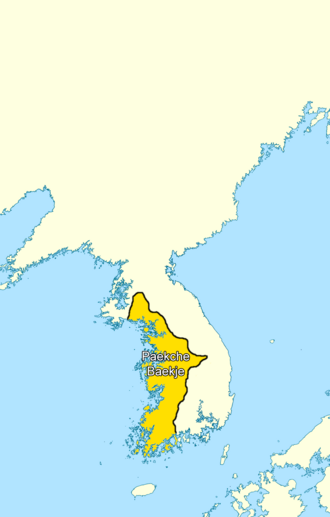
Among the three great kingdoms that once divided the Korean peninsula, Baekje (also romanized as Paekche) remains one of the most fascinating and, in many ways, the most underappreciated. Flourishing for nearly seven centuries between 18 BC and 660 AD, Baekje occupied the southwestern portion of the Korean peninsula, commanding rich agricultural plains and a strategic coastline that made it a hub of inter-regional exchange. It was a kingdom defined by elegance — in its art, its diplomacy, and its Buddhism — and its sudden, catastrophic fall to a coalition of Silla and Tang China in 660 AD has echoed through Korean historical memory ever since.
Quick Facts: The Baekje Kingdom at a Glance
| Detail | Information |
|---|---|
| Founded | 18 BC (traditional date) |
| Dissolved | 660 AD |
| Location | Southwestern Korean peninsula |
| Period | Three Kingdoms of Korea |
| Major Capitals | Wiryeseong, Ungjin (Gongju), Sabi (Buyeo) |
| Religion | Buddhism (adopted 4th century), Shamanism |
| Notable Neighbors | Goguryeo (north), Silla (east), Gaya confederacy (south) |
| Defeated By | Silla–Tang China coalition (660 AD) |
Origins and the Founding Legend
Baekje’s founding is traditionally attributed to Onjo, who according to Korean historical chronicles was a son of Jumong — the legendary founder of Goguryeo. The traditional founding date is 18 BC, though modern historians understand this timeline partly through a mythological lens. What is clear from archaeological and textual evidence is that by the early centuries of the Common Era, a powerful state had consolidated control over the Han River basin in what is today the greater Seoul region and the provinces of South Chungcheong and North Jeolla.
The kingdom’s earliest capital, Wiryeseong, was located near modern-day Seoul. This geographic positioning placed Baekje at the center of peninsular trade routes and within reach of the Yellow Sea, giving its early rulers both agricultural wealth and maritime access. These advantages would shape the kingdom’s character for centuries to come.
Why Did Baekje Become a Cultural Powerhouse?
Several interlocking factors transformed Baekje from a regional power into one of East Asia’s most culturally dynamic states. Its geographic position along the Yellow Sea meant that Baekje maintained close contacts with the various dynasties of China, absorbing administrative systems, Buddhist teachings, and artistic techniques. But Baekje did not simply copy — it refined and transmitted.
The kingdom became one of the primary conduits through which Buddhism, writing, and sophisticated artistic forms traveled from the Asian continent to the Japanese archipelago. Baekje monks, scholars, and artisans made the crossing to Japan, and their influence on early Japanese culture — particularly during the Asuka period — is well documented. Craftsmen trained in Baekje techniques helped construct early Japanese Buddhist temples, and Baekje-style gilt-bronze iconography shaped the early visual language of Japanese Buddhism.
“Baekje was not merely a recipient of continental culture — it was an active transformer and transmitter, carrying refined art and Buddhist learning to Japan at a time when those islands were being shaped into a civilization.”
Within the peninsula, Baekje art is distinguished by its lightness and grace. The famous Baekje Smile — a term applied to the gentle, serene expressions found on Baekje Buddhist sculptures — reflects a distinct aesthetic sensibility that set the kingdom’s art apart from the more powerful, austere style of Goguryeo to the north and the more provincial early works of Silla to the east. Baekje goldsmiths produced intricate ornaments, and the kingdom’s ceramics and roof tiles demonstrate a high level of technical mastery.
Three Capitals, Three Eras
The history of Baekje can be usefully divided by its three capital cities, each reflecting a different phase of the kingdom’s fortunes.
1. Wiryeseong (18 BC – 475 AD): The founding capital near modern Seoul represented Baekje at the height of its territorial ambition. During this long era, the kingdom competed fiercely with Goguryeo and extended its influence southward across the peninsula. The court culture of this period laid the foundations for Baekje’s later artistic achievements.
2. Ungjin / Gongju (475 – 538 AD): A catastrophic military defeat at the hands of Goguryeo in 475 AD forced Baekje to abandon Wiryeseong and relocate its capital southward to Ungjin, modern-day Gongju in South Chungcheong Province. This was a period of rebuilding and consolidation. The royal tomb complex at Songsan-ri in Gongju, including the celebrated Tomb of King Muryeong (discovered intact in 1971), dates to this era and has yielded extraordinary archaeological treasures.
3. Sabi / Buyeo (538 – 660 AD): Under King Seong, the capital moved again to Sabi, modern Buyeo, marking a confident period of cultural and political revival. Sabi-era Baekje produced some of the kingdom’s finest art and architecture. It was here that the kingdom would make its final stand before its fall in 660 AD.
The Tomb of King Muryeong: A Window Into Royal Baekje
Few archaeological discoveries in Korean history have been as significant as the 1971 excavation of the Tomb of King Muryeong in Gongju. Unlike most ancient Korean royal tombs, which had been looted centuries before modern archaeology could document them, Muryeong’s tomb was found intact. Inside, archaeologists recovered over 4,600 artifacts, including gold crown ornaments, bronze mirrors, and inscribed stone tablets that confirmed the identity of the occupants — King Muryeong (r. 501–523 AD) and his queen.
The tomb itself was built in a Chinese-influenced brick construction style, reflecting the close diplomatic and cultural ties Baekje maintained with the Liang dynasty of southern China during this period. The artifacts recovered are now held at the National Museum of Korea and the Gongju National Museum, and the tomb complex is part of the Baekje Historic Areas, inscribed as a UNESCO World Heritage Site in 2015.
How Did the Baekje Kingdom Fall?
The fall of Baekje in 660 AD is one of the pivotal moments in Korean history. By the mid-seventh century, the kingdom found itself squeezed between an assertive Silla to the east and a Tang Chinese empire that had ambitions of its own on the peninsula. Silla, under King Muyeol, forged a military alliance with Tang China, and in 660 AD a combined force invaded Baekje from multiple directions.
The Baekje defense collapsed with startling speed. General Gyebaek led a desperate last stand at the Battle of Hwangsanbeol with a force vastly outnumbered by the Silla army, but despite moments of fierce resistance, the battle ended in defeat. The capital Sabi fell, and King Uija — the last king of Baekje — was captured and taken to Tang China. Resistance continued for several years through a restoration movement backed by Baekje loyalists and Japanese allies, but the kingdom was never revived.
The image of court ladies leaping from the Nakhwaam Rock into the Baengma River at Buyeo rather than surrender became one of the most enduring legends of Baekje’s fall — a story of loyalty and tragedy that has been retold in Korean culture for over a millennium.
Baekje vs. Its Rivals: A Comparison
| Feature | Baekje | Goguryeo | Silla |
|---|---|---|---|
| Location | Southwest peninsula | North / Manchuria | Southeast peninsula |
| Cultural Style | Elegant, refined, maritime | Powerful, militaristic | Later absorber of all three |
| Key Export | Buddhism and art to Japan | Mural tomb paintings | Unified Korean culture |
| Fall | 660 AD (Silla–Tang alliance) | 668 AD (Silla–Tang alliance) | Survived, unified peninsula |
| UNESCO Heritage | Baekje Historic Areas (2015) | Complex of Koguryo Tombs (2004) | Gyeongju Historic Areas (2000) |
The Baekje Legacy: What Survived the Fall?
Although the kingdom was extinguished as a political entity in 660 AD, Baekje’s cultural legacy proved remarkably durable. Its artistic traditions were absorbed into the unified Silla culture that followed, and through Japan, Baekje aesthetics influenced Buddhist art across the broader East Asian world. Modern South Korea has invested heavily in recovering and celebrating this heritage.
The Baekje Historic Areas — encompassing the archaeological sites of Gongju, Buyeo, and Iksan — were inscribed as a UNESCO World Heritage Site in 2015, recognized as an outstanding example of the exchange of human values across East Asia during the first millennium AD. The site includes fortress ruins, palace sites, Buddhist temples, royal tombs, and ancient artificial hills that together paint a vivid picture of a sophisticated, cosmopolitan kingdom.
Annual cultural festivals in Buyeo and Gongju celebrate Baekje heritage, drawing visitors from across Korea and from Japan, where Baekje’s historical influence remains a point of deep cultural connection. Museums in both cities hold permanent collections of Baekje artifacts, making the region one of the richest destinations for anyone interested in ancient Korean history.
Continue Exploring
Further Reading on Baekje and the Three Kingdoms
- Baekje — Wikipedia: Comprehensive overview of the kingdom’s history, art, and fall
- Encyclopedia of Korean Culture (AKS) — Scholarly Korean historical reference
- Baekje Historic Areas — UNESCO World Heritage Site listing
- Paekche — Britannica: Historical summary of the Baekje kingdom
- National Museum of Korea — Baekje artifacts from the Tomb of King Muryeong and beyond
- Visit Korea: Gongju and Buyeo — Planning a heritage visit to Baekje’s historic capitals