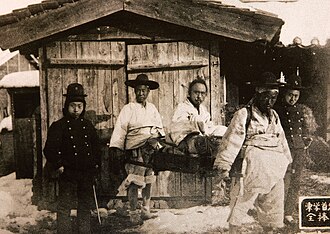
“We raise our righteous banners to save the people and stabilize the nation.” — Tonghak rebel proclamation, 1894
In the spring of 1894, tens of thousands of Korean farmers, laborers, and religious followers took up arms against a government they believed had abandoned them. The Tonghak Peasant Revolution — also written as the Donghak Peasant Revolution — was one of the most dramatic and consequential uprisings in all of Korean history. Rooted in decades of exploitation, inspired by a homegrown religious movement, and ultimately crushed by foreign military intervention, it left a legacy that shaped Korea’s path into the modern era.
To understand the revolution, we must first understand the world that produced it: a late Joseon dynasty groaning under the weight of corruption, a peasantry pushed to the edge of survival, and a peninsula caught between rival imperial powers hungry for dominance in East Asia.
Quick Facts: The Tonghak Peasant Revolution
| Detail | Information |
|---|---|
| Date | 1894 |
| Location | Korean Peninsula (Joseon dynasty) |
| Key Leader | Jeon Bong-jun |
| Religious Inspiration | Tonghak (Eastern Learning) movement |
| Government Response | Joseon court requested Chinese military aid |
| Foreign Intervention | Chinese and Japanese forces both deployed |
| Outcome | Rebellion suppressed; Gabo Reform initiated; First Sino-Japanese War triggered |
| Significance | Accelerated the collapse of the Joseon dynasty |
What Was the Tonghak Movement — and Why Did It Spread So Fast?
The Tonghak movement — literally meaning “Eastern Learning” — was founded in 1860 by Choe Je-u, a Korean scholar who sought to create a spiritual and philosophical counterweight to the Western-influenced “Western Learning” (Seohak) that had begun spreading through the peninsula. Tonghak blended elements of Confucianism, Buddhism, Taoism, and Korean shamanism into a new religious vision centered on the inherent dignity of every human being. Its core teaching, innaecheon — “humanity is heaven” — carried a profoundly egalitarian message that resonated deeply with Korea’s exploited lower classes.
Choe Je-u was executed by the Joseon government in 1864, accused of spreading dangerous ideas. But his death did not stop the movement. Under the second leader, Choe Si-hyeong, Tonghak continued to grow, especially in the southern and central provinces where rural poverty was most acute. By the early 1890s, Tonghak followers numbered in the hundreds of thousands, making it one of the most significant social movements Korea had ever produced.
The movement’s appeal was not purely spiritual. In a society where the yangban elite monopolized wealth and privilege, where local magistrates routinely extorted taxes from farmers, and where foreign merchants — particularly Japanese — increasingly dominated trade, Tonghak offered ordinary Koreans both a language of protest and a community of resistance.
The Conditions That Made Revolution Inevitable
The Joseon dynasty in the late nineteenth century was a state in profound crisis. The government at the center was dominated by competing factions, and the court had proven incapable of meaningful reform. Out in the provinces, the situation was even worse. Local officials called hyangni collected taxes with little oversight, often doubling or tripling the official rates and pocketing the difference. Farmers who could not pay lost their land, joining a growing class of displaced rural poor.
The opening of Korean ports to foreign trade following the 1876 Treaty of Ganghwa brought additional pressures. Japanese merchants flooded Korean markets with cheap goods, undercutting local producers. Korean rice was exported in large quantities, driving up domestic food prices at a time when harvests were already unreliable. Jeolla Province — the agricultural heartland of the peninsula and the epicenter of the coming rebellion — suffered acutely under these conditions.
Tensions came to a head in 1893, when Tonghak leaders organized large petitions demanding the rehabilitation of the movement’s founder and relief from official persecution. The government ignored them. By early 1894, local leaders were ready to move beyond petition and toward open revolt.
“The people are the root of the nation. If the root withers, the nation will weaken.” — Tonghak rebel manifesto, 1894
Three Turning Points That Defined the Revolution
1. The Battle of Hwangto Pass — First Victory
The rebellion began in earnest in Gobu County, Jeolla Province, in January 1894, when the local magistrate Jo Byeong-gap imposed particularly brutal forced labor requirements and illegal taxes on the already-suffering population. Under the leadership of Jeon Bong-jun, local Tonghak followers stormed the county office, distributed confiscated grain to the poor, and destroyed a reservoir that had been built through unpaid peasant labor. Government troops were sent to restore order, but the rebels routed them at the Battle of Hwangto Pass in April 1894 — the first major military victory of the revolution and a moment that electrified supporters across the country.
2. The Capture of Jeonju — A Province Falls
Emboldened by early successes, Tonghak forces swept through Jeolla Province. In May 1894, they captured Jeonju — the provincial capital and one of the most symbolically important cities in Korea, known as a sacred site because it housed the ancestral portraits of the Joseon royal family. The fall of Jeonju sent shockwaves through the court in Seoul. Facing a military crisis it could not handle alone, the Joseon government made a fateful decision: it requested military assistance from Qing dynasty China under the terms of the Convention of Tientsin.
3. Foreign Intervention and the Jeonju Treaty — A Revolution Transformed
China sent troops. Japan, citing the same convention, sent its own forces — far more than the situation required. With foreign armies now on Korean soil, the Tonghak rebels and the government reached a negotiated settlement known as the Jeonju Treaty in June 1894. The rebels agreed to disband in exchange for promised reforms. But the foreign troops did not leave. Instead, Japanese forces seized the royal palace in Seoul in July 1894, installed a pro-Japanese government, and used the crisis as the pretext for launching a war against China — the First Sino-Japanese War. The revolution had, almost by accident, triggered a conflict that would reshape the entire region.
The Second Phase: A Fight to the End
When it became clear that Japanese forces intended to remain on Korean soil and that the promised reforms were hollow, Tonghak leaders launched a second phase of the uprising in the autumn of 1894. This time, the rebellion was explicitly anti-Japanese as well as anti-corruption. Jeon Bong-jun called on followers across the country to rally against the foreign occupation.
The second phase ended in catastrophe. At the Battle of Ugeumchi in November 1894, a combined force of Japanese soldiers and pro-government Korean troops crushed the Tonghak army. Armed primarily with traditional weapons and facing modern rifles and artillery, the rebels suffered devastating losses — estimates of the dead in this single engagement range into the tens of thousands. Jeon Bong-jun was captured in December 1894 and executed in Seoul in March 1895.
The suppression that followed was brutal. Japanese and government forces swept through Jeolla and Chungcheong provinces, killing suspected rebels and their families. Historians estimate that between 300,000 and 500,000 people may have died in connection with the revolution and its aftermath, making it one of the bloodiest events in Korean history.
What Did the Tonghak Revolution Actually Achieve?
At first glance, the Tonghak Peasant Revolution appears to have been a total failure. Its armies were destroyed, its leaders executed, and its immediate goals — an end to official corruption and foreign influence — were not achieved. Korea’s situation, if anything, worsened dramatically in the years that followed, culminating in Japanese annexation in 1910.
But the revolution’s legacy is far more complex than a simple story of defeat. The Joseon government, under Japanese pressure, launched the Gabo Reforms of 1894-1895, a sweeping modernization program that abolished many of the feudal privileges the Tonghak rebels had fought against — including the formal class system. The rebels did not live to see it, but their uprising helped force changes that their petitions never could.
More enduringly, the Tonghak Peasant Revolution became a foundational moment in Korean national memory. The rebels’ insistence that ordinary people had rights, that those who governed had responsibilities to the governed, and that foreign domination was illegitimate — these ideas would echo through Korea’s later independence movement. Many historians draw a direct line from the Tonghak rebels of 1894 to the March First Movement of 1919.
| Aspect | Immediate Outcome | Long-Term Legacy |
|---|---|---|
| Political Reform | Gabo Reforms introduced under Japanese pressure | Formal abolition of the hereditary class system |
| Foreign Presence | Japanese and Chinese forces entered Korea | First Sino-Japanese War; accelerated Japanese dominance |
| Rebel Leadership | Jeon Bong-jun captured and executed (1895) | Venerated as a national hero in modern Korea |
| Peasant Conditions | Brutal suppression; mass casualties | Inspired later nationalist and labor movements |
| Tonghak Religion | Movement suppressed temporarily | Evolved into Cheondogyo religion; still practiced today |
Remembering 1894: How Korea Honors the Revolution Today
In contemporary South Korea, the Tonghak Peasant Revolution is recognized as a pivotal moment in the nation’s democratic tradition. The rebels’ courage is officially commemorated, and Jeon Bong-jun is regarded as a patriotic hero. Sites associated with the uprising — particularly in Jeolla Province — have been preserved and marked as places of historical memory. The city of Jeonju, scene of the rebels’ greatest victory, holds annual commemorations of the events of 1894.
Scholars and filmmakers have revisited the revolution repeatedly, finding in it themes that resonate across Korean history: the struggle of ordinary people against unjust authority, resistance to foreign domination, and the tension between tradition and modernity. The Tonghak movement itself did not die with the revolution — it evolved into the Cheondogyo (“Religion of the Heavenly Way”) faith, which played an important role in the March First Independence Movement of 1919 and continues to have followers in Korea today.
The Tonghak Peasant Revolution reminds us that history is rarely made only by kings and generals. In 1894, it was farmers from Jeolla Province — armed with little more than bamboo spears and a burning sense of injustice — who set in motion events that changed the course of an entire nation.
Continue Exploring
On This Site
- The Joseon Dynasty: Five Centuries of Korean Civilization
- The March First Movement: Korea’s Declaration of Independence
- Cheondogyo: From Tonghak Roots to Modern Faith