“We herewith proclaim the independence of Korea and the liberty of the Korean people.”
— Opening line of the Korean Declaration of Independence, March 1, 1919
Few moments in Korean history carry the emotional and historical weight of the independence movement that defined the early twentieth century. For thirty-five years, from 1910 to 1945, the Korean peninsula was absorbed into the Japanese Empire — its language suppressed, its land redistributed, and its people subjected to colonial administration. Yet throughout this period, Koreans at home and abroad refused to accept the erasure of their nationhood. They organized, protested, published, and in some cases took up arms. The Korean independence movement was not a single event but a sustained, multi-decade effort woven from courage, sacrifice, and an unshakeable sense of cultural identity.
Quick Facts: The Korean Independence Movement
| Period | 1910–1945 (Japanese colonial rule) |
| Key Date | March 1, 1919 — Declaration of Independence (Samil Movement) |
| Provisional Government Founded | April 1919, Shanghai, China |
| Key Figures | Yu Gwan-sun, Ahn Chang-ho, Kim Gu, Syngman Rhee |
| Liberation Date | August 15, 1945 |
| Modern Commemoration | March 1st is a national holiday in South Korea (Samiljeol) |
How Did Japan Come to Rule Korea?
To understand the independence movement, one must first understand the circumstances of Korea’s annexation. The Joseon Dynasty, which had ruled the peninsula for over five centuries, found itself increasingly vulnerable in the late nineteenth century as imperial powers competed for influence in East Asia. Japan, freshly modernized through the Meiji Restoration, emerged as the dominant regional power after victories against China in 1895 and Russia in 1905. The Eulsa Treaty of 1905 stripped Korea of its diplomatic sovereignty, and on August 22, 1910, the Japan-Korea Annexation Treaty formally dissolved Korean statehood.
What followed was a colonial administration that left few aspects of Korean life untouched. Japanese authorities took control of land registries, displacing many Korean farmers. The Korean language was gradually marginalized in schools and government. Korean cultural and social organizations were monitored or shut down. A government-general headquartered in Seoul oversaw a system designed to integrate Korea into the Japanese imperial economy — extracting rice, minerals, and labor while suppressing any organized political resistance.
Yet suppression alone cannot extinguish national consciousness, and Korea’s sense of itself as a distinct civilization with its own language, history, and traditions proved remarkably resilient.
The March First Movement: Korea’s Defining Moment of Resistance
The single most dramatic episode of the independence movement came on March 1, 1919. In the weeks leading up to that day, a network of Korean religious leaders, intellectuals, and students had secretly coordinated a nationwide demonstration. Thirty-three individuals — drawn from Christian and Cheondogyo communities — signed a Declaration of Independence modeled partly on Wilsonian ideals of national self-determination that were circulating at the Paris Peace Conference.
On the appointed day, the declaration was read aloud in Tapgol Park in Seoul, and simultaneously across the country, Koreans took to the streets. The demonstrations spread to hundreds of cities, towns, and villages over the following weeks. Participants waved Korean flags and chanted for independence. The movement was explicitly nonviolent in its original conception — the declaration itself urged peaceful protest.
The Japanese colonial authorities responded with overwhelming force. Soldiers and police fired on crowds, arrested thousands, and carried out reprisals in villages suspected of harboring demonstrators. Estimates of participants run into the hundreds of thousands. Thousands were killed or wounded, and approximately 46,000 people were arrested. The village of Jeamni became a symbol of colonial brutality when Japanese soldiers locked residents inside a church and set it on fire.
Among those arrested was Yu Gwan-sun, a nineteen-year-old student who had helped organize protests in her home region of Cheonan after schools were closed by colonial authorities. She was tortured in prison and died in September 1920, becoming one of the most enduring symbols of Korean resistance. Her story has been taught to generations of Korean schoolchildren and remains central to national memory of the independence movement.
“Even if my fingernails are torn out, my nose and ears are ripped apart, and my legs and arms are crushed, this physical pain does not compare to the pain of losing my nation.”
— Yu Gwan-sun, as recounted in historical sources
3 Pillars of the Independence Movement Beyond the Streets
1. The Provisional Government in Exile
In the immediate aftermath of the March First Movement, Korean independence leaders recognized that street protest alone could not secure liberation. In April 1919, Korean exile communities established the Provisional Government of the Republic of Korea in Shanghai, China. This government-in-exile attempted to function as a legitimate state authority, maintaining diplomatic contacts, issuing publications, and coordinating resistance activities. Key figures included Syngman Rhee, who served as its first president, and Kim Gu, who later became one of its most active leaders. The provisional government persisted through extraordinary hardship, relocating multiple times as Japanese pressure on Chinese authorities intensified.
2. Armed Resistance and the Korean Liberation Army
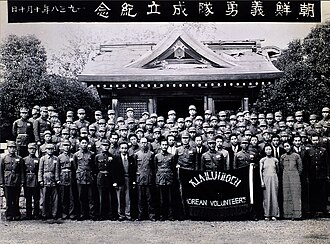
While many independence advocates pursued diplomatic and nonviolent means, others concluded that armed struggle was necessary. Korean guerrilla fighters operated in Manchuria and along the Chinese border throughout the colonial period. In 1940, the provisional government formally established the Korean Liberation Army in Chongqing, China, where it aligned with Allied forces fighting Japan during World War II. The Liberation Army trained soldiers and planned operations, though Japan’s sudden surrender in August 1945 meant its planned landing on the Korean peninsula never took place.
3. The Role of the Korean Diaspora
Korean communities abroad were indispensable to the independence movement. In the United States, Ahn Chang-ho founded the흥사단 (흥사단, Heungsadan or Korean National Association) and worked tirelessly to raise funds and awareness. Korean students in Japan, Hawaii, and elsewhere formed organizations, circulated newspapers, and lobbied foreign governments. The independence movement was, in this sense, a genuinely transnational effort — sustained by Koreans wherever they had settled, all of whom carried the weight of a homeland under occupation.
Cultural Resistance: Keeping Korean Identity Alive
Not all resistance took the form of protests or armed struggle. Throughout the colonial period, Korean scholars, writers, and artists worked to preserve and celebrate Korean language and culture in the face of Japanization policies. Linguists compiled dictionaries and grammars of the Korean language. Writers published in Korean despite growing restrictions. Historians documented Korean history and traditions, asserting that Korea’s civilization had its own integrity independent of Japan.
This cultural resistance intensified as Japan’s wartime policies became more aggressive. From the late 1930s onward, Koreans were compelled to adopt Japanese names, worship at Shinto shrines, and speak Japanese in public. The determination to preserve Hangul, Korean literature, and historical memory became itself a form of political defiance.
Comparison: Strategies of the Independence Movement
| Strategy | Key Examples | Strengths | Limitations |
|---|---|---|---|
| Nonviolent Mass Protest | March First Movement, 1919 | Broad public participation; international attention | Violently suppressed; no immediate political change |
| Government in Exile | Provisional Government, Shanghai | Maintained diplomatic legitimacy; coordinated resistance | Limited resources; reliant on foreign hosts |
| Armed Resistance | Korean Liberation Army; Manchurian guerrillas | Direct military challenge to occupation | Outgunned; geographically scattered |
| Cultural Preservation | Korean language scholarship; literature | Maintained national identity across generations | Increasingly restricted under late colonial rule |
| Diaspora Advocacy | Korean National Association; lobbying in USA | Raised international awareness and funds | Limited influence on great power decisions |
Why Did Liberation Finally Come in 1945?
Korea’s liberation on August 15, 1945, came not as a direct result of any single independence movement action, but as a consequence of Japan’s defeat in World War II. When the United States dropped atomic bombs on Hiroshima and Nagasaki, and the Soviet Union declared war on Japan, the imperial government surrendered. Korea was liberated almost overnight — though the manner of that liberation, with Soviet forces entering from the north and American forces from the south, immediately set the stage for the division of the peninsula at the 38th parallel.
This bittersweet liberation — freedom achieved, but national unity denied — meant that the independence movement’s ultimate dream of a unified, sovereign Korean state remained unfulfilled. The provisional government’s leaders, including Kim Gu, returned to Korea only to find themselves sidelined as the geopolitics of the Cold War reshaped their homeland. Kim Gu lobbied passionately against the division of Korea until his assassination in 1949.
August 15 is commemorated in South Korea as Gwangbokjeol — the Day of the Restoration of Light — a national holiday marking liberation. March 1st, Samiljeol, honors the 1919 uprising. Together, these two dates anchor South Korea’s official memory of the colonial period and the struggle that defined it.
The Legacy of the Independence Movement in Modern Korea
The independence movement’s legacy runs deep in contemporary Korean society. The figures who risked and gave their lives — Yu Gwan-sun, Kim Gu, Ahn Chang-ho, and thousands of unnamed protesters — are honored in museums, school curricula, and national ceremonies. The provisional government’s legacy is claimed by South Korea’s constitution, which traces the republic’s legitimacy back to the 1919 government in Shanghai.
For many Koreans, the independence movement also represents a foundational argument: that Korean national identity is not simply an administrative or ethnic category, but something worth fighting and dying for. The movement’s ideals of sovereignty, dignity, and self-determination continue to resonate in Korean political culture, shaping how Koreans understand their relationship with history, with Japan, and with the wider world.
Relations between Korea and Japan remain shaped by the unresolved histories of the colonial period. Questions about compensation for forced laborers, the comfort women issue, and historical textbooks periodically surface as diplomatic flashpoints — reminders that the independence movement is not merely a chapter of the past, but a living dimension of the present.
Continue Exploring
On Coreaverse:
- The Joseon Dynasty: Korea’s Last Royal Chapter
- Yu Gwan-sun: The Student Who Became a National Symbol
- Korean Language and Identity: The Story of Hangul Under Threat
External Resources: