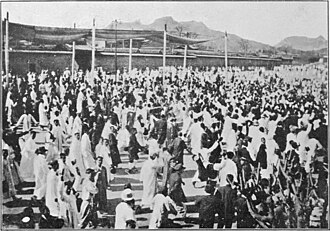
“We herewith proclaim the independence of Korea and the liberty of the Korean people.” — Opening words of the Korean Declaration of Independence, March 1, 1919
On the first day of March 1919, something extraordinary happened across the Korean peninsula. In cities, towns, and rural villages alike, ordinary men and women stepped into the streets and declared, with remarkable courage, that they were a free people. They carried no weapons. Many carried only handwritten copies of a declaration. What followed was one of the largest and most sustained nonviolent independence movements the modern world had seen — and it would echo through Korean history for generations to come.
The March First Movement, known in Korean as Samiljeol (삼일절) or the Sam-il Independence Movement, remains one of the most defining moments in Korean national identity. More than a century later, March 1st is a national holiday in South Korea, a day of solemn remembrance and patriotic pride. To understand why, we must travel back to the early twentieth century, to a peninsula under the boot of imperial Japan.
Quick Facts: The March First Movement at a Glance
| Fact | Detail |
|---|---|
| Date | March 1, 1919 — ongoing through spring and summer 1919 |
| Location | Across the Korean peninsula and Korean diaspora communities |
| Also Known As | Sam-il Movement, Samiljeol, March 1st Movement |
| Context | Japanese colonial rule of Korea (1910–1945) |
| Key Document | Korean Declaration of Independence (독립선언서) |
| Signatories | 33 representatives, known as the 33 National Representatives |
| Nature of Protest | Nonviolent public demonstrations, marches, and readings of the Declaration |
| Legacy | March 1st is a national public holiday in South Korea |
The World That Made March First Necessary
To understand the March First Movement, we need to understand what life under Japanese colonial rule meant for Koreans. Japan had formally annexed Korea in 1910, ending the five-century Joseon Dynasty and absorbing the short-lived Korean Empire. From that point forward, Korea was administered as a colony of Japan — its people stripped of political rights, its press censored, its land ownership restructured to benefit Japanese settlers, and its cultural identity systematically suppressed.
Korean language and culture were marginalized in official contexts. Korean businesses faced structural disadvantages. Korean farmers found themselves displaced from land their families had worked for generations. Military police enforced colonial law with a heavy hand, and public assembly was tightly restricted. For nearly a decade, organized resistance had been difficult and dangerous.
Then came the winds of change from abroad. In January 1919, United States President Woodrow Wilson had delivered his famous Fourteen Points speech, championing the principle of national self-determination — the idea that peoples had the right to determine their own political futures. The speech resonated deeply with colonized peoples across Asia and Africa. Korean intellectuals and independence activists saw in Wilson’s words a potential international argument for their cause.
Another catalyst arrived closer to home. On January 21, 1919, the former Korean Emperor Gojong died under circumstances that many Koreans found suspicious. Rumors circulated that he had been poisoned by Japanese authorities. Whether or not this was true, Gojong’s death ignited grief and fury across the population. His funeral was scheduled for March 3 — and Korean activists saw in the massive gathering of mourners an extraordinary opportunity.
Why Did the Movement Begin on March 1st?
The timing of March 1st was deliberate and carefully planned. Organizers wanted to launch the public declaration of independence two days before Emperor Gojong’s state funeral, when enormous crowds would already be assembling in Seoul and across the country. The compression of national mourning and political protest was intentional — the grief of a people losing their last emperor merging with the defiance of a people demanding their nation back.
Behind the scenes, a coalition of Korean religious and civic leaders had been working for weeks. The organizing group drew heavily from two communities: Korean Christians, who had developed institutional networks partly protected by their connections to Western missionaries, and Korean Cheondogyo practitioners, followers of an indigenous Korean religious movement with deep nationalist roots. Together, these groups identified 33 individuals to sign the Declaration of Independence as national representatives.
The Declaration itself — written primarily by the independence activist Choe Nam-seon and refined by others — was a remarkable document. It proclaimed Korea’s independence not with bitterness or calls for violence, but with a philosophy of justice and peaceful assertion. It was printed in advance and distributed secretly across the peninsula, ready to be read aloud in public on March 1st.
“Our movement is animated by the spirit of justice and humanity… We do not intend to accuse Japan of breach of faith… We wish simply to establish our own destiny.” — Korean Declaration of Independence, 1919
On the morning of March 1, 1919, the 33 signatories gathered at Taehwagwan restaurant in Seoul. They read the Declaration, notified the Japanese authorities themselves — in keeping with their commitment to nonviolent action — and were promptly arrested. Simultaneously, across Seoul’s Tapgol Park (also known as Pagoda Park) and in public squares and market towns across the entire peninsula, Korean men and women gathered to hear the Declaration read aloud and to shout “Manse!” — “Long live!” — for Korean independence.
The Spread and Scale of the Uprising
What began in Seoul rapidly spread across the peninsula with a speed that stunned colonial authorities. Within days, demonstrations had erupted in virtually every province of Korea. Students, farmers, merchants, teachers, religious figures — people from all walks of life and social backgrounds participated. Korean communities in Manchuria, Siberia, and even the United States organized their own solidarity demonstrations.
The movement’s scope was staggering. By the time it subsided later in the year, historians estimate that somewhere between one and two million Koreans — out of a total population of roughly seventeen million — had participated in demonstrations in some form. The protests were spread across hundreds of locations and sustained over many months.
The Japanese colonial government’s response was swift and brutal. Military and police forces were deployed throughout the country. Demonstrators were beaten, arrested, and killed. Villages suspected of harboring independence activists faced collective punishment. The Jeam-ri massacre of April 1919, in which Japanese soldiers locked Korean villagers inside a church and set it on fire, became a symbol of colonial atrocity — killing men, women, and children who had gathered peacefully.
Thousands were killed during the suppression of the movement. Tens of thousands were arrested and imprisoned, many subjected to torture. Activist Yu Gwan-sun, a teenage student who organized demonstrations in her hometown of Cheonan after returning from Seoul, was arrested, tortured in prison, and died in captivity at the age of seventeen. She is today remembered as one of Korea’s most revered independence martyrs.
3 Lasting Impacts of the March First Movement
1. The Founding of the Korean Provisional Government
The March First Movement demonstrated that Korean national identity had survived a decade of colonial suppression — and that Koreans demanded self-governance. One of its most direct political consequences was the establishment of the Korean Provisional Government in Shanghai, China, in April 1919. This government-in-exile would operate throughout the remainder of the colonial period, coordinating independence activities and maintaining the institutional claim of Korean statehood. The Provisional Government is recognized by the Republic of Korea as a legitimate predecessor government, and its establishment is commemorated each year alongside March 1st.
2. A Shift in Japanese Colonial Policy
The scale and intensity of the March First Movement shocked the Japanese colonial administration. In its aftermath, Japan replaced its military governor-general with a civilian administrator and announced a shift toward what it called a “cultural policy” — ostensibly allowing greater Korean cultural expression, including Korean-language newspapers and some relaxation of restrictions on public assembly. In practice, surveillance and control remained pervasive, but the policy shift acknowledged that the previous approach of pure military repression was unsustainable. The movement had forced the colonizer to adapt, if not retreat.
3. Inspiration for Asian Independence Movements
The March First Movement reverberated far beyond the Korean peninsula. News of the uprising — and of Japan’s brutal suppression — spread across Asia. In China, the movement is credited as a direct inspiration for the May Fourth Movement of 1919, a massive student-led protest against imperialism and for Chinese modernization that proved pivotal in twentieth-century Chinese history. Across colonized Asia, the Korean example demonstrated that colonized peoples could organize at national scale and sustain nonviolent resistance even under violent suppression.
Remembering March First Today
The March First Movement holds a place in Korean national memory comparable to what independence days hold in other nations — but tinged with both pride and grief. South Korea officially designates March 1st as Independence Movement Day (Samiljeol), one of the country’s most important national holidays. Ceremonies are held at Tapgol Park in Seoul, where the original Declaration was read aloud, and across the country. The Declaration of Independence is re-read publicly. Independence fighters are honored.
The figures of the movement — the 33 signatories, the martyred Yu Gwan-sun, the countless unnamed farmers and students and market women who risked their lives to shout Manse — occupy a permanent place in Korean cultural memory, taught to every schoolchild and celebrated in film, literature, and art.
For those interested in physically walking the ground where history happened, Tapgol Park in central Seoul — the site where the Declaration was first read publicly on March 1, 1919 — remains open and contains a pavilion and relief sculptures commemorating the movement. It is a place where the past feels remarkably close.
Continue Exploring
Deepen your understanding of the March First Movement and the broader story of Korean independence with these resources:
- March First Movement — Wikipedia: Comprehensive overview with extensive sourcing.
- Encyclopedia of Korean Culture (encykorea.aks.ac.kr): Authoritative Korean academic reference on the independence movement.
- March First Movement — Britannica: Clear summary for general readers.
- Asia Society: Broader context of Korean history and Asian independence movements.
- Visit Korea — Tapgol Park: Plan a visit to the historic heart of the March First Movement in Seoul.
Korea Through Time also recommends exploring our articles on the Joseon Dynasty and the Korean Provisional Government to understand the full arc of Korean independence history.