“We hereby proclaim the independence of Korea and the liberty of the Korean people.”
Few chapters in Korean history carry the emotional and national weight of the independence movement. Spanning decades of resistance, sacrifice, and determination, the Korean struggle against Japanese colonial rule shaped the modern Korean identity in ways that continue to resonate today. From street demonstrations to armed uprisings, from exile governments to underground networks, Koreans at home and abroad refused to accept the erasure of their nation.
Quick Facts: The Korean Independence Movement
| Period | 1895–1945 |
| Key Trigger | Japan’s formal annexation of Korea in 1910 |
| Major Event | March 1st Movement (Sam-il Undong), 1919 |
| Provisional Government | Established in Shanghai, April 1919 |
| Key Figures | Yu Gwan-sun, An Chang-ho, Kim Gu, Syngman Rhee |
| Outcome | Liberation on August 15, 1945 |
| National Memorial Day | March 1st (Samiljeol), a public holiday in South Korea |
How Did Japan Come to Occupy Korea?
To understand the independence movement, one must first understand the circumstances that made it necessary. Korea’s Joseon dynasty had governed the peninsula for over five centuries, but by the late nineteenth century, the kingdom found itself caught between competing imperial powers. Japan’s military victory in the First Sino-Japanese War (1894–1895) and then in the Russo-Japanese War (1904–1905) left Korea increasingly vulnerable to Japanese influence.
In 1905, Japan imposed the Eulsa Treaty — often called the Protectorate Treaty — effectively stripping Korea of its diplomatic sovereignty and placing it under Japanese oversight. Korean Emperor Gojong reportedly refused to sign the document, yet Japanese officials proceeded regardless. Five years later, in August 1910, Japan formally annexed Korea through the Japan-Korea Annexation Treaty, dissolving the Joseon dynasty entirely and beginning a period of direct colonial rule that would last thirty-five years.
Under colonial administration, Koreans faced systematic suppression. The Japanese Government-General banned Korean-language newspapers, restricted political assembly, and imposed a land survey system that dispossessed many Korean farmers of their land. Korean culture, language, and names were progressively targeted, especially in later decades when assimilation policies intensified. It was against this backdrop that organised resistance began to build.
The March 1st Movement: A Nation Speaks
The single most iconic moment of the Korean independence movement came on March 1, 1919. Drawing inspiration partly from U.S. President Woodrow Wilson’s principle of national self-determination — articulated in the aftermath of World War One — Korean activists, intellectuals, and religious leaders coordinated a nationwide declaration of independence.
On that day, thirty-three representatives gathered in Seoul and publicly read aloud the Korean Declaration of Independence, a document drafted with both moral authority and restrained dignity. Simultaneously, crowds gathered across cities, towns, and villages throughout the peninsula. Ordinary men and women — students, farmers, merchants, and clergy — took to the streets holding Korean flags and calling for independence. The demonstrations spread rapidly, eventually involving an estimated one to two million participants across the country.
The Japanese colonial government responded with severe force. Soldiers and police dispersed crowds, killing hundreds and arresting thousands. One figure whose story became emblematic of the movement’s sacrifice was Yu Gwan-sun, a teenage student activist who organised demonstrations in her home region of Cheonan after her school was closed by colonial authorities. Arrested and tortured in Seodaemun Prison, she died in captivity in 1920 at the age of eighteen. Her courage has made her one of the most revered figures in Korean national memory.
“The March 1st Movement was not simply a political protest — it was a declaration that Korean identity itself would not be surrendered.”
Though the March 1st Movement did not immediately achieve independence, its impact was profound. It galvanised Korean resistance both at home and in the diaspora, and it forced the Japanese colonial government to temporarily soften some of its harshest policies in what was called the “Cultural Policy” period — though repression never truly ended.
3 Pillars of the Independence Movement
1. The Provisional Government in Shanghai
Within weeks of the March 1st Movement, Korean independence leaders established the Korean Provisional Government (KPG) in Shanghai, China, in April 1919. Operating in exile, the KPG served as a symbolic and administrative centre for the independence cause. It issued passports, collected funds, published newspapers, and maintained diplomatic contacts with foreign powers. Leaders such as Syngman Rhee, who served as president of the KPG, and later Kim Gu, who became its most steadfast chairman, kept the institutional flame of Korean sovereignty alive even when direct resistance on the peninsula was impossible.
The KPG eventually relocated several times as Japanese forces expanded through China during the Second Sino-Japanese War, but it endured until liberation in 1945. Its very existence was an assertion: Korea was a nation, not a Japanese province.
2. Armed Resistance and the Independence Armies
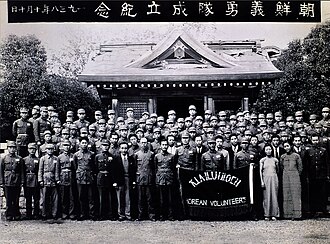
Not all resistance was peaceful. Korean independence armies operated primarily from Manchuria and parts of China, conducting guerrilla operations against Japanese military and police targets. Units such as the Korean Independence Army fought in cooperation with Chinese nationalist and later Chinese communist forces. The Battle of Qingshanli in 1920, in which Korean independence fighters achieved a significant victory against Japanese troops in Manchuria, became a celebrated episode in independence movement history.
Individual acts of direct resistance also captured public imagination. In 1932, independence activist Yun Bong-gil detonated a bomb at a Japanese military celebration in Shanghai’s Hongkou Park, killing a Japanese general and wounding several senior officials. The attack drew international attention and strengthened Chinese Nationalist support for the Korean independence cause. Yun was executed by the Japanese military the same year.
3. Cultural and Intellectual Resistance
Alongside armed struggle and political organisation, Koreans resisted colonialism through culture, language, and scholarship. The preservation and promotion of the Korean language became an act of patriotism. The Joseon Language Society worked to standardise and document the Korean language during the colonial period, an effort the Japanese authorities eventually suppressed by arresting its members in 1942. Korean historians, writers, and artists found ways — sometimes covert, sometimes openly symbolic — to maintain a sense of distinct Korean identity against policies designed to assimilate Koreans into Japanese imperial culture.
The Diaspora and International Advocacy
The independence movement was not confined to the Korean peninsula or even to Asia. Korean communities in the United States, notably in Hawaii and California, organised societies to raise funds and advocate diplomatically for Korean independence. Syngman Rhee, based largely in the United States, lobbied American officials and wrote extensively in English to build international awareness. An Chang-ho, another towering figure of the movement, founded the흥사단 (Heungsadan, or Young Korean Academy) in San Francisco in 1913, an organisation dedicated to building Korean civic character and national capacity for self-governance.
These overseas efforts rarely succeeded in winning concrete diplomatic support — the major Western powers largely deferred to Japan — but they maintained international visibility for the Korean cause and kept a transnational network of resistance active across decades.
Comparison: Methods of Resistance
| Method | Examples | Geographic Base | Primary Goal |
|---|---|---|---|
| Nonviolent protest | March 1st Movement, student strikes | Korean peninsula | Demonstrate national will, gain international sympathy |
| Armed guerrilla resistance | Independence armies in Manchuria | Manchuria, northern China | Military pressure on Japanese forces |
| Exile government | Korean Provisional Government | Shanghai, Chongqing | Maintain sovereignty, international legitimacy |
| Diplomatic advocacy | Lobbying in USA, Paris Peace Conference petitions | USA, Europe | Win foreign support for independence |
| Cultural preservation | Language societies, underground publishing | Korea, diaspora | Resist cultural erasure, sustain national identity |
Liberation and the Movement’s Legacy
Japan’s surrender on August 15, 1945, ending World War Two, brought the liberation Koreans had struggled toward for decades. The date — known in Korean as Gwangbokjeol, meaning “restoration of light” — remains one of the most significant national holidays in both North and South Korea.
The independence movement’s legacy is complex and deeply felt. Its heroes are commemorated in school curricula, street names, monuments, and museums across South Korea. The Independence Hall of Korea in Cheonan — built near the hometown of Yu Gwan-sun — stands as the country’s most comprehensive memorial to the movement, drawing millions of visitors. March 1st is observed as a national public holiday, Samiljeol, every year.
Yet the movement’s history also carries unresolved tensions. The division of the Korean peninsula after 1945 meant that independence did not bring the unified, sovereign Korean state that activists had envisioned. North and South Korea each claim the independence movement’s legacy differently, shaping their respective national narratives around it. Questions of collaboration under Japanese rule, and of which leaders and factions deserve credit, have remained subjects of ongoing historical debate within Korean society.
What is beyond debate is the scale of sacrifice involved. Hundreds of thousands of Koreans were imprisoned, killed, or exiled over the course of the colonial period for the act of asserting their national identity. The independence movement was not the work of a few heroic individuals — it was a sustained, multigenerational effort involving people from every walk of Korean life.