“Of the Three Kingdoms, Baekje was perhaps the most cosmopolitan — a maritime kingdom whose artists, monks, and scholars carried Korean civilization across the seas to Japan and beyond.”
When most people think of ancient Korea, they think of the dramatic unification wars, of Silla’s golden crowns, or of the mighty northern kingdom of Goguryeo. Yet for nearly seven centuries, from 18 BC to 660 AD, the kingdom of Baekje — also romanized as Paekche — stood as one of the most culturally sophisticated and internationally connected states in East Asia. Its artists shaped Japanese aesthetics, its Buddhist monks carried the dharma across the Korea Strait, and its craftsmen produced metalwork and ceramics of breathtaking refinement. That Baekje ultimately fell to a Silla-Tang alliance in 660 AD has meant it is often overshadowed in popular memory. But the evidence of its greatness remains — in museum collections, in ancient Japanese chronicles, and buried in the soil of modern South Chungcheong Province.
Quick Facts: The Kingdom of Baekje at a Glance
| Fact | Detail |
|---|---|
| Founded | 18 BC (traditional date) |
| Dissolved | 660 AD |
| Duration | Approximately 678 years |
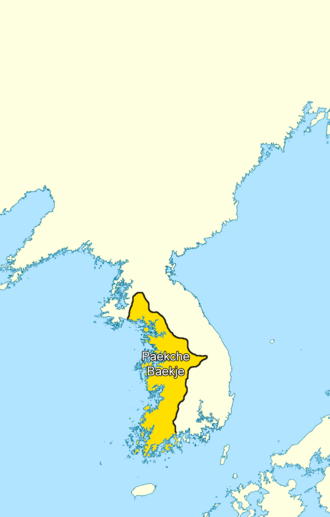
| Location | Western and southwestern Korean peninsula |
| Capitals | Wiryeseong, Ungjin (Gongju), Sabi (Buyeo) |
| Religion | Buddhism (adopted 4th century), Shamanism |
| Key Neighbors | Goguryeo (north), Silla (east), Japan (overseas) |
| Founding Legend | Onjo, son of Goguryeo’s founder Jumong |
| Ended by | Combined Silla-Tang Chinese forces |
Origins: How Was Baekje Founded?
According to traditional Korean accounts, Baekje was founded by Onjo, a prince said to be descended from Jumong, the legendary founder of Goguryeo. Onjo and his followers moved southward from the north and established a new kingdom in the Han River basin, in the region of present-day Seoul and Gyeonggi Province. This founding is traditionally dated to 18 BC, though modern historians debate the precise chronology of the early Three Kingdoms period.
The kingdom’s early territory centered on the fertile lowlands of the western Korean peninsula — a geography that would prove both a blessing and a vulnerability. The wide plains and river valleys supported dense agricultural settlement and trade, while the long western coastline opened Baekje to maritime contact with China and Japan. From the beginning, Baekje was a kingdom defined by its openness to the wider world.
The ruling house claimed descent from the Buyeo people of Manchuria, a connection that linked Baekje symbolically and culturally to the broader northeast Asian world. This Buyeo heritage was taken seriously enough that when the kingdom moved its capital to the south in 538 AD, the new capital was named Sabi — near present-day Buyeo in South Chungcheong Province — deliberately invoking that ancestral homeland.
3 Reasons Baekje Was the Cultural Powerhouse of Ancient Korea
1. The Kingdom That Brought Buddhism to Japan
One of the most consequential acts in East Asian religious history occurred in the mid-sixth century when Baekje’s King Seong sent an official mission to the Yamato court in Japan, bearing Buddhist scriptures, images, and monks. This transmission — traditionally dated to 552 AD or by some accounts 538 AD — is recorded in Japanese chronicles including the Nihon Shoki and is widely regarded as the formal introduction of Buddhism to Japan. The implications were enormous: Buddhism went on to fundamentally reshape Japanese art, architecture, philosophy, and statecraft.
Baekje did not stop at a single diplomatic gesture. Over the following decades, Baekje monks, architects, and craftsmen traveled to Japan and participated directly in building some of Japan’s earliest Buddhist temples. The architectural style of the great Asuka-period temples of Japan bears unmistakable traces of Baekje workmanship. For the Japanese, the connection was not abstract — Baekje was, in very practical terms, the teacher kingdom from which civilization flowed.
2. Masters of Art and Metalwork
Baekje artisans developed a distinctive aesthetic that combined elegance and restraint with technical mastery. The most celebrated surviving example is the Gilt-Bronze Incense Burner of Baekje (Baekje Geumdongyongbongnohyang, National Treasure No. 287), unearthed near Buyeo and now housed in the National Museum of Korea. This extraordinary object, standing over 60 centimeters tall, depicts a mountain landscape populated with animals, figures, and a phoenix, all rendered with astonishing precision in gilded bronze. It stands as one of the supreme masterpieces of Korean art from any era.
Beyond this single object, Baekje is known for the delicacy of its gold jewelry, the sophistication of its ceramic roof tiles, and the graceful simplicity of its Buddhist sculptures. The famous “Baekje smile” — a serene, slightly upturned expression found on Baekje Buddhist statues — has been identified as a distinctive artistic signature, one that influenced sculpture not only in Korea but in Japan as well.
3. A Maritime Trading Kingdom
Baekje’s long western coastline gave it consistent access to the Yellow Sea trade routes that connected the Korean peninsula to China’s successive dynasties. Baekje maintained active diplomatic and commercial relations with the Eastern Jin, Liu Song, Southern Qi, Liang, and Chen dynasties of southern China, adopting Chinese administrative models, writing, and elements of Confucian governance while developing its own cultural identity. This engagement with China was not passive imitation but a selective, sophisticated exchange in which Baekje absorbed what was useful and transformed it into something distinctly its own.
The kingdom also served as a crucial intermediary, passing Chinese cultural influences onward to Japan. In this role, Baekje functioned as the great cultural bridge of Northeast Asia — a position that gave its rulers considerable diplomatic leverage and prestige.
“Baekje functioned as the great cultural bridge of Northeast Asia — passing the gifts of Chinese civilization onward to Japan while forging a distinctive Korean artistic identity of its own.”
The Three Capitals: Tracing Baekje’s Shifting Heart
The history of Baekje’s capitals reflects the kingdom’s turbulent political fortunes. The original capital, Wiryeseong, was located in the Han River basin in the vicinity of present-day Seoul. This northern location made Baekje powerful in its early centuries but also placed it in direct competition — and eventual conflict — with the expanding power of Goguryeo to the north.
In 475 AD, disaster struck. The Goguryeo king Jangsu launched a devastating invasion, capturing and destroying Wiryeseong and killing the Baekje king Gaero. The kingdom was forced to abandon its original heartland and retreat southward, establishing a new capital at Ungjin — modern-day Gongju in South Chungcheong Province. The royal tombs of this period, the Tombs of the Muryeong Royal Family, survive today as extraordinary archaeological treasures. The tomb of King Muryeong (r. 501–523 AD), discovered intact in 1971, yielded a wealth of gold, bronze, and ceramic objects that transformed scholarly understanding of the Baekje period.
In 538 AD, King Seong moved the capital again, this time to Sabi near modern Buyeo. This final capital, more spaciously planned and more defensible, became the setting for Baekje’s greatest cultural achievements — and ultimately for its final defeat. It was at Sabi that the Silla-Tang forces struck in 660 AD, bringing the kingdom to its end.
Baekje vs. Its Rivals: A Comparison
| Kingdom | Location | Cultural Strength | Military Strength | End Date |
|---|---|---|---|---|
| Baekje | Western/SW peninsula | Art, Buddhism, maritime trade | Moderate; naval power | 660 AD |
| Goguryeo | Northern peninsula & Manchuria | Tomb murals, military arts | Very strong; repeatedly repelled China | 668 AD |
| Silla | Southeastern peninsula | Gold jewelry, Buddhism | Strong; allied with Tang China | Unified Korea in 668 AD |
The Fall of Baekje: Why Did the Kingdom Collapse in 660 AD?
By the seventh century, the Three Kingdoms period had entered its final, most violent phase. Silla, long the weakest of the three kingdoms, had made the strategically brilliant decision to seek an alliance with Tang China — then the most powerful empire in the world. The Tang court, which had its own reasons for wanting to extend its influence over the Korean peninsula, agreed. The result was a combined military operation of formidable scale.
In 660 AD, Tang naval forces landed on the western coast of the peninsula while Silla armies advanced overland from the east. Baekje, caught between two powerful forces and weakened by internal political divisions, could not withstand the assault. The capital Sabi fell, King Uija was captured, and the kingdom came to an abrupt end. A brief resistance movement — the so-called Baekje Restoration Movement — continued for a few years, aided by Japanese forces who crossed the Korea Strait in support. But the Battle of Baekgang in 663 AD ended these efforts definitively, with the combined Silla-Tang fleet defeating the Japanese-Baekje fleet in one of the earliest recorded naval battles in East Asian history.
With Baekje’s fall, tens of thousands of Baekje refugees fled to Japan, where they were absorbed into Japanese society and continued to transmit Baekje cultural traditions. Their influence on early Japanese culture — in crafts, Buddhism, and administration — was profound and lasting.
Baekje’s Legacy: Why Does This Ancient Kingdom Still Matter?
The legacy of Baekje is woven into the cultural fabric of both Korea and Japan in ways that are still being discovered. In South Korea, the Baekje Historic Areas — encompassing the ancient capitals of Gongju and Buyeo and the Iksan region — were designated a UNESCO World Heritage Site in 2015, in recognition of the kingdom’s outstanding universal cultural value. The eight sites included in this designation represent the peak of Baekje’s architectural, artistic, and urban achievement.
In Japan, the debt to Baekje is acknowledged in historical scholarship and in the survival of temples, sculptures, and artistic traditions that trace their origins to Baekje craftsmen and missionaries. The relationship between Baekje and early Japan was not simply one of cultural borrowing but of deep human connection — of communities, families, and shared traditions that crossed the Korea Strait and took root in new soil.
For students of Korean history, Baekje offers a reminder that the history of the peninsula cannot be understood in isolation. Baekje was always part of a broader East Asian world, and its story is ultimately a story about how culture travels — carried by monks, merchants, diplomats, and refugees across land and sea.
Continue Exploring
On Coreaverse
- The Three Kingdoms of Korea: An Overview
- Baekje Historic Areas: Korea’s UNESCO World Heritage Site
- The Tomb of King Muryeong: Baekje’s Greatest Archaeological Discovery