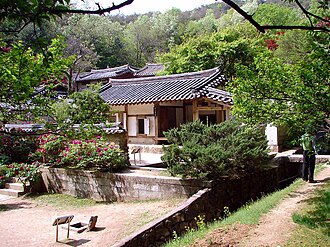
“A seowon was not merely a school — it was a sanctuary of memory, scholarship, and moral cultivation, where the spirits of great scholars were honoured alongside the living pursuit of knowledge.”
Few institutions shaped the intellectual and political landscape of Joseon-era Korea more profoundly than the seowon (서원). These private Confucian academies served a dual purpose that set them apart from all other educational establishments of their time: they were simultaneously schools for the study of Neo-Confucian philosophy and shrines dedicated to the commemoration of revered Korean scholars. For over three centuries, the seowon functioned as the beating heart of the yangban scholarly class, producing the officials, thinkers, and moralists who defined Joseon society. Today, nine of the finest surviving seowon stand as UNESCO World Heritage Sites, recognised as outstanding examples of the global tradition of Confucian academies adapted uniquely to Korean soil.
Quick Facts: The Seowon at a Glance
| Feature | Details |
|---|---|
| Korean Term | 서원 (Seowon) |
| Type | Private Confucian Academy and Shrine |
| Period Active | Mid-16th century – 19th century (Joseon Dynasty) |
| First Seowon | So수서원 (Sosu Seowon), established 1543 |
| Peak Number | Estimated over 600–700 academies across the country |
| UNESCO Inscription | 2019, as “Seowon, Korean Neo-Confucian Academies” |
| Number of UNESCO Sites | 9 seowon across South Korea |
| Dynasty | Joseon (1392–1897) |
Origins: How Did the Seowon Come to Be?
The seowon emerged in the mid-sixteenth century, at a time when Korean Confucian scholars were seeking institutions that operated outside the direct control of the central government. The existing state-run schools — the Sungkyunkwan in Seoul and the hyanggyo in provincial towns — were official establishments tied to bureaucratic examinations. Scholars of the sarim faction, deeply committed to the moral and philosophical dimensions of Neo-Confucianism rather than mere examination success, felt the need for independent spaces where genuine intellectual inquiry could flourish.
The first seowon, Sosu Seowon, was founded in 1543 in Yeongju, North Gyeongsang Province, by the local magistrate Ju Sebung. It was established to honour the memory of An Hyang, the scholar credited with introducing Neo-Confucianism to Korea during the Goryeo period. Crucially, in 1550, the great reformer and scholar Yi Hwang — better known by his pen name Toegye — persuaded King Myeongjong to issue a royal charter to Sosu Seowon, making it the first saekseowon, or royally recognised academy. This royal endorsement granted the academy the right to receive land, books, and slaves from the state, and marked the beginning of a period of rapid expansion across the country.
Architecture and Layout: Sacred Spaces of Learning
The physical design of a seowon was never accidental. Each academy was carefully situated in a natural landscape — typically beside a stream, facing mountains, and sheltered by forested hillsides. This placement reflected the Neo-Confucian belief that the moral cultivation of the scholar was inseparable from harmony with the natural world. The site selection followed principles of Korean geomancy (pungsu), and the resulting locations gave the seowon an atmosphere of serene withdrawal from the noise of worldly affairs.
Architecturally, a seowon was divided into two distinct zones. The front section was dedicated to education and contained lecture halls, dormitories for students, and communal areas for discussion. The rear section housed the shrine, where memorial tablets of the honoured scholars were kept and ritual ceremonies performed. This clear spatial division — study at the front, veneration at the back — encoded in stone and timber the seowon’s double identity as both school and sacred place.
The buildings themselves were constructed in a deliberately understated style. Unlike the grand palaces of Seoul or the ornate temples of Buddhism, seowon architecture favoured restraint and simplicity — wide wooden verandas, unadorned timber columns, and tiled roofs that blended into the surrounding hills. This aesthetic was a conscious expression of Neo-Confucian values: gravity, sincerity, and the rejection of ostentation.
“The seowon was placed where mountains could watch over it and streams could speak to it — for Confucian scholars believed that the landscape itself was a teacher.”
The Role of the Seowon in Joseon Society
To understand the seowon fully, it is necessary to understand the society that created it. Joseon Korea was governed by a philosophy — Neo-Confucianism — that penetrated every layer of life, from court rituals to family relationships, from agricultural policy to the examination system. The yangban aristocracy derived its legitimacy not merely from birth but from demonstrated mastery of Confucian texts and the moral virtues those texts prescribed. The seowon was the institution where this legitimacy was cultivated and reproduced across generations.
Students at a seowon studied the classical texts of the Confucian canon — the Four Books and Five Classics — alongside Korean Neo-Confucian commentaries, particularly those produced by the two towering figures of Joseon scholarship: Yi Hwang (Toegye) and Yi I (Yulgok). Debates between their rival philosophical schools animated intellectual life across the country, and many seowon were associated with one tradition or the other, functioning as regional outposts in a nationwide ideological conversation.
Beyond scholarship, seowon served important social and political functions. They were gathering places where regional yangban networks were maintained, where consensus on local governance was built, and where the moral prestige of prominent families was publicly demonstrated. Attending — or better, founding — a seowon conferred enormous social capital. As a result, the number of academies grew rapidly: by the seventeenth and eighteenth centuries, hundreds of seowon had been established across the peninsula, many of them claiming royal charter status.
3 Reasons the Seowon Became Politically Controversial
- Economic Drain on the State: Royally chartered seowon were exempt from taxation and could accumulate land, slaves, and resources. As their numbers multiplied, they drew significant wealth away from government coffers, straining the state’s financial capacity and creating powerful local interests resistant to central control.
- Factional Politics: Seowon became closely associated with the bitter factional struggles that plagued the Joseon court from the sixteenth century onward. Each academy tended to honour scholars belonging to one political faction, effectively making them institutional bases for ongoing political rivalries. The shrines within seowon were weapons as much as memorials — the act of enshrining a particular scholar could assert one faction’s legitimacy and insult another’s.
- Local Power Bases: In the provinces, powerful seowon could dominate local administration, coerce commoners into providing labour, and resist the authority of government magistrates. Rather than remaining pure centres of scholarship, many seowon had evolved into instruments of local elite control, generating resentment among the broader population.
The Great Suppression Under the Heungseon Daewongun
The contradictions accumulated over centuries finally forced a dramatic confrontation in the nineteenth century. Heungseon Daewongun, the regent who governed Korea on behalf of his young son King Gojong from 1863, was determined to restore the power and financial solvency of the central government. In a sweeping series of reforms, he targeted the seowon as symbols of aristocratic privilege and factional corruption.
Between 1865 and 1871, the Daewongun ordered the closure of the vast majority of seowon across the country. Of the hundreds that existed, only 47 seowon were permitted to remain open — one for each of the scholars considered most worthy of national commemoration. This was an act of extraordinary political courage. The yangban class mobilised furious protests, with scholars flooding the capital with petitions. The Daewongun famously dismissed them, reportedly declaring that even if Confucius himself returned to Korea, he would not permit the abuses to continue. The suppression demonstrated both the political will of the regent and the degree to which the seowon had strayed from their founding ideals.
Comparison: Seowon vs. Hyanggyo
| Feature | Seowon (Private Academy) | Hyanggyo (Public School) |
|---|---|---|
| Governance | Private, controlled by local yangban | State-administered |
| Primary Purpose | Scholarship + commemoration of scholars | Preparation for state examinations |
| Founding Authority | Local scholars or magistrates | Central government |
| Royal Support | Available (saekseowon) | Guaranteed by state |
| Shrine Function | Central — rear shrine to Korean scholars | Shrine to Confucius (Munmyo) |
| Location | Rural, scenic — mountains and streams | Town centres, near government offices |
| Philosophical Focus | Neo-Confucian moral cultivation | Classical curriculum for exams |
The Nine UNESCO World Heritage Seowon
In July 2019, nine seowon were inscribed together on the UNESCO World Heritage List under the title “Seowon, Korean Neo-Confucian Academies.” UNESCO recognised them as outstanding examples of a new type of Confucian academy that developed in Korea — one that adapted the broader East Asian tradition to Korean landscape, aesthetics, and intellectual culture in distinctive ways. The nine inscribed seowon are: Sosu Seowon (Yeongju), Namgye Seowon (Hamyang), Oksan Seowon (Gyeongju), Dosan Seowon (Andong), Pilam Seowon (Jangseong), Dodong Seowon (Dalseong), Byeongsan Seowon (Andong), Museong Seowon (Jeongeup), and Donam Seowon (Nonsan).
Each of these nine sites retains its original architectural layout, its scenic natural setting, and the living ritual traditions of the Confucian commemorative ceremonies (hyangsa) still performed there today. UNESCO noted that the seowon demonstrate a remarkable continuity of intangible heritage alongside their outstanding physical form — a combination that made them exceptional candidates for inscription.
Dosan Seowon, founded posthumously to honour Yi Hwang (Toegye) and located in the Andong region of North Gyeongsang Province, is perhaps the most celebrated of all. Yi Hwang himself designed an earlier study retreat on the site, and the academy that grew around it became the most prestigious in the country. The image of Dosan Seowon has appeared on Korean currency, a testament to its place in the national imagination.
Why Do the Seowon Still Matter Today?
The seowon are not merely historical curiosities preserved for tourism. They remain active sites of cultural practice. Confucian ritual ceremonies honouring the enshrined scholars continue to be performed at many seowon, maintained by the descendants of the original scholar lineages and by local cultural organisations. These ceremonies — involving formal dress, ritual music, offerings of food and wine, and prescribed sequences of bowing — are among the most direct living links to Joseon-era ceremonial culture surviving in Korea today.
Intellectually, the seowon tradition contributed lasting elements to Korean culture: a reverence for scholarship and moral cultivation, a belief in the responsibility of the educated to serve society, and an architectural aesthetic of deliberate simplicity set within carefully chosen natural landscapes. The nine UNESCO-inscribed seowon attract hundreds of thousands of visitors annually, offering scholars, students, and travellers alike a rare opportunity to experience the spaces where Korea’s intellectual heritage was forged.
For historians, the seowon also offer a window into the tensions that defined Joseon society — between central power and local autonomy, between genuine scholarship and political manipulation, between Confucian idealism and aristocratic self-interest. The story of the seowon is, in miniature, the story of Joseon itself.