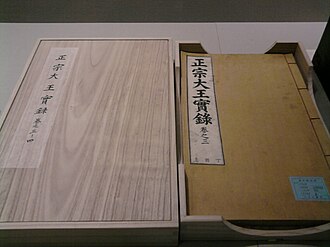
“No king may read the records of his own reign.”
— Governing principle of the Joseon Royal Secretariat, ensuring the integrity of the Veritable Records
Imagine a chronicle so meticulously guarded that even the most powerful ruler in the land was forbidden from reading it. That was the extraordinary standard set for the Veritable Records of the Joseon Dynasty — known in Korean as the Joseon Wangjo Sillok (조선왕조실록). Compiled over nearly five centuries, these records stand as one of the most remarkable documentary achievements in world history, offering an unbroken, day-by-day account of the Joseon Dynasty from its founding in 1392 to its final years. Today, they are recognized by UNESCO as part of the Memory of the World Register, a testament to their enduring global significance.
For historians, the Sillok is nothing short of irreplaceable. It does not merely recount royal decrees and military campaigns — it captures the texture of an entire civilization: its debates, disasters, diplomatic maneuverings, cultural innovations, and the struggles of ordinary life as filtered through the eyes of the royal court. Understanding the Joseon Dynasty means, above all, understanding its Veritable Records.
Quick Facts: The Joseon Veritable Records at a Glance
| Detail | Information |
|---|---|
| Korean Name | 조선왕조실록 (Joseon Wangjo Sillok) |
| Period Covered | 1392–1910 (Joseon Dynasty) |
| Number of Reigns Recorded | 25 kings |
| Language | Classical Chinese (Hanja) |
| UNESCO Status | Memory of the World Register (inscribed 1997) |
| National Treasure Status | National Treasure of South Korea |
| Primary Custodian | National Institute of Korean History |
| Storage Archives (historical) | Four mountain depositories (sago) |
What Are the Veritable Records, Exactly?
The Joseon Veritable Records are an official compilation of daily records maintained by the royal court throughout the Joseon Dynasty. Each reign produced its own sillok, or “veritable record,” which was compiled after a king’s death by a special editorial office staffed by scholars. The records drew upon daily logs kept by royal secretaries and historians known as sagwan, who were present at official court proceedings, royal audiences, and major state events.
What made the system so extraordinary — and so trustworthy — was its built-in protection against political interference. The reigning monarch was strictly prohibited from reading the records of his own reign, and even former kings could not access records composed about them while they lived. This rule was not merely ceremonial. It was enforced with genuine seriousness, and scholars who maintained the records were expected to write with unflinching honesty, recording even events that reflected poorly on the throne.
The records are written in classical Chinese, the language of official scholarship and governance across East Asia during this period. This choice reflected both the era’s literary conventions and the desire to produce documents legible to the broader scholarly world of the region.
Why Did Joseon Historians Create Such Meticulous Records?
The impulse to compile comprehensive royal records was deeply rooted in Confucian statecraft. Joseon was founded on Neo-Confucian principles, and one of the central tenets of this worldview held that proper governance required accurate historical memory. Rulers were expected to learn from the past, and the compilation of thorough records was understood as both a moral obligation and a practical necessity.
This tradition was not unique to Korea — China’s dynastic histories provided the model — but the Joseon approach was distinguished by its extraordinary continuity and scope. While other dynasties in East Asia produced comparable records, few maintained such an unbroken chain of documentation across such a long span of time.
The scholars responsible for maintaining these records, the sagwan, occupied a uniquely protected position within the Joseon bureaucracy. They were empowered — indeed required — to record events candidly, and their notes formed the raw material from which the compiled sillok of each reign was later assembled. The independence of this function was considered essential to the records’ integrity.
“The Joseon Veritable Records represent one of the longest and most detailed chronicles of any single dynasty in world history — a day-by-day account spanning more than five centuries of Korean civilization.”
How Were the Records Protected Over the Centuries?
Preserving such an enormous and precious collection required elaborate institutional arrangements. The Joseon court maintained a network of special archive depositories called sago — literally “history repositories” — where copies of the records were stored. To guard against the risk of fire, flood, or military invasion destroying the entire collection, multiple copies were made and distributed to depositories located in geographically dispersed, often remote mountain locations.
This precaution proved its wisdom during the devastating Japanese invasions of the late sixteenth century, known in Korean history as the Imjin War (1592–1598). The invasions caused catastrophic destruction across the Korean peninsula, and several of the archive depositories were burned or looted. Only one complete set of the records survived the wars intact — stored at the Muju Jeoksangsan depository in a remote mountain location. This surviving set became the basis for new copies that were subsequently distributed to rebuilt depositories across the kingdom.
The determination to reconstruct and preserve the records even amid such devastating national trauma speaks to the profound value that Joseon society placed on its historical documentation. Restoring the Sillok was treated as a matter of urgent national priority in the war’s aftermath.
3 Reasons the Veritable Records Are Historically Priceless
- Unmatched Duration and Continuity: The Sillok covers 25 consecutive reigns across more than 500 years without a significant break, making it one of the longest continuous royal chronicles in world history. No comparable dynasty archive from East Asia matches both its duration and its level of day-by-day detail.
- Built-In Institutional Independence: The strict rule barring reigning kings from accessing their own records gave the Sillok a degree of candor rare in official court documents. Historians recorded defeats, policy failures, royal misdeeds, and court conflicts alongside triumphs and achievements. This makes the records unusually reliable as a historical source.
- Encyclopedic Breadth of Coverage: The records are not limited to political and military events. They document astronomical observations, weather patterns, agricultural conditions, legal cases, religious debates, and diplomatic exchanges with neighboring states including China and Japan. For researchers studying everything from historical climate patterns to the evolution of Korean law, the Sillok is an irreplaceable resource.
The Records in the Modern Era: Preservation and Digitization
The twentieth century brought new threats — and new opportunities — for the Veritable Records. The Japanese colonial period (1910–1945) saw portions of the records moved to Japan, and the Korean War (1950–1953) created further risks of loss or damage. Considerable effort went into locating, recovering, and consolidating surviving copies after the establishment of the Republic of Korea.
In 1997, UNESCO inscribed the Joseon Veritable Records on its Memory of the World Register, formally recognizing them as part of the shared documentary heritage of humanity. This inscription brought international attention to their significance and added further impetus to preservation efforts.
Perhaps the most transformative modern development has been digitization. The National Institute of Korean History undertook the massive project of digitizing and translating the entire Sillok into modern Korean — a project that required decades of scholarly labor given the classical Chinese language of the originals and the sheer volume of the text. Today, the full text of the Joseon Veritable Records is available online, making this extraordinary archive accessible to researchers and curious readers around the world for the first time in history.
A Comparison: The Joseon Sillok and Other Great Royal Chronicles
| Chronicle | Country | Period Covered | UNESCO Recognition |
|---|---|---|---|
| Joseon Veritable Records | Korea | 1392–1910 (~518 years) | Memory of the World (1997) |
| Twenty-Four Histories (China) | China | Antiquity–1644 | Not inscribed as single item |
| Anglo-Saxon Chronicle | England | 9th–12th centuries | Not inscribed |
| Annals of the Four Masters | Ireland | Pre-history–1616 | Not inscribed |
While many civilizations produced royal chronicles or dynastic histories, the Joseon Veritable Records stand apart for their combination of unbroken continuity, institutional safeguards against censorship, and encyclopedic scope. The records’ survival across five centuries of political upheaval, foreign invasion, and colonial occupation makes them all the more remarkable.
Legacy: What the Records Tell Us About Joseon Korea
Reading the Sillok — even in translation — is a remarkable experience. On a single day’s entry, one might find a record of a royal audience with foreign envoys, a report on drought conditions in the southern provinces, a legal dispute over land inheritance, and a debate among court scholars about the proper interpretation of a Confucian text. The records capture a society of extraordinary complexity and sophistication, engaged in the serious and sometimes difficult work of governing a large, diverse kingdom over centuries.
The Sillok also reveals the human dimensions of court life with unusual vividness. Factional conflicts, succession crises, the careers of remarkable individuals — scholars, reformers, generals, and queens — all appear in the records with a detail that more official or celebratory histories typically suppress. Historians of the Joseon period rely on the Sillok not just as a starting point but as an anchor, the documentary foundation upon which all other historical understanding must rest.
For anyone seeking to understand Korean history — its continuities, its transformations, its moments of crisis and creativity — the Veritable Records of the Joseon Dynasty are the place to begin. They are not merely a national treasure of Korea. They are a treasure of world civilization.