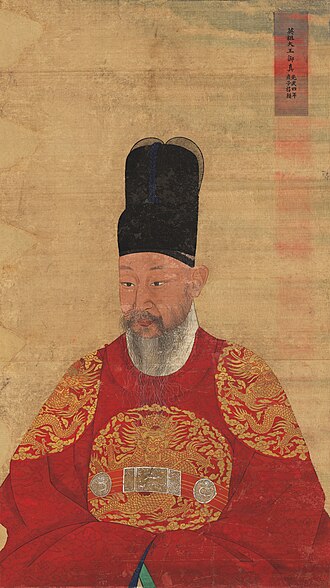
“A king must stand above all factions, impartial as heaven itself.”
— The governing philosophy attributed to King Yeongjo, who reigned for 52 years over Joseon.
Few monarchs in Korean history cast as long a shadow as King Yeongjo (영조), the twenty-first ruler of the Joseon dynasty. Born in 1694 and dying in 1776, he sat on the throne for 52 years — the longest reign in the dynasty’s history. His era was one of paradox: sweeping intellectual reforms coexisted with brutal factional politics, and a ruler who spoke passionately of benevolent governance became forever linked to one of the most shocking acts in royal Korean history — ordering the death of his own son, Crown Prince Sado, by sealing him inside a rice chest.
Understanding Yeongjo means grappling with contradictions: a reformer and a tyrant, a survivor and a destroyer. His reign shaped the political and cultural landscape of eighteenth-century Korea in ways still visible in historical memory today.
Quick Facts: King Yeongjo at a Glance
| Detail | Information |
|---|---|
| Full Posthumous Title | Yeongjo (영조) |
| Born | 1694 |
| Died | 1776 |
| Reign | 1724–1776 (52 years) |
| Dynasty | Joseon |
| Dynasty Number | 21st King of Joseon |
| Key Policy | Tangpyeongchaek (Impartiality Policy) |
| Most Infamous Act | Death of Crown Prince Sado (1762) |
| Successor | King Jeongjo (grandson) |
The Road to the Throne: A Contested Ascension
Yeongjo’s path to kingship was anything but smooth. He was the son of King Sukjong and a royal concubine, Lady Choe — a low-born origin that would haunt him throughout his reign and provide ammunition for political enemies who questioned his legitimacy. When his older half-brother, King Gyeongjong, died in 1724 without an heir, Yeongjo ascended to the throne. Almost immediately, rumors spread — some perpetuated by the rival Soron faction — that Yeongjo had been complicit in Gyeongjong’s death, perhaps even poisoning him.
These accusations were never proven, but they followed Yeongjo for decades. They also made him acutely aware of the destructive power of factional strife, a defining feature of late Joseon politics. The so-called Noron and Soron factions had been tearing the court apart for generations, each affiliated with different royal lines and competing policy visions. Yeongjo would spend much of his reign attempting — with mixed success — to neutralize this toxic dynamic.
Why Did Yeongjo Pursue the Tangpyeong Policy?
The most significant political legacy of Yeongjo’s reign is the tangpyeongchaek (탕평책), often translated as the “Policy of Impartiality” or “Broad Equilibrium Policy.” To understand why it mattered, one must appreciate how deeply factional politics had destabilized the Joseon court in the century before his reign. Officials lived and died — sometimes literally — based on which faction controlled the king’s ear. Purges were common. Talented officials from the “wrong” faction could be exiled or executed regardless of their abilities.
Yeongjo’s tangpyeong policy sought to break this cycle by deliberately appointing officials from multiple factions to key positions, balancing Noron and Soron representatives in the bureaucracy. The goal was to shift loyalty from faction to king, and from partisan interest to state interest. He famously had a stone monument inscribed with the principles of impartiality erected near Sungkyunkwan, the royal Confucian academy, as a visible declaration of his commitment to this ideal.
In practice, tangpyeong was never fully achieved. Yeongjo himself leaned toward the Noron faction at critical moments, and factional struggles continued beneath the surface of apparent harmony. Nevertheless, the policy represented a genuine and historically significant attempt to reform the political culture of Joseon, and it laid groundwork that his grandson Jeongjo would attempt to build upon.
“The tangpyeong policy was not merely a political calculation — it was Yeongjo’s answer to a century of bloodshed. Whether it succeeded is debatable. That it was necessary, no one disputed.”
3 Major Reforms That Defined Yeongjo’s Reign
1. The Equal Tax Law (Gyunyeokbeop)
One of the most impactful social reforms of the eighteenth century in Korea was the gyunyeokbeop (균역법), enacted by Yeongjo in 1750. Under the previous military tax system, commoner men were required to provide two bolts of cloth per year as a substitute for military service. This burden fell almost exclusively on the peasant class, as the yangban aristocracy were largely exempt. The law was deeply unpopular and economically punishing for ordinary families.
Yeongjo reduced the cloth tax from two bolts to one, and compensated for the lost revenue by imposing supplementary taxes on fishing grounds, salt production, and vessel fees — activities dominated by wealthier interests. While not a perfect equalization, the reform was a meaningful gesture toward reducing the burden on the poorest Joseon subjects and demonstrated Yeongjo’s stated commitment to governing for the people.
2. Revision of the Legal Code
Yeongjo oversaw a significant revision and compilation of Joseon’s legal codes. He was particularly concerned with limiting the use of torture in legal proceedings, recognizing that confessions extracted under duress were unreliable and unjust. His efforts to standardize and humanize criminal procedure represented an engagement with Confucian ideals of benevolent governance that went beyond rhetoric.
3. Promotion of Scholarship and Publication
Yeongjo’s reign was also a period of considerable intellectual activity. Royal publishing houses were active, and the king himself was known for his personal interest in scholarship and Confucian learning. His court produced important compiled texts and supported the kind of intellectual culture that would flourish even more dramatically under his grandson, King Jeongjo. The Joseon dynasty’s eighteenth century is sometimes called its “cultural renaissance,” and Yeongjo’s patronage was a key foundation of that flowering.
The Shadow of Sado: A Tragedy That Defines a Reign
No account of Yeongjo can avoid the event that has defined his image in Korean historical memory and popular culture: the death of Crown Prince Sado (사도세자) in 1762. Sado was Yeongjo’s second son and designated heir. By the time he reached adulthood, something had gone profoundly wrong. Historical sources describe increasingly erratic and violent behavior — accounts of Sado harming court ladies and servants, of rages and irrational episodes that terrified the palace.
Modern historians and psychologists have retrospectively speculated about mental illness, though the exact nature of Sado’s condition remains a matter of scholarly debate. What is not debated is what happened in the eighth month of 1762: Yeongjo summoned Sado and ordered him to enter a large wooden rice chest. The chest was sealed. Crown Prince Sado died inside it over the course of approximately eight days.
The official reasoning — to the extent Yeongjo articulated one — was that Sado had become a danger to the state and that executing him formally would bring shame upon the dynasty. By ordering him to die in this manner, Yeongjo avoided a formal treason trial. He also, controversially, decreed that Sado’s young son — the future King Jeongjo — would succeed him, effectively leaping over the tragedy to preserve the royal line.
The death of Sado was documented in heartbreaking detail by Sado’s widow, Lady Hyegyeong, in her memoir Hanjungnok (한중록), one of the most remarkable personal documents to survive from Joseon history. Her account offers an intimate, anguished perspective on the court politics, family dynamics, and psychological tensions that surrounded the tragedy. It remains essential reading for anyone seeking to understand this period.
Yeongjo and Jeongjo: Legacy Across Generations
| Aspect | King Yeongjo (r. 1724–1776) | King Jeongjo (r. 1776–1800) |
|---|---|---|
| Political Reform | Tangpyeong impartiality policy | Expanded tangpyeong; established Gyujanggak royal library |
| Social Reform | Gyunyeokbeop (equal tax law) | Partial emancipation policies; support for lower-status scholars |
| Scholarly Culture | Patronage of publishing and Confucian learning | Active personal scholarship; Silhak (practical learning) support |
| Factional Struggle | Attempted to balance Noron and Soron | Continued struggle; rehabilitated father Sado posthumously |
| Historical Memory | Reformer overshadowed by Sado tragedy | Often romanticized as enlightened monarch |
The relationship between Yeongjo and the reign of his grandson Jeongjo is one of the most important dynastic continuities in Korean history. Jeongjo came to the throne in 1776, the same year Yeongjo died, and immediately set about honoring — and in some ways correcting — his grandfather’s legacy. One of his first acts was to posthumously honor the memory of his father, Crown Prince Sado, whom Yeongjo had condemned. This act was itself deeply political, signaling Jeongjo’s alignment with factions that had sympathized with Sado.
Yet Jeongjo also continued and deepened Yeongjo’s tangpyeong approach, and the administrative and intellectual infrastructure Yeongjo had built made possible the cultural flourishing of Jeongjo’s reign. The two kings together represent the high-water mark of the Joseon dynasty in its later centuries.
How Should We Remember King Yeongjo?
Yeongjo is a figure who resists easy moral categorization, which perhaps explains his enduring fascination in Korean culture. In the modern era, he has been portrayed in numerous television dramas and films, often depicted as a complex, tormented figure — a king who genuinely cared about his people and his dynasty, yet committed an act of paternal violence almost without historical parallel.
His reforming instincts were real. The gyunyeokbeop provided material relief to thousands of peasant families. The tangpyeong policy, however imperfect, represented a genuine attempt to heal a fractured political culture. His personal interest in scholarship left an intellectual inheritance that bore fruit in the generation that followed him.
But the rice chest stands. The death of Sado cannot be explained away, and historians continue to debate whether it reflected political calculation, paternal failure, genuine fear for the dynasty, or something darker. Lady Hyegyeong’s Hanjungnok ensures that the human cost of that decision — the grief of a wife, the trauma of a child who became king — is never forgotten.
In the end, King Yeongjo’s 52-year reign remains one of the most consequential and morally complex chapters in Korean dynastic history. He governed longer than any other Joseon king, reformed more than most, and left behind a tragedy that no amount of achievement can entirely overshadow.
Continue Exploring
On Coreaverse
- King Jeongjo: The Enlightened Grandson Who Rebuilt a Dynasty
- Lady Hyegyeong and the Hanjungnok: A Memoir from the Inner Palace
- Noron vs. Soron: How Factional Strife Shaped Joseon