Historical Sites in Busan: A Guide to the Heritage of Korea’s Great Southern Port
Busan is best known for its beaches and seafood, but beneath the modern port lies a long and layered history: Gaya-era tombs, a hilltop fortress, a temple on the sea, an old harbour quarter, and a dramatic twentieth century. This guide maps the city’s historical sites and how to visit them.
Travellers come to Busan for Haeundae Beach, the vast Jagalchi fish market, and the colourful hillside of Gamcheon, and they rarely think of it as a history destination. Yet Korea’s second city has been a gateway to the peninsula for two thousand years, and its past is written across the harbour, the hills, and the coast in a way quite different from the royal capitals of Seoul and Gyeongju. Busan’s history is maritime and layered rather than dynastic: the story of a port where kingdoms, trade, faith, and the modern age all arrived by sea.
That makes its historical sites more scattered and more varied than a single palace quarter, which is exactly their charm. In one day you can stand among tombs of an early Korean culture, climb the walls of a mountain fortress, watch waves break beneath a seaside temple, and walk the streets of the old port. This guide groups Busan’s heritage into themes, explains what each site offers, and shows how to fold them into a trip built around the city’s more famous pleasures.
Why Busan’s History Matters
Before Korea was unified, the southeast of the peninsula was home to the Gaya confederacy, a cluster of small states famous for ironworking and trade, whose culture flourished around the lower Nakdong River near present-day Busan before being absorbed by Silla. The region’s early tombs and their ironware and pottery tell this story, and the Gaya legacy is one reason Busan’s history reaches back further than its modern skyline suggests.
In later centuries Busan’s position made it Korea’s principal southern port and its front door to the sea. It held coastal fortresses built to guard against seaborne threats, and it was the point through which trade and envoys passed. In the twentieth century the port’s importance made it central to Korea’s modern story, and the old harbour district preserves the texture of that era. To walk Busan’s historical sites is therefore to read the biography of a port: early culture, coastal defence, maritime faith, and modern upheaval, all within one coastal city.
Quick Facts
| From Seoul | About 2.5 hours by KTX to Busan Station [VERIFY: KTX journey time] |
|---|---|
| Getting around | Extensive subway reaches most sites; buses and taxis for the coast |
| Signature site | Haedong Yonggungsa, the seaside temple on the eastern coast |
| Ancient layer | Gaya-era tombs and museums near the Nakdong River |
| Time needed | One to three days alongside beaches and markets |
| Best combined with | Haeundae, Jagalchi market, Gamcheon Culture Village |
The Ancient Layer: Gaya and Early Busan
The oldest thread of Busan’s history belongs to the Gaya confederacy and the early cultures of the Nakdong River delta. The region’s ancient tombs have yielded ironware, pottery, and ornaments that reveal a society skilled in metalwork and connected by trade across the sea. Museums in and around the city display these finds and reconstruct how the people of early Busan lived, worked iron, and buried their dead. For visitors drawn to the deep past, this layer is Busan’s equivalent of Gyeongju’s Silla remains, less monumental but genuinely ancient, and it explains why the southeast of Korea was contested ground long before the kingdoms unified. [VERIFY: specific Gaya-era museum names and locations in Busan]
Fortresses and the Mountain Defences
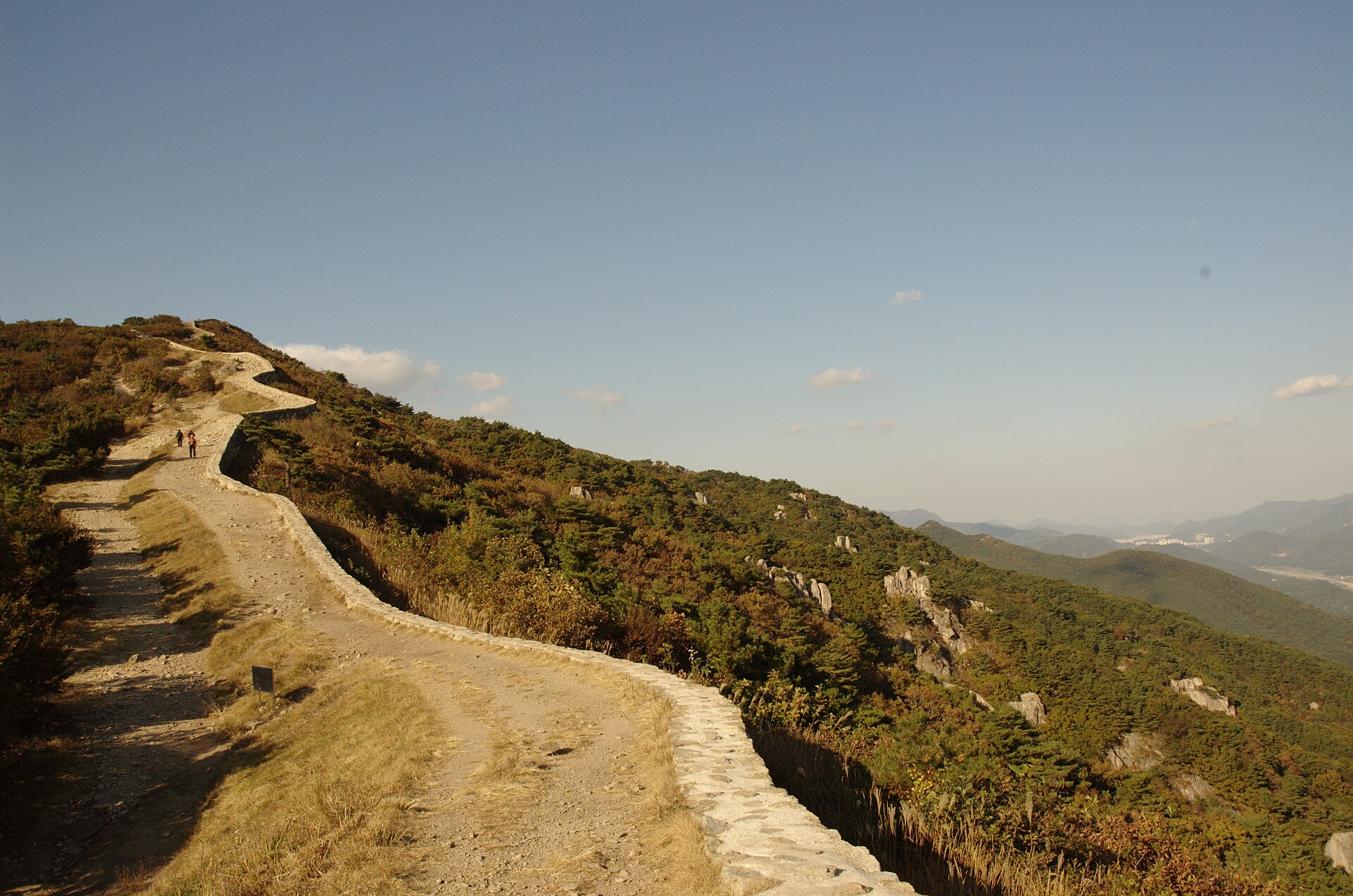
Busan’s role as a coastal gateway meant it needed defending, and the hills above the city carry the remains of fortifications. The great hilltop fortress on Geumjeong mountain, with its long walls and gates winding over the ridges, is the largest and most impressive, and today it doubles as one of the city’s finest walking areas, its ramparts offering wide views over Busan. Lower fortress sites nearer the coast mark the points where the port was guarded. Climbing a stretch of fortress wall combines history with the kind of mountain walk that Koreans love, and it shows how a trading port also had to be a stronghold. [VERIFY: Geumjeong fortress access, gates, trail details]
Temples by the Sea
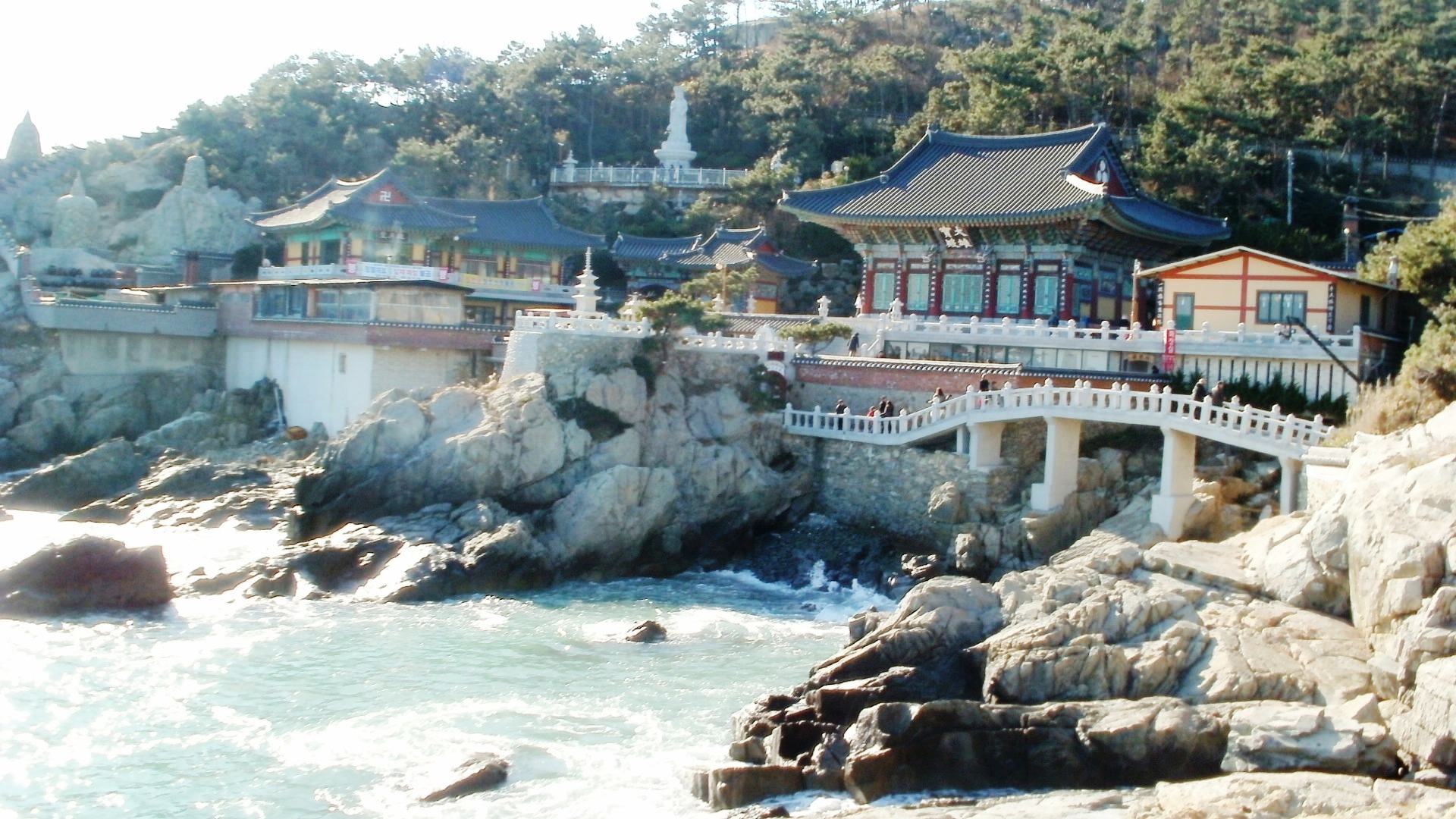
Busan’s most beloved historical site is Haedong Yonggungsa, a Buddhist temple built not in the mountains, as almost all Korean temples are, but on the rocks at the very edge of the sea on the city’s eastern coast. Waves break below its halls, and a stone stairway descends through a gate to the water. It is one of the most photographed places in Korea and is especially striking at sunrise. Though much of what stands has been rebuilt, the setting is unforgettable and the site has a long religious history. Elsewhere in the city, mountain temples such as Beomeosa, set in the forest below Geumjeong fortress, preserve a quieter and older monastic atmosphere, with historic halls and gates. Together the seaside and mountain temples show the two faces of Korean Buddhism in one city. [VERIFY: Haedong Yonggungsa and Beomeosa hours, access, admission]
The Old Port and the Modern Quarter
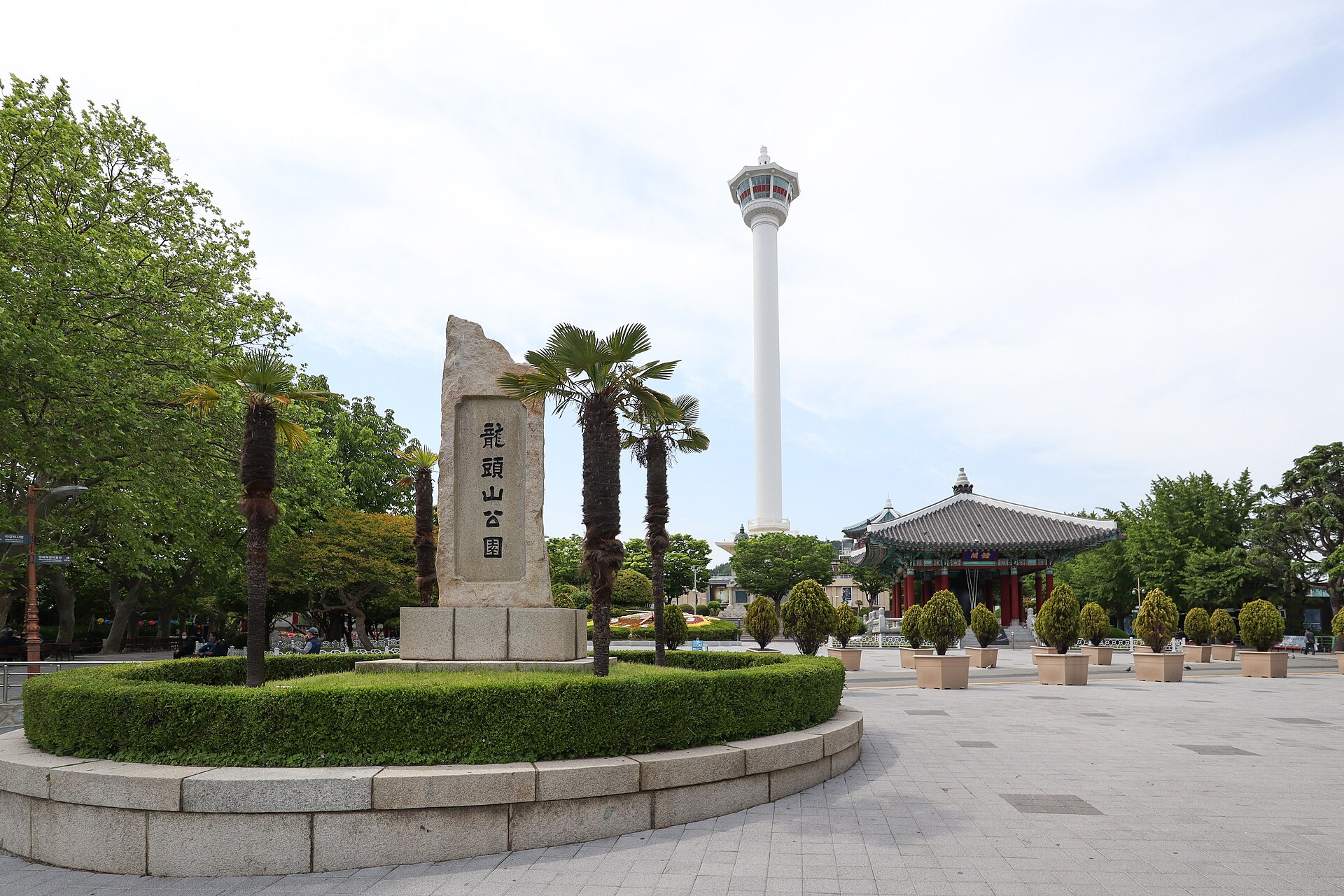
The heart of historic Busan is the old harbour, and the district around it preserves the feel of the twentieth-century port. The landmark of this quarter is Yongdusan Park, a green hill topped by Busan Tower, rising above the old downtown and the markets. Below it spread the famous Jagalchi fish market, Korea’s largest, and the dense Gukje market, both grown from the trade of the port. The nearby station district and old streets carry the layered memory of a city that received people and goods from across the sea throughout the modern era. Walking from the tower down through the markets to the quays is the best way to feel Busan’s identity as a working port, which is itself a form of living history. [VERIFY: Yongdusan, Jagalchi, Gukje market access and hours]
Recommended Itinerary
Busan’s history mixes best with its coast and food, so this plan alternates the two.
- Day 1, morning – the seaside temple. Start early at Haedong Yonggungsa on the eastern coast, when the light is best and the crowds thin, then enjoy nearby Haeundae Beach.
- Day 1, afternoon – the old port. Head to Yongdusan Park and Busan Tower, then walk down through Jagalchi and Gukje markets for a seafood lunch or dinner.
- Day 2, morning – fortress and mountain temple. Climb a stretch of Geumjeong fortress wall and visit Beomeosa temple in the forest below.
- Day 2, afternoon – the ancient layer. Visit a Gaya-era museum and tomb site near the Nakdong River, then end at Gamcheon Culture Village for the views.
Travellers with a single day should pair Haedong Yonggungsa with the Yongdusan and market quarter for the best mix of setting and city life. [VERIFY: opening hours for sequencing]

Nearby Places & Experiences
Busan’s historical sites sit among the attractions that make the city a favourite holiday destination. Haeundae and Gwangalli beaches lie close to the eastern temple and coast. Gamcheon Culture Village, the terraced hillside of brightly painted houses, overlooks the old port quarter and tells a more recent chapter of the city’s story. The Jagalchi and Gukje markets are heritage and lunch at once. For a day trip, Gyeongju and its Silla monuments are only about thirty minutes away by KTX, making it easy to combine the ancient capital with the modern port. Busan thus rewards a traveller who wants history woven through beaches, markets, and mountain walks rather than presented in a single museum quarter.
Practical Tips
Busan is spread along a coastline, so its sites are farther apart than those of Seoul or Gyeongju; use the efficient subway as your backbone and taxis or buses for the coastal temple and fortress, which lie beyond the rail lines. Visit Haedong Yonggungsa early to beat the crowds and catch the sea light. Wear proper shoes for the fortress walls and temple stairs, and carry water in summer. The markets are liveliest in the morning for fish and the evening for food stalls. Because the city combines history with beaches, pack for both a temple walk and the shore. Confirm opening hours for the temples and museums, which vary seasonally. [VERIFY: facilities, seasonal hours]
Frequently Asked Questions
What are the main historical sites in Busan?
Gaya-era tombs and museums, the Geumjeong mountain fortress, the seaside temple Haedong Yonggungsa and mountain temple Beomeosa, and the old port quarter around Yongdusan and the markets.
Is Busan worth visiting for history?
Yes, though its history is maritime and layered rather than royal: early Gaya culture, coastal defence, seaside Buddhism, and a dramatic modern era, easily combined with the beaches and markets.
How do you get to Busan from Seoul?
By KTX from Seoul Station to Busan Station in about two and a half hours. The city’s subway reaches most sites. [VERIFY: KTX time]
What is the most famous temple in Busan?
Haedong Yonggungsa, built on the rocks at the edge of the sea on the eastern coast, unusual for sitting on the shore rather than in the mountains.
How much time do you need?
One to three days alongside the beaches and markets; two to three days for a history-focused visit adding the Gaya museums and the fortress.
Continue Exploring
- 19-busan-haedong-yonggungsa.jpg — Anna L Martin / CC BY 2.0 / Wikimedia Commons source
- 19-busan-geumjeong-fortress.jpg — Honza Soukup / CC BY 2.0 / Wikimedia Commons source
- 19-busan-yongdusan.jpg — Mobius6 / CC BY-SA 4.0 / Wikimedia Commons source
- 19-busan-gaya-tomb.jpg — Korea Heritage Service / CC BY-SA 4.0 / Wikimedia Commons source
Disclosure: This article may contain affiliate links. Booking through them supports Coreaverse at no extra cost to you.