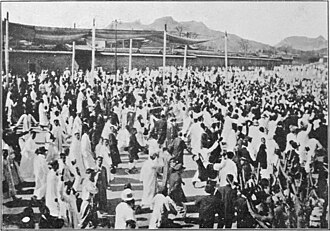
“We hereby declare that Korea is an independent state and that Koreans are a self-governing people.” — Opening lines of the Korean Declaration of Independence, March 1, 1919
On the first day of March 1919, something extraordinary happened across the Korean peninsula. In streets, marketplaces, schoolyards, and rural villages, ordinary Koreans — students, farmers, merchants, religious leaders, and elderly men and women — stepped forward to defy one of the most powerful colonial empires in Asia. They carried no weapons. They raised only their voices and handwritten copies of a declaration that dared to say what had been forbidden for nearly a decade: Korea is free.
The March First Movement, known in Korean as Samiljeol (삼일절) or the Sam-il Movement, stands as one of the most significant events in modern Korean history. It was a mass nonviolent uprising against Japanese colonial rule that reverberated far beyond the peninsula, inspiring independence movements across Asia and reshaping the political landscape of the early twentieth century. To understand it is to understand something essential about the Korean national spirit.
Quick Facts: The March First Movement
| Date | March 1, 1919 — and continuing through months of protests |
| Location | Throughout the Korean peninsula and Korean diaspora communities abroad |
| Also Known As | Sam-il Movement; Samiljeol (삼일절); March 1st Independence Movement |
| Trigger | Death of former Emperor Gojong; influence of Wilsonian self-determination principles |
| Key Document | Korean Declaration of Independence, signed by 33 national representatives |
| Organizers | Religious leaders (Cheondogyo, Christian, Buddhist communities), students, intellectuals |
| Colonial Power | Empire of Japan (Korea annexed in 1910) |
| Legacy | Establishment of the Provisional Government of the Republic of Korea; national holiday |
The World That Made the Movement Possible
To understand March First, we must go back to 1910, when Japan formally annexed Korea, ending the Joseon dynasty and absorbing the Korean Empire into its colonial territory. What followed was a period Koreans call the era of military rule. Japanese authorities suppressed Korean language use in schools, banned Korean political organizations, restricted the press, and used a heavily armed gendarmerie — military police — to enforce order. Korean landowners lost titles to their properties under new registration laws, and cultural institutions that had defined Korean identity for centuries were dismantled or marginalized.
By 1919, the conditions for a mass uprising had been quietly assembling for years. Korean students studying in Tokyo had already issued their own declaration of independence in February 1919, emboldened in part by the rhetoric of American President Woodrow Wilson, whose Fourteen Points speech had introduced the concept of national self-determination to an international audience. If subjugated peoples around the world had the right to determine their own futures, Koreans asked, why not them?
Then came a more immediate catalyst. In January 1919, former Korean Emperor Gojong died suddenly. Gojong had been the last ruler of a sovereign Korean state, and his death — rumored by many Koreans to have been caused by poisoning at Japanese hands, though this was never proven — unleashed enormous public grief. His funeral was scheduled for early March, which would draw Koreans from across the country to Seoul. The organizers of the independence movement recognized the moment.
Why Did So Many Koreans Risk Everything on March 1, 1919?
This is perhaps the most important question a historian can ask about the event. Colonial subjects rarely rise up in the open, in daylight, in public squares. The risks were real and well understood: Japanese colonial authorities had the legal power to imprison, torture, or execute those deemed threats to public order. So what drove millions of people — estimates suggest that between one and two million Koreans participated in demonstrations over the following weeks and months — to take to the streets?
Several forces converged. First, there was the accumulated anger of nearly a decade of cultural suppression. The Japanese colonial government had systematically attempted to erase Korean identity: the language, the dress, the customs, the historical memory. For many Koreans, especially the educated young, this was not merely a political grievance but an existential wound.
Second, religious networks provided the organizational backbone that made a coordinated, peninsula-wide protest possible. The Cheondogyo faith — a Korean religious movement blending Confucian, Buddhist, and shamanist elements — and the growing Christian community (particularly in the northern regions around Pyongyang) had developed communication networks and community structures that could spread messages and organize people outside of the surveillance structures the Japanese colonial government had placed over Korean political life.
Third, as noted, the international atmosphere of 1919 — shaped by the end of World War I and Wilson’s self-determination principles — gave Korean activists a moral framework and a sense that the world might be watching and willing to listen.
“The movement was not a spontaneous eruption of anger. It was the organized expression of a people who had been waiting, watching, and quietly building the courage to say: enough.”
The Day Itself: March 1, 1919
The Declaration of Independence had been drafted in secret by a group of Korean intellectuals and signed by thirty-three representatives — men drawn from the Cheondogyo and Christian communities — who called themselves the Representatives of the Korean People. On the morning of March 1, the plan was for these representatives to gather at Taehwagwan restaurant in Seoul, read the declaration aloud, and then notify Japanese authorities of their action, accepting arrest as a form of nonviolent witness. At the same time, throughout the city and across the country, copies of the declaration would be read publicly, and crowds would gather to demonstrate peacefully.
In Tapgol Park (also known as Pagoda Park) in central Seoul, a young student read the declaration to a gathered crowd. Cries of Daehan Dongnip Manse! — “Long live Korean independence!” — rang out. From Seoul, the demonstrations spread with remarkable speed. Within days, protests had erupted in cities, towns, and villages across the peninsula. The thirty-three signatories were arrested almost immediately, but the movement they had helped ignite was already beyond the capacity of any small group to control or contain.
The Colonial Response and Its Human Cost
The Japanese colonial government’s response to the demonstrations was swift and brutal. Military and police units were dispatched to suppress protests. Demonstrators were beaten, arrested, and killed. Entire villages accused of harboring independence sentiment were subjected to violent reprisals. Churches and other gathering places were burned.
The Jeam-ri massacre stands as one of the darkest episodes of the crackdown. In April 1919, Japanese soldiers herded villagers into a local church in the village of Jeam-ri (in present-day Hwaseong, Gyeonggi Province) and set it on fire, killing those inside. This atrocity, documented by Western missionaries who were present in Korea at the time, brought international attention to the violence being used against Korean civilians.
Casualty figures from the March First Movement vary depending on the source, but Korean historical records indicate that thousands of people were killed, tens of thousands wounded, and tens of thousands more arrested and imprisoned. The scale of the repression was itself a kind of testimony to how seriously the Japanese colonial authorities took the threat that mass Korean solidarity represented.
What Changed After March First?
Despite the brutal suppression, the March First Movement achieved something that could not be undone by force: it demonstrated to Koreans, to the Japanese Empire, and to the watching world that Korean national identity had not been extinguished by a decade of colonial rule. It also produced concrete political consequences.
The most significant was the establishment of the Provisional Government of the Republic of Korea, founded in Shanghai in April 1919 by Korean independence activists who had fled or operated outside the peninsula. This government-in-exile maintained Korean independence claims internationally and continued the struggle against Japanese rule for the following decades, eventually becoming part of the institutional lineage of the modern Republic of Korea.
Within Korea, the Japanese colonial government, embarrassed by international criticism of its military suppression of unarmed demonstrators, shifted its approach. The period of harsh military rule gave way to what historians call the “Cultural Policy” era, in which some restrictions on Korean language publication and cultural activity were relaxed — though colonial control remained firmly in place.
Internationally, the March First Movement influenced independence movements across Asia, particularly in China where the May Fourth Movement of 1919 drew inspiration from Korean resistance. It also attracted sympathy from some Western observers and missionaries, even if the major Western powers — preoccupied with post-war negotiations at the Paris Peace Conference — took no concrete action to support Korean independence.
March First in Korean Memory
Today, March 1st is a national public holiday in South Korea: Independence Movement Day (Samiljeol). Each year, commemorations are held at Tapgol Park in Seoul and at memorial sites across the country. The thirty-three signatories of the Declaration of Independence are revered as national heroes. The Jeam-ri massacre site has been designated a national heritage site, and the Hwaseong region of Gyeonggi Province maintains memorials to those who died there.
The movement also lives on in Korean cultural memory through literature, film, and art. It has been depicted in countless Korean dramas and films, taught in every Korean school, and revisited by historians who continue to debate its causes, its scale, and its legacy. For Koreans, March First is not simply a historical event — it is a founding story, a moment when the nation declared itself to the world in the most public and courageous way it could.
It is worth noting, too, that the movement’s specifically nonviolent character has remained meaningful to Koreans. The thirty-three signatories chose to hand themselves to Japanese authorities rather than flee. The demonstrators who filled the streets carried no arms. This moral clarity — the decision to face power without violence — gave the movement a dignity that has only grown in historical memory.
Continue Exploring
- On This Site: The Fall of the Joseon Dynasty and the Korean Empire | Gojong: The Last Emperor of Korea | The Korean Provisional Government in Shanghai
- March First Movement — Wikipedia
- Encyclopedia of Korean Culture (AKS)
- March First Movement — Britannica
- National Museum of Korea
- National Heritage Portal of Korea
- Asia Society — Korean History Resources