“Between the great powers of Goguryeo, Baekje, and Silla, there existed a confederation so skilled in iron and trade that its legacy endured long after its fall — yet history almost forgot it entirely.”
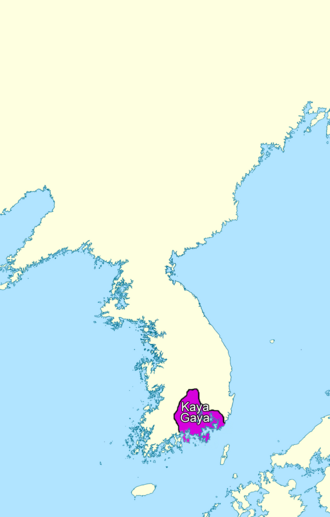
When most people think of ancient Korea, they picture the Three Kingdoms: Goguryeo in the north, Baekje in the southwest, and Silla in the southeast. Yet for roughly five centuries, a fourth power occupied the fertile river valleys of the southern Korean peninsula — a loose but formidable alliance of chiefdoms known as the Kaya Confederacy. Neither fully unified nor easily conquered, Kaya was a civilization defined by its extraordinary iron industry, its strategic position on maritime trade routes, and its ultimate absorption into the expanding kingdom of Silla in the sixth century.
Today, Kaya is experiencing a long-overdue renaissance in public consciousness. In 2023, the Gaya Tumuli — the burial mounds left behind by Kaya’s ruling class — were inscribed on the UNESCO World Heritage List, bringing international attention to a culture that Korean historians have long argued deserves far greater recognition. This is the story of a kingdom that history almost forgot.
Quick Facts: The Kaya Confederacy at a Glance
| Fact | Detail |
|---|---|
| Period | Approximately 42 CE – 562 CE |
| Location | Southern Korean peninsula, centered on the Nakdong River basin |
| Capital (early) | Geumgwan Kaya, near modern Gimhae |
| Capital (later) | Daegaya, near modern Goryeong |
| Key resource | Iron production and trade |
| Notable neighbors | Silla, Baekje, Goguryeo, Wa (Japan) |
| End | Absorbed by Silla, final polity fell 562 CE |
| UNESCO status | Gaya Tumuli inscribed 2023 |
Origins: How Did the Kaya Confederacy Form?
The origins of Kaya are intertwined with the legendary founding narratives of the Korean south. Traditional accounts preserved in the Samguk Yusa — a thirteenth-century compilation of Korean history and legend — describe the founding of Geumgwan Kaya by a king named Suro, said to have descended from the heavens in a golden egg. While such origin myths must be read as cultural memory rather than literal history, they point to the consolidation of chiefly authority in the Nakdong River basin during the early centuries of the Common Era.
Archaeologically, the region that would become Kaya shows evidence of dense settlement and sophisticated material culture stretching back well before the first century CE. The communities here were not isolated; they sat at the intersection of overland routes connecting the peninsula’s interior with coastal harbors that looked out toward the Japanese archipelago. This geographic fortune would prove to be one of Kaya’s defining advantages.
By the first and second centuries CE, a cluster of distinct polities had emerged along the Nakdong River and its tributaries. Ancient Chinese records, including passages in the Wei Zhi (the chronicle of the Wei kingdom), refer to a region called Byeonhan in the southern peninsula — a collection of twelve communities known for producing and exporting iron. Scholars broadly accept that these Byeonhan polities were the direct predecessors of the Kaya chiefdoms. The transition from the loose Byeonhan grouping to what can meaningfully be called the Kaya Confederacy is generally placed in the third to fourth centuries CE, as certain polities grew more powerful and hierarchical.
The Iron Advantage: Why Kaya Was a Regional Powerhouse
If a single word could encapsulate Kaya’s importance in ancient East Asia, it would be iron. The Nakdong River basin sits atop rich iron ore deposits, and the Kaya polities developed techniques for smelting and working iron that were among the most advanced in the region. Iron ingots produced in Kaya became a form of currency as much as a commodity — the Wei Zhi explicitly notes that iron from the Byeonhan/Kaya region was used in trade with the Chinese commanderies in the north and with the Wa people of the Japanese islands to the east.
This iron economy had profound consequences. It allowed Kaya warriors to equip themselves with superior weapons and armor at a time when iron military equipment conferred decisive battlefield advantages. Archaeological excavations of Kaya burial mounds have uncovered spectacular iron armor assemblages, iron helmets, long swords, and horse trappings that speak to the martial sophistication of Kaya’s elite. Equally important, iron agricultural tools produced in Kaya improved farming productivity across the region, underpinning population growth and surplus wealth.
“Kaya’s iron ingots were the currency of ancient East Asia — traded from the Korean peninsula to the Japanese archipelago, they fueled an economy that rivaled its more famous neighbors.”
The maritime trade network Kaya maintained was extraordinary for its era. Geumgwan Kaya, centered near the mouth of the Nakdong River at modern-day Gimhae, functioned as a major port. Ships carrying iron goods, pottery, and other products moved regularly between southern Korea and the Wa kingdoms of western Japan. This exchange was not one-directional; Kaya absorbed cultural and artistic influences from Japan just as it transmitted Korean goods and technologies eastward. The resulting material culture visible in Kaya tombs is notably cosmopolitan — a mixture of Korean, Japanese, and continental Chinese elements rarely seen so fully integrated anywhere else on the peninsula during this period.
Political Structure: A Confederation, Not a Kingdom
One of the most important things to understand about Kaya is what it was not: it was never a centralized, unified kingdom in the manner of Goguryeo or Silla. The Kaya Confederacy was precisely that — a confederacy. Individual polities retained their own rulers, their own territories, and a significant degree of political autonomy. What bound them together was a combination of shared cultural identity, economic interdependence built around the iron trade, and periodically, military alliance against external threats.
Historians conventionally distinguish between two major phases of Kaya’s political history. The earlier phase, roughly the third through fifth centuries, was dominated by Geumgwan Kaya, the polity centered near the southern coast. Its geographic position made it the natural hub of maritime commerce, and its rulers appear to have exercised a degree of prestige leadership over the other Kaya chiefdoms. The later phase, from roughly the fifth century onward, saw the center of gravity shift inland to Daegaya, centered in the Goryeong area further up the Nakdong valley. This shift coincided with increasing military pressure from Silla and Goguryeo that made coastal positions more vulnerable.
Kaya vs. Its Neighbors: Rivalries That Shaped the Peninsula
| Kingdom / Power | Relationship with Kaya | Key Dynamic |
|---|---|---|
| Silla | Rival and eventual conqueror | Gradual territorial encroachment; absorbed Kaya polities one by one |
| Baekje | Periodic ally | Shared interest in checking Silla and Goguryeo expansion |
| Goguryeo | Distant but dangerous | Goguryeo’s 400 CE military campaign devastated Geumgwan Kaya |
| Wa (Japan) | Trade partner and cultural exchange | Iron exports; Kaya emigrants carried culture and technology to Japan |
The turning point in Kaya’s fortunes came around 400 CE, when the powerful northern kingdom of Goguryeo dispatched a massive military force southward in response to appeals from its ally Silla. Goguryeo forces swept through Silla territory and pushed onward to strike at Kaya polities, particularly Geumgwan Kaya. The destruction wrought by this campaign was severe enough that Geumgwan Kaya never fully recovered its dominant position within the confederacy. Power shifted to Daegaya in the interior, and the confederacy entered a period of reorganization and gradual decline relative to the increasingly powerful Silla state to its east.
Silla’s absorption of Kaya was not a single dramatic conquest but a drawn-out process spanning more than a century. Smaller Kaya polities were incorporated one by one, sometimes through military force, sometimes through negotiated submission. The last major Kaya polity, Daegaya, fell to Silla in 562 CE — the conventional end date of the Kaya Confederacy. With that absorption, the age of the Four Kingdoms of ancient Korea came to a close, and the peninsula’s political map simplified into the Three Kingdoms that would fight on until Silla’s eventual unification in 668 CE.
What Did Kaya Leave Behind?
Despite its political disappearance, Kaya’s cultural legacy proved remarkably durable. Perhaps most tangibly, the Kaya elite left behind hundreds of burial mounds — the tumuli that now dot the landscape of South Gyeongsang and North Gyeongsang provinces. These earthen mounds, some of impressive scale, contain the richest surviving evidence of Kaya material culture: elaborate iron armor, gold and gilt-bronze jewelry, fine pottery with distinctive designs, horse equipment, and occasionally the remains of human sacrifices buried alongside the principal occupant.
The pottery tradition of Kaya deserves particular mention. Kaya ceramics — high-fired stoneware produced using advanced kiln technology — were prized across the region and had direct influence on the development of Sue ware in Japan, one of the foundational ceramic traditions of Japanese history. The movement of Kaya potters, ironworkers, and other craftspeople to Japan following the confederacy’s collapse contributed meaningfully to the technological advancement of the Yamato state.
Music, too, carries a Kaya fingerprint into the present. The gayageum, one of Korea’s most iconic traditional string instruments, takes its name directly from Kaya (written in an older romanization as Gaya or Kaya). According to tradition, the instrument was created at the court of Daegaya’s King Gasil in the sixth century, and a musician named Ureuk was dispatched to Silla to transmit the musical tradition after Kaya’s fall. The gayageum remains central to Korean traditional music today — a living thread connecting the present to a civilization more than fifteen hundred years gone.
Why Was Kaya Overlooked for So Long?
The relative obscurity of Kaya in both Korean popular consciousness and international scholarship has several explanations. The primary historical sources for ancient Korea — the Samguk Sagi and Samguk Yusa — were compiled centuries after Kaya’s fall and were written from perspectives centered on Silla, Goguryeo, and Baekje. Kaya appears in these texts largely as a peripheral player in stories centered on its more powerful neighbors. There is no surviving Kaya-authored text of any kind.
Additionally, the confederacy’s decentralized nature meant there was no single Kaya capital, no single Kaya royal lineage, and no single narrative of Kaya history to reconstruct and celebrate in the way that Silla’s story — climaxing in the dramatic unification of the peninsula — lent itself to historical storytelling. Kaya was, in a sense, a victim of its own political character.
Modern Korean archaeology has done much to correct this imbalance. Systematic excavation of Kaya burial sites since the latter half of the twentieth century has revealed the extraordinary wealth and sophistication of Kaya society. The 2023 UNESCO World Heritage inscription of the Gaya Tumuli — encompassing burial mound clusters at Gimhae, Haman, Goryeong, Hapcheon, Changnyeong, and Go-ryeong — represents international recognition that these sites are of outstanding universal value to human heritage.
Continue Exploring
Deepen your understanding of the Kaya Confederacy and ancient Korea with these resources:
- Kaya Confederacy — Wikipedia: Comprehensive overview of the confederacy’s history, polities, and legacy.
- Encyclopedia of Korean Culture (AKS): Scholarly Korean-language and English entries on Kaya history and archaeology.
- Gaya Tumuli — UNESCO World Heritage Centre: Official inscription details and the outstanding universal value statement for the Kaya burial mounds.
- Kaya States — Britannica: Concise reference entry on the Kaya polities and their place in Korean history.
- National Museum of Korea: Houses major collections of Kaya iron armor, pottery, and gold artifacts from excavated tombs.
- Asia Society: Resources on Korean cultural heritage and ancient East Asian civilizations in broader regional context.