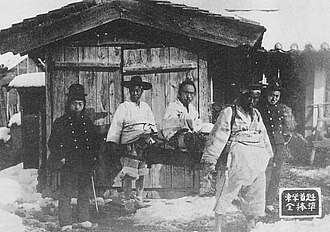
“The people are the most precious thing under heaven. We rise not for ourselves alone, but for the people of Joseon.”
— Spirit of the Tonghak Movement, 1894
In the spring of 1894, the Korean peninsula erupted. Tens of thousands of farmers, laborers, and followers of a new religious movement called Tonghak took up arms against a government they saw as corrupt, indifferent, and unable to protect them from exploitation. The Tonghak Peasant Revolution — also known as the Donghak Peasant Revolution — was not simply a local tax revolt. It was a defining moment in Korean history that ultimately triggered a war between China and Japan, accelerated the collapse of the Joseon dynasty, and planted seeds of Korean nationalist consciousness that would grow for decades to come.
Quick Facts: The Tonghak Peasant Revolution
| Detail | Information |
|---|---|
| Date | 1894 (January – December) |
| Location | Joseon Korea, primarily the Jeolla and Chungcheong provinces |
| Key Leader | Jeon Bongjun (전봉준) |
| Religious Basis | Tonghak (Eastern Learning) movement |
| Outcome | Suppressed by Joseon government with Japanese military assistance |
| Major Consequence | Triggered the First Sino-Japanese War (1894–1895) |
| Dynasty | Joseon (조선) |
What Was the Tonghak Movement, and Why Did It Spread?
To understand the revolution, one must first understand Tonghak — literally “Eastern Learning” — a religious and social movement founded in 1860 by Choe Je-u. Conceived as a response to the growing influence of Western Christianity (“Western Learning,” or Seohak) and foreign pressures on Korea, Tonghak drew on elements of Confucianism, Buddhism, and Taoism while asserting a distinctly Korean spiritual identity. At its heart was a radical egalitarian message: all human beings possessed an inner divine nature, and therefore no person was inherently superior to another.
This message resonated powerfully with Korea’s lower classes. By the 1880s and early 1890s, the Joseon dynasty was in deep crisis. The central government was riddled with corruption. Local magistrates — known as gunsu — routinely extorted taxes from farmers, seized land, and exploited laborers with near impunity. Famine conditions in the southern provinces left ordinary Koreans desperate. Meanwhile, the opening of Korea’s ports to foreign trade following the 1876 Ganghwa Treaty had disrupted traditional grain markets, and Japanese merchants were increasingly seen as draining Korean wealth.
Into this atmosphere of desperation and resentment, the Tonghak movement offered not just spiritual solace but a vision of a world turned right-side up — one in which the powerful would be held accountable and the common people treated with dignity.
3 Key Phases of the Revolution
1. The Gobu Uprising (January 1894)
The revolution’s opening act was local and specific. In Gobu County, in the Jeolla province, a magistrate named Jo Byong-gap had become notorious for forcing farmers to build a reservoir and then taxing them to use its water. In January 1894, a farmer-leader named Jeon Bongjun — nicknamed “Nokdu Janggun” (General Mung Bean) for his short stature — led a group of angry peasants to seize the county office, destroy the hated reservoir, and redistribute its stored grain to the poor. The government’s response was to send another punitive official, which only deepened resentment and widened the rebellion’s appeal.
2. The First Uprising and the Jeonju Peace Agreement (Spring 1894)
By the spring of 1894, what had begun as a local grievance had transformed into a mass movement. Tonghak forces under Jeon Bongjun swept through the Jeolla province, defeating government armies at the Battle of Hwangtojae in May 1894. They then captured Jeonju — a city of great symbolic importance as the ancestral home of the Joseon royal family. The fall of Jeonju sent shockwaves through the capital, Seoul. Facing an army it could not quickly defeat, the Joseon government negotiated: under the Jeonju Peace Agreement, the rebels agreed to stand down in exchange for a promise of reform. A system of local reform bureaus called jipgang was established in Jeolla province to address grievances. For a brief moment, it seemed as though change might come peacefully.
3. The Second Uprising and Final Suppression (Autumn–Winter 1894)
The fragile peace did not hold. The Joseon government, alarmed by the scale of the rebellion, had already made a fateful request: it asked Qing China to send troops to help restore order. China complied, but Japan — citing the 1885 Convention of Tientsin, which had given both powers the right to intervene in Korea — immediately dispatched its own forces. By the summer of 1894, both Chinese and Japanese soldiers were on Korean soil, and neither showed any intention of leaving. In July, Japanese forces seized the Gyeongbokgung Palace in Seoul and effectively took control of the Korean government. The First Sino-Japanese War had begun.
Seeing the Japanese military presence as a far greater threat than the Joseon government had ever been, Jeon Bongjun launched a second uprising in the autumn of 1894. This time, Tonghak forces from both the northern and southern commands attempted to march on Seoul to drive out the Japanese. They were met at the Battle of Ugeumchi in November 1894 — a catastrophic defeat. Armed primarily with traditional weapons and outgunned by Japanese rifles, the Tonghak army was decimated. Jeon Bongjun was captured in December 1894 and executed in Seoul in March 1895. The revolution was over.
“Though our bodies may perish, our spirit shall not die. The people’s cause endures beyond any single defeat.”
— Attributed to Jeon Bongjun at his trial, 1895
Why Did the Tonghak Revolution Matter Beyond Korea?
The Tonghak Peasant Revolution’s most immediate consequence was geopolitical rather than domestic. The arrival of Chinese and Japanese forces on the Korean peninsula — both ostensibly there to restore order — brought the two regional powers into direct confrontation. The First Sino-Japanese War (1894–1895), fought largely on Korean and Manchurian soil, ended in a decisive Japanese victory. Under the Treaty of Shimonoseki in 1895, China renounced its traditional suzerainty over Korea and ceded Taiwan and the Liaodong Peninsula to Japan. The era of Chinese dominance in East Asia was effectively over, and Japan’s rise as a regional imperial power had begun.
For Korea itself, the consequences were equally momentous. The Joseon government, now deeply dependent on Japanese support, was compelled to implement the Gabo Reforms of 1894–1895 — a sweeping modernization program that abolished the traditional class system, ended the state examination system, banned child marriage, and restructured the government along more modern lines. These reforms, though introduced under Japanese pressure and deeply resented by conservatives, represented some of the most significant social changes in Joseon history. They also accelerated the dynasty’s unraveling: the old order had been destabilized, and the new order being imposed was one in which Japan held increasing influence.
The Tonghak Revolution and Korean National Identity
In the longer arc of Korean history, the Tonghak Peasant Revolution occupies a complex and deeply honored place. The rebels were ultimately defeated, their leaders executed, and their immediate demands left largely unmet. Yet the revolution left an enduring legacy. The Tonghak movement itself did not disappear: it evolved, in the early twentieth century, into Cheondogyo — the “Religion of the Heavenly Way” — which played a significant role in the March First Independence Movement of 1919, one of the largest nonviolent protests against Japanese colonial rule.
The figure of Jeon Bongjun has become an iconic symbol of Korean resistance to oppression. In modern South Korea, the sites associated with the revolution — including Jeonju and the Gobu area in North Jeolla province — are recognized as places of national historical significance. The revolution is remembered not as a failed rebellion but as an assertion of the Korean people’s fundamental rights and dignity at a moment when both their own government and foreign powers had failed them.
| Movement | Year | Base of Support | Primary Goal | Outcome |
|---|---|---|---|---|
| Tonghak Peasant Revolution | 1894 | Farmers, laborers, Tonghak followers | End corruption, protect people from foreign exploitation | Suppressed; triggered Gabo Reforms |
| Gapsin Coup | 1884 | Progressive yangban elite | Modernization along Japanese Meiji lines | Suppressed within days; leaders exiled or killed |
| Independence Club Movement | 1896–1898 | Educated urban reformers | Democratic reform, Korean sovereignty | Dissolved by royal decree |
Continue Exploring
On This Site
- The Joseon Dynasty: Five Centuries of Korean Civilization
- The Gabo Reforms: How the Tonghak Revolution Changed Joseon Society
- The March First Movement of 1919: When Korea Said No
- Cheondogyo: The Legacy of Tonghak in Modern Korea