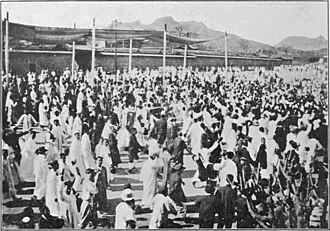
“We hereby proclaim the independence of Korea and the liberty of the Korean people.”
On a cold morning in early March 1919, something extraordinary happened across the Korean peninsula. From the streets of Seoul to remote villages in the countryside, Koreans of every background — students, farmers, merchants, monks, and Christian leaders — gathered publicly and declared that their nation was free. They waved handmade flags, read aloud a declaration of independence, and marched through streets controlled by Japanese colonial authorities. They were unarmed. They were defiant. And their cry would echo across the world.
The March First Movement, known in Korean as the Samiljeol (삼일절, or “March First Day”), stands as one of the most significant moments in Korean history — a mass nonviolent uprising against Japanese imperial rule that would shape the course of the independence struggle for decades to come.
Quick Facts: The March First Movement at a Glance
| Date | March 1, 1919 (demonstrations continued for months) |
|---|---|
| Location | Throughout the Korean peninsula, under Japanese colonial rule |
| Also Known As | Samiljeol (삼일절); the Sam-il Movement |
| Type of Action | Nonviolent mass protest, public readings of independence declaration |
| Key Participants | 33 national representatives, students, religious communities, general public |
| Colonial Power | Empire of Japan (Korea annexed 1910) |
| Key Outcome | Establishment of the Provisional Government of the Republic of Korea (April 1919) |
| Legacy | March 1 is a national public holiday in South Korea |
The World Korea Was Living In
To understand the March First Movement, we must first understand what Korea had endured in the years leading up to 1919. Japan had formally annexed Korea in 1910, ending the Joseon Dynasty and absorbing the peninsula into its rapidly expanding empire. Under Japanese colonial rule, Koreans faced systematic suppression of their language, culture, and political rights. Land was confiscated, Korean-language education was restricted, and any form of organized resistance was met with swift and often brutal force.
The colonial administration enforced control through the gendarmerie — a military police force with sweeping powers — that governed everyday life with an iron hand. Koreans could not freely assemble, publish independent newspapers, or organize politically. The weight of occupation bore down on millions of people who had, within living memory, known national sovereignty.
Then, in early 1919, two events on the global stage stirred new hope. The conclusion of the First World War had brought the idealistic language of U.S. President Woodrow Wilson to international prominence. His Fourteen Points speech included a call for self-determination of peoples — the principle that nations had the right to govern themselves. For Koreans, this was a spark. If the victorious Allied powers were rebuilding the world on the principle of self-determination, perhaps Korea’s case could be heard.
The second event was closer to home: the death of the former Korean Emperor Gojong in January 1919. Gojong, the last emperor of the Korean Empire, had long been a symbol of national sovereignty, however compromised by Japanese pressure. His death prompted mourning across the peninsula and provided a moment of public gathering that organizers would recognize as an opportunity.
How Was the March First Movement Organized?
The movement was not spontaneous. It was the product of careful, clandestine planning by networks of Korean intellectuals, religious leaders, and students. At its heart were 33 representatives — drawn from Christian communities, the Cheondogyo religious movement (a Korean spiritual tradition), and Buddhist groups — who gathered to sign the Korean Declaration of Independence. These 33 signatories knew the risks they faced: arrest, imprisonment, and likely torture.
The Declaration of Independence itself was a remarkable document. Written in a dignified, measured tone, it did not appeal to rage or vengeance. Instead, it grounded Korea’s claim to independence in universal principles of justice and human dignity. It announced the establishment of a free Korea not as an act of rebellion, but as a restoration of what was rightfully the Korean people’s own.
Copies of the declaration were printed and secretly distributed across the country in the days before March 1. On that chosen day, public readings were planned simultaneously in cities, towns, and villages throughout Korea. The Korean national flag, the Taegukgi, was prepared in homes and schools. Students at Ehwa Hakdang (one of Korea’s first modern schools for women) and Bosung College were among those who mobilized their communities.
“The movement spread with extraordinary speed across a peninsula where there were no telephones in most communities, no social media, no instant communication — only human networks, trust, and a shared conviction that something had to change.”
March 1, 1919: The Day Korea Spoke
On the morning of March 1, 1919, crowds gathered at Tapgol Park in central Seoul (then called Keijō by Japanese colonial administrators). When it became clear that the 33 signatories would not be reading the declaration publicly themselves — they had chosen to notify Japanese authorities directly and accept their arrest — a student stepped forward and read the declaration aloud to the gathered crowd.
Cheers erupted. People produced Korean flags they had hidden under their clothing. The crowd spilled into the streets, chanting “Manse!” — “Long live Korea!” — a phrase that would become synonymous with the movement. Across the city, similar scenes unfolded at churches, markets, and public squares.
The demonstrations spread with breathtaking speed. By the end of March, protests had taken place in hundreds of locations across the peninsula. Historians estimate that over the weeks and months of demonstrations, somewhere between one and two million people participated — an extraordinary figure for a population of approximately seventeen million living under close military surveillance.
The Japanese colonial response was swift and violent. Authorities deployed military forces, and crowds were met with rifles, bayonets, and mass arrests. One of the most notorious acts of repression occurred in the village of Jeam-ri (also romanized as Jemyŏng-ri) in Suwon, where Japanese soldiers herded villagers — many of them Christian — into a church and set it on fire. Dozens were killed. This massacre, and others like it, were documented by foreign missionaries who witnessed the crackdown firsthand, generating international outrage.
The Human Cost of the Uprising
The precise casualty figures for the March First Movement have been a subject of debate among historians, with Korean and Japanese sources often diverging significantly. Korean nationalist accounts recorded thousands killed, tens of thousands injured, and hundreds of thousands arrested. Japanese colonial records acknowledged far smaller numbers. What is not in dispute is that the Japanese response was brutal, that many Koreans died, and that the movement resulted in mass incarceration — with estimates of those arrested ranging from tens of thousands to nearly fifty thousand people over the course of the demonstrations.
Prisons overflowed. Detainees reported torture and extreme mistreatment. Among the most celebrated figures arrested during this period was Yu Gwan-sun, a teenage student from Ehwa Hakdang who had organized demonstrations in her home region of Cheonan after schools were closed by colonial authorities. She was arrested, sentenced to prison, subjected to severe mistreatment, and died in prison in September 1920. She became one of the enduring symbols of the movement’s spirit.
What Did the Movement Achieve?
Korea did not gain independence on March 1, 1919. Japan did not withdraw from the peninsula. In that immediate, concrete sense, the movement did not achieve its stated goal. Yet its consequences were profound and lasting, operating on multiple levels simultaneously.
1. The Establishment of the Provisional Government
In April 1919, just weeks after the uprising began, Korean independence activists established the Provisional Government of the Republic of Korea in Shanghai, China — beyond the reach of Japanese colonial authority. This government, which drew together leaders from across the independence movement, represented Korea’s claim to legitimate national existence and would continue its work for the next twenty-six years, until Japan’s defeat in 1945.
2. A Shift in Japanese Colonial Policy
The scale of the uprising shocked Japanese authorities. In the months that followed, the colonial administration under Governor-General Hasegawa Yoshimichi was replaced, and Japan announced a shift from the harsh “military rule” model to what it called “cultural rule” (bunka seiji). Restrictions on Korean-language newspapers were loosened, and some of the most overt forms of repression were modified — though the fundamental reality of colonial occupation remained unchanged. The movement had demonstrated that brute suppression alone could not pacify the Korean people.
3. International Attention
Reports from foreign missionaries and international observers brought Korea’s situation to global attention. While Western governments did not intervene — the Paris Peace Conference that year declined to take up Korea’s case — the movement established Korean independence as a cause with international moral weight. It influenced diaspora communities in the United States, China, and Russia, energizing support networks that would sustain the independence movement for decades.
4. A Living National Memory
Perhaps most enduringly, the March First Movement became the foundational event of modern Korean national identity. March 1 is today a national public holiday in South Korea, observed each year with ceremonies, flag-waving, and rereading of the original declaration. The movement’s values — nonviolent resistance, unity across religious and social lines, the insistence on human dignity — continue to resonate in Korean civic culture.
The March First Movement and the Wider World
| Feature | March First Movement (Korea, 1919) | Non-Cooperation Movement (India, 1920–22) |
|---|---|---|
| Primary Method | Mass public demonstrations, declaration readings | Boycotts, civil disobedience, non-participation in colonial institutions |
| Leadership Structure | Distributed — 33 signatories plus widespread local organizers | Centralized around Mahatma Gandhi and the Indian National Congress |
| Religious Dimension | Cross-religious coalition (Christian, Cheondogyo, Buddhist) | Broadly Hindu-led with Muslim participation (Khilafat alliance) |
| Colonial Response | Military crackdown, mass arrests, massacres | Mass arrests; movement called off after violence at Chauri Chaura |
| Immediate Outcome | No independence; colonial policy reforms; Provisional Government established | No independence; heightened national consciousness |
The March First Movement emerged at a pivotal moment in global history — the same post-WWI period that gave rise to independence movements and nationalist uprisings across Asia, the Middle East, and Africa. Korea’s movement was among the earliest and largest of these, and its example was noted by independence advocates in other colonized nations. The principle that an unarmed people could confront an empire with moral clarity and collective will was one whose time had come.
Why Does the March First Movement Still Matter Today?
More than a century after those first crowds gathered in Tapgol Park, the March First Movement remains the single most important event in the story of Korean national resistance. It is the moment when the Korean people, stripped of their state and their sovereignty, demonstrated that they had not surrendered their identity or their will.
The movement’s legacy is visible everywhere in modern South Korea: in the national holiday observed each March 1st, in the faces printed on currency and depicted in school textbooks, in the constitution of the Republic of Korea — which explicitly grounds its legitimacy in the tradition of the 1919 Provisional Government. The democratic values that Korean civil society has defended in its own turbulent twentieth-century history draw, in part, from this foundational moment of principled, peaceful resistance.
For students of history, the March First Movement offers a remarkable case study in how ordinary people — without weapons, without state power, and without international support — can assert the deepest truths about human dignity and leave a mark on history that no colonial administration could erase.
Continue Exploring
On Coreaverse
- Emperor Gojong: The Last Ruler of the Korean Empire
- Korea’s Government in Exile: The Shanghai Provisional Government
- Yu Gwan-sun: The Student Who Defied an Empire
- Tapgol Park: Where Korea’s Independence Was Declared