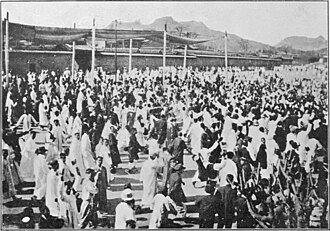
“We herewith proclaim the independence of Korea and the liberty of the Korean people.”
— Opening line of the Korean Declaration of Independence, March 1, 1919
On the first day of March 1919, something extraordinary happened across the Korean peninsula. In cities, towns, and rural villages alike, men and women — students, farmers, religious leaders, and merchants — stepped into the streets and declared, with a single voice, that Korea was free. They were not free, not yet, and many of them knew it. Japanese colonial authorities would respond with arrests, beatings, and worse. Yet the March First Movement, known in Korean as Samiljeol (삼일절), became one of the most significant moments in modern Korean history — a declaration not just of political ambition, but of national identity and human dignity.
More than a century later, March 1st remains a national holiday in South Korea, commemorated every year as a reminder of what ordinary people are capable of when they stand together.
Quick Facts: The March First Movement
| Date | March 1, 1919 (protests continued for months) |
| Location | Throughout the Korean peninsula |
| Also Known As | Samiljeol (삼일절); Sam-il Independence Movement |
| Context | Japanese colonial rule of Korea (1910–1945) |
| Key Document | Korean Declaration of Independence |
| Signatories | 33 representatives (religious and civic leaders) |
| Legacy | National holiday in South Korea; inspiration for later independence efforts |
Background: A Nation Under Colonial Rule
To understand the March First Movement, one must first understand the world in which it occurred. Japan had formally annexed Korea in 1910 following years of increasing political pressure and military domination. The annexation ended the five-century reign of the Joseon Dynasty and placed Korea under the authority of a Japanese Governor-General whose powers were sweeping and largely unchecked.
Under Japanese colonial rule, Korean cultural expression was suppressed. The Korean language was marginalized in official settings, Korean land was transferred to Japanese-controlled entities, and Korean political organization was tightly controlled. The military police — known as the gendarmerie — enforced colonial order with a heavy hand. Koreans were subjects of the Japanese empire, not citizens with equal rights.
Yet Korean national consciousness did not disappear. It deepened. Religious communities — particularly Christian congregations and the Cheondogyo faith — became important nodes of organization and resistance. Schools, even those operating under colonial oversight, quietly passed down a sense of Korean identity. And by the late 1910s, global events were creating new possibilities for imagining independence.
Why Did the March First Movement Happen in 1919?
The timing of the uprising was not accidental. Several converging forces made 1919 the moment when decades of suppressed frustration finally broke into public action.
1. The Death of Emperor Gojong
In January 1919, the last emperor of Korea, Gojong, died under circumstances that many Koreans found suspicious. Rumors spread that he had been poisoned by Japanese authorities rather than dying of natural causes. His death unleashed a wave of grief and anger across the peninsula. His state funeral, scheduled for March 3, 1919, would bring large numbers of Koreans to Seoul — a fact that organizers of the independence movement recognized as an opportunity to gather people without arousing immediate suspicion.
2. Wilsonian Self-Determination
The end of World War I and U.S. President Woodrow Wilson’s articulation of the principle of national self-determination — the idea that peoples had the right to determine their own political futures — electrified independence movements around the world. Korean intellectuals and activists, many of whom were aware of the Paris Peace Conference taking place in early 1919, believed the moment had come to make Korea’s case before the international community. Though Wilson’s principles were ultimately applied selectively and not to colonial Korea, the rhetoric of self-determination gave the movement moral language and a sense of global alignment.
3. Student Activism and Religious Networks
Korean students studying in Tokyo had already issued their own declaration of independence in February 1919, known as the February Eighth Declaration. This act of courage by overseas students emboldened organizers back home. At the same time, networks of Christian and Cheondogyo leaders were quietly coordinating a far larger public demonstration, drafting a declaration and gathering signatories across the peninsula.
“The strength of the March First Movement lay not in arms or armies, but in the moral weight of a people refusing to accept their own erasure.”
March 1, 1919: The Day of Declaration
The plan was set for March 1st, two days before the state funeral of Emperor Gojong. Thirty-three representatives — drawn from Christian, Cheondogyo, and Buddhist communities — gathered at Taehwagwan restaurant in Seoul to sign and read aloud the Korean Declaration of Independence. Simultaneously, copies of the declaration were distributed across the country, and crowds gathered in public squares, marketplaces, and streets to hear it read aloud and to join in the cry of “Daehan Dongnip Manse!” — “Long live Korean independence!”
The thirty-three signatories, knowing they would likely be arrested, notified Japanese authorities themselves after the reading. They were indeed taken into custody. But the movement they had helped ignite could not be so easily contained.
From Seoul, demonstrations spread rapidly. Within days, protests had erupted in cities and towns across the peninsula. The movement crossed every social boundary — men and women, young and old, farmers and scholars. Participants carried Korean flags, sang, marched, and called for freedom. The demonstrations were, by design and by conviction, nonviolent.
The Japanese Response and Its Consequences
Japanese colonial authorities responded to the uprising with force. Military police and soldiers were deployed across the peninsula. Demonstrators were beaten, arrested, and in numerous cases killed. Villages where protests were held faced collective punishment. The most notorious single incident occurred in the village of Jeam-ri in Gyeonggi Province, where Japanese soldiers locked villagers inside a church and set it on fire, killing those who tried to escape — a massacre that became emblematic of colonial brutality.
The scale of the crackdown was significant. Thousands of Koreans were arrested in the weeks and months following March 1st. Many were imprisoned and subjected to harsh treatment. The movement, for all its moral power, did not immediately achieve Korean independence.
Yet it changed things in ways that mattered enormously.
What Did the March First Movement Actually Achieve?
Judged by immediate political outcomes, one might conclude that the March First Movement failed — Japan did not grant Korea independence in 1919. But such a judgment misses the deeper significance of what happened.
First, it demonstrated the breadth of Korean national sentiment. The movement proved, to Koreans and to the watching world, that opposition to Japanese colonial rule was not the sentiment of a small elite but of an entire people. Participation spanned regions, religions, and classes in a way that was impossible to dismiss.
Second, it led to the establishment of the Provisional Government of the Republic of Korea. In April 1919, Korean independence activists established a government-in-exile in Shanghai, China. This provisional government, which included figures such as Syngman Rhee and Kim Gu, would serve as the political and symbolic center of the Korean independence movement for the next two and a half decades, until Japan’s defeat in World War II in 1945.
Third, it forced a shift in Japanese colonial policy. Embarrassed by international attention to the crackdown and its brutality, Japanese authorities moved away from the most overt forms of military repression. The period of so-called “Cultural Policy” that followed allowed somewhat greater — though still strictly limited — Korean cultural and press activity. This was a modest concession, but it was a concession nonetheless, won by the courage of those who marched.
Fourth, it became the founding myth of modern Korean national identity. The March First Movement is not merely historical event — it is the story Koreans tell about themselves: that they resisted, that they stood up, that they did not accept occupation silently. This narrative underpins the national identity of both South and North Korea, though it is commemorated quite differently in each.
Remembering Samiljeol: Legacy and Commemoration
In South Korea, March 1st — Samiljeol — is one of the most important national holidays of the year. Government ceremonies are held, the Declaration of Independence is read aloud in public, and the story of the movement is taught in every school. The Tapgol Park in central Seoul, where some of the first public readings of the declaration took place, remains a site of historical memory and annual commemoration.
The movement also left a deep imprint on Korean diaspora communities, particularly in China, the United States, and Russia, where Koreans living abroad had organized in support of independence. These overseas networks, energized by the events of March 1919, remained active throughout the colonial period and contributed to the diplomatic and activist work that eventually contributed to Korea’s liberation in 1945.
Historians outside Korea have increasingly recognized the March First Movement as one of the most significant anticolonial uprisings of the twentieth century — comparable in its scale and moral clarity to other great nonviolent movements for national liberation. The image of unarmed Koreans facing soldiers and police, declaration in hand, continues to resonate.
Continue Exploring
- On This Site: The Korean Declaration of Independence: Words That Changed a Nation
- On This Site: Korea’s Government in Exile: The Shanghai Provisional Government
- On This Site: Emperor Gojong: The Last Ruler of the Joseon Dynasty
- March First Movement — Wikipedia
- Encyclopedia of Korean Culture (AKS)
- March First Movement — Britannica
- Asia Society: Korean History and Culture Resources
- National Heritage Portal of Korea