“In the beginning, there was Dangun Wanggeom, who founded the kingdom of Joseon.”
— From the Samguk Yusa, 13th century Korean historical text
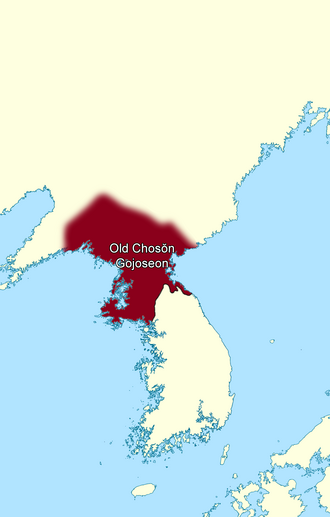
Long before the Silla queens, the Buddhist temples of the Three Kingdoms, or the great Confucian halls of the Joseon dynasty, there was Gojoseon — Korea’s first and most ancient state. Known in older romanization as Old Chosŏn, Gojoseon stands at the very threshold of Korean civilization, occupying a space where history blurs into legend, and where archaeology is only beginning to fill in the gaps left by myth.
For Koreans, Gojoseon is not merely an ancient polity — it is a founding story, a source of national identity, and the origin point of a continuous civilization stretching more than two thousand years. Understanding it means grappling with one of Northeast Asia’s most fascinating and debated chapters of early history.
| Detail | Information |
|---|---|
| Also Known As | Old Chosŏn, Joseon (고조선) |
| Traditional Founding Date | 2333 BC (legendary) |
| Fall | 108 BC (conquest by Han China) |
| Founder (Legendary) | Dangun Wanggeom |
| Core Territory | Northern Korean Peninsula and southern Manchuria |
| Primary Sources | Samguk Yusa, Donggukyeoji seungnam, Chinese annals |
| Archaeological Culture | Megalithic (dolmen), Bronze Age, Liaoning-type bronze daggers |
| Successor States | Four Han Commanderies (Chinese), various Korean proto-kingdoms |
The Bear, the Tiger, and the Birth of a Nation
Every civilization has a founding myth, and Korea’s is among the most vivid in all of East Asian history. According to the Samguk Yusa — a 13th-century compilation of Korean legends and history written by the Buddhist monk Iryeon — the kingdom of Gojoseon was founded by Dangun Wanggeom in 2333 BC.
The story begins in heaven. Hwanung, the son of the heavenly king Hwanin, descended to earth on Baekdusan (Mount Baekdu) accompanied by three thousand followers and the gods of wind, rain, and clouds. He established a divine city and taught humanity the arts of civilization.
One day, a bear and a tiger came to Hwanung, begging to become human. He gave them sacred mugwort and garlic, instructing them to stay in a cave away from sunlight for one hundred days. The tiger gave up, but the bear endured and transformed into a woman — Ungnyeo, the Bear Woman. She and Hwanung married, and their son was Dangun Wanggeom, who would go on to found Asadal (believed to be near present-day Pyongyang) as the capital of Joseon.
Modern historians treat this account as a mythological narrative rather than literal history, but it carries deep cultural significance. The story encodes ideas about the relationship between humans and nature, the divine right of Korean rulers, and the spiritual connection between the Korean people and the sacred mountain Baekdusan — a peak that remains symbolically important to both North and South Korea today.
What Do Archaeologists Actually Know About Gojoseon?
Separating historical fact from legend is one of the central challenges of Gojoseon scholarship. While the 2333 BC founding date is traditional and mythological, historians and archaeologists have identified real Bronze Age cultures in the northern Korean Peninsula and southern Manchuria that plausibly correspond to the political entity referred to in early Chinese texts as Joseon.
The most distinctive archaeological marker associated with Gojoseon culture is the Liaoning-type bronze dagger (also called the slender bronze dagger or mandolin-shaped dagger). These elegant, uniquely Korean-style weapons — quite different in shape from Chinese bronze daggers of the same period — appear across a broad arc stretching from the Liaodong Peninsula through the Korean Peninsula. Their distribution is often used to map the approximate extent of the cultural sphere associated with Gojoseon.
Also associated with this culture are dolmens — large stone burial monuments. Korea has one of the highest concentrations of dolmens in the world, and the dolmen fields of Gochang, Hwasun, and Ganghwa were designated a UNESCO World Heritage Site in 2000, recognized as significant monuments of the prehistoric and early historic peoples of the Korean Peninsula.
Bronze artifacts, fine pottery, and evidence of stratified social organization all point to a sophisticated Bronze Age society existing in this region by at least the first millennium BC — consistent with the political entity that Chinese records begin mentioning around the 7th century BC.
“The dolmens of Korea represent one of the world’s greatest concentrations of megalithic monuments — silent witnesses to the early peoples who built the foundations of Korean civilization.”
— UNESCO World Heritage Committee
Why Does Gojoseon Matter to Korean Identity?
The question of why Gojoseon holds such a central place in Korean national consciousness goes beyond academic history. For Koreans, it answers a profound question: who were we before the Chinese, before Buddhism, before written history as recorded by outsiders?
The answer Gojoseon provides is powerful: we were here, we had our own kingdom, our own rulers, our own culture — and we have been a distinct people for thousands of years. This sense of deep historical continuity has been central to Korean identity across many periods of foreign pressure, colonial rule, and national division.
The name itself is meaningful. Go (고) means “old” or “ancient” in Korean — it was added by later historians to distinguish this early state from the Joseon dynasty founded in 1392. The original name was simply Joseon, meaning something close to “Land of the Morning Calm” or “Land of the Morning Freshness,” a poetic designation that would echo through Korean history for millennia.
Dangun, the legendary founder, is venerated in Korea’s indigenous spiritual tradition, Cheondogyo, and his mythological founding date of October 3rd, 2333 BC is celebrated as Gaecheonjeol — National Foundation Day — a public holiday in South Korea observed every year on October 3rd.
Three Phases: How Gojoseon Changed Over Time
- The Dangun Period (Legendary / Mythological Phase): The founding era associated with Dangun Wanggeom. This phase is documented in Korean literary and historical tradition but lacks direct archaeological confirmation. Scholars view it as encoding genuine cultural memory about the origins of the Korean people and their earliest political organization.
- The Gija Period (Contested Historical Phase): Chinese records speak of a sage named Gija (Jizi in Chinese) who, according to tradition, migrated from the collapsing Shang dynasty of China to Joseon around 1122 BC and became its ruler. Korean nationalist historians have long contested this account, viewing it as a later Chinese attempt to frame Korean civilization as derivative of Chinese culture. Modern scholarship treats the Gija narrative with considerable skepticism, and many Korean historians reject it entirely or view it as a mythologized account of Chinese cultural influence on the region rather than literal dynastic succession.
- The Wiman Period (Documented Historical Phase, c. 194–108 BC): This is the most historically secure phase of Gojoseon. Around 194 BC, a Chinese exile named Wiman (Weiman in Chinese) — who had fled turmoil in the Chinese state of Yan — gathered followers, crossed the border into Joseon, and eventually seized power from the ruling king Jun. Wiman’s Joseon maintained its Korean character despite its leader’s Chinese origins, using the existing governmental structure and retaining Korean customs. Under Wiman and his successors, the kingdom became a significant regional power, controlling trade routes between China and the Korean Peninsula, and extending its influence over neighboring peoples.
The Fall of Gojoseon: War with Han China
The end came from the west. By the reign of Wiman’s grandson Ugeo (also written Ugo), Gojoseon had grown prosperous and strategically positioned enough to become a target of the expansionist Han dynasty of China, then at the height of its power under Emperor Wu (Wudi).
Relations between Gojoseon and the Han court had grown tense over trade and diplomatic access. Gojoseon acted as a middleman between Han China and various peoples further east and south on the Korean Peninsula, and Han China resented both this control and Gojoseon’s growing independence.
In 109 BC, Emperor Wu launched a major military invasion of Gojoseon, sending both a naval force and a land army. The campaign did not go smoothly for the Han — their forces suffered setbacks, and the Gojoseon capital of Wanggeomseong (believed to be near modern Pyongyang) held out for over a year. Internal divisions within Gojoseon’s ruling class ultimately proved fatal. In 108 BC, the city fell after pro-peace factions assassinated King Ugeo and surrendered to the Han forces.
The Han dynasty subsequently divided the former Gojoseon territory into four administrative commanderies. These commanderies — Lelang (Nangnang in Korean), Xuantu, Zhenfan, and Lintun — would have a complex and contested legacy, serving as conduits for Chinese cultural influence into the Korean Peninsula while simultaneously provoking resistance that would eventually give rise to the successor kingdoms of the Three Kingdoms period.
| Feature | Gojoseon (Wiman Period) | Han Commanderies (Post-108 BC) |
|---|---|---|
| Political Character | Indigenous Korean kingdom with mixed influences | Chinese imperial administration |
| Cultural Orientation | Korean Bronze Age / Iron Age culture | Han Chinese bureaucratic culture |
| Trade Role | Independent regional trade broker | Integrated into Han imperial economy |
| Duration | c. 194–108 BC (Wiman phase) | Varied; Lelang survived until 313 AD |
| Legacy | Foundation of Korean national identity | Catalyst for rise of Three Kingdoms |
Gojoseon’s Legacy: The Seed of Korean Civilization
Though Gojoseon fell more than two thousand years ago, its legacy has proven extraordinarily durable. The political vacuum left by its collapse accelerated the formation of new Korean kingdoms — Goguryeo, Baekje, and Silla — which would dominate the peninsula for the next several centuries and shape Korean culture in profound ways.
The cultural traditions associated with the Gojoseon sphere — including distinctive bronze craftsmanship, megalithic burial practices, and shamanistic religious customs — fed into the emerging cultures of the Three Kingdoms period and beyond. The Liaoning-type bronze daggers found across the Gojoseon cultural zone gave way to iron technology, but the artistic and ceremonial sensibilities they represent persisted in Korean material culture.
Perhaps most importantly, the memory of Gojoseon gave Koreans a founding narrative independent of China. In periods when Korean kingdoms were heavily influenced by Chinese culture, literature, and political thought, the story of Dangun and the ancient kingdom of Joseon served as a reminder that Korean civilization had its own roots — that the Korean people were not simply recipients of Chinese civilization but the inheritors of their own ancient tradition.
That narrative continues to resonate. Every October 3rd in South Korea, Gaecheonjeol is observed as a national holiday. The Dangun myth is taught in schools. And scholars across Korea and internationally continue to debate, excavate, and analyze the archaeological record in hopes of learning more about the real people who built Northeast Asia’s earliest Korean-speaking civilization.
Continue Exploring
On Coreaverse.com:
- The Three Kingdoms of Korea: Goguryeo, Baekje, and Silla
- Korea’s Dolmens: Ancient Stones and UNESCO Heritage
- What the Dangun Myth Really Tells Us About Early Korea
External Resources: