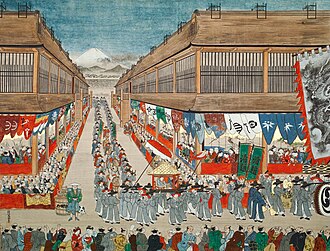
“The Tongsinsa were not merely messengers — they were living bridges between two civilizations, carrying knowledge, art, and goodwill across the sea.”
For more than two hundred years, a remarkable procession of scholars, artists, musicians, and diplomats set sail from Korea’s shores bound for Japan. They were the Joseon Tongsinsa (조선통신사) — the official diplomatic missions dispatched by the Joseon dynasty to the Tokugawa shogunate. These were not simple state visits. They were grand cultural exchanges, carefully choreographed demonstrations of learning and prestige, and the foundation of one of early modern Asia’s most significant bilateral relationships.
The story of the Tongsinsa is a story of resilience and reinvention. Born in the aftermath of devastating war, the missions rebuilt trust between two neighbors and created a channel through which art, philosophy, medicine, and literature flowed in both directions. Today, the historical records of the Tongsinsa are recognized as part of UNESCO’s Memory of the World Register, a testament to their enduring importance.
Quick Facts: The Joseon Tongsinsa at a Glance
| Fact | Detail |
|---|---|
| Korean Name | 조선통신사 (Joseon Tongsinsa) |
| Meaning | “Envoys of Communication and Trust” |
| Period of Activity | 17th–19th century (post-1607) |
| Host Country | Japan (Tokugawa Shogunate) |
| Number of Missions | 12 recorded missions (post-war era) |
| Final Mission | 1811 |
| UNESCO Recognition | Memory of the World Register |
| Typical Delegation Size | 300–500 people |
Origins: From War to Diplomacy
To understand the Tongsinsa, one must first understand the catastrophe that preceded them. The Japanese invasions of Korea — known in Korean as the Imjin Waeran — took place between 1592 and 1598. Led by the warlord Toyotomi Hideyoshi, the campaigns devastated the Korean peninsula, leaving cities in ruin, farmland scorched, and hundreds of thousands of Koreans dead or captured. The invasions remain one of the most traumatic episodes in Korean history.
When Hideyoshi died in 1598 and Japanese forces withdrew, both sides were left to assess a shattered relationship. The new ruler of Japan, Tokugawa Ieyasu, was eager to restore trade and diplomatic ties — his priorities lay in consolidating power at home, and normalized relations with Korea and China served his broader strategic interests. The Joseon court, while deeply wounded by the invasions, recognized that cautious engagement was preferable to perpetual hostility with a neighboring power.
The intermediary in this delicate rapprochement was the domain of Tsushima, a Japanese island positioned between the Korean peninsula and the Japanese mainland. The lords of Tsushima, the So clan, had long depended on Korean trade for their livelihood and worked energetically to broker renewed contact. It was through Tsushima’s mediation that preliminary diplomatic exchanges began, culminating in the first post-war Tongsinsa mission in 1607.
That initial mission had multiple purposes: to confirm that Japan’s new Tokugawa rulers were genuinely committed to peace, to recover some of the Korean captives taken during the wars, and to begin the slow process of restoring institutional trust. It succeeded on all three fronts, setting the stage for a diplomatic relationship that would last over two centuries.
What Did the Name Mean?
The name Tongsinsa carries deep meaning. The word tongshin (통신) combines characters meaning “to communicate” and “trust” or “faithfulness.” The missions were thus not merely diplomatic in the modern bureaucratic sense — they were conceived as acts of mutual good faith, ceremonial expressions of the desire to maintain sincere communication between the two states.
Interestingly, the name itself was subject to political negotiation. Earlier missions used different titles, reflecting the complex questions of hierarchy and protocol that governed East Asian interstate relations. The eventual adoption of the Tongsinsa designation represented a carefully balanced formula that both sides could accept without compromising their respective claims to prestige.
Why Were the Tongsinsa Missions So Remarkable?
1. Their Sheer Scale and Spectacle
A typical Tongsinsa delegation comprised between 300 and 500 individuals. This was not a small diplomatic party — it was a traveling city. The procession included the three chief envoys (a senior ambassador, a deputy, and a secretary), but also physicians, painters, calligraphers, musicians, poets, interpreters, military escorts, and a vast retinue of servants and support staff.
The journey itself was extraordinarily demanding. Delegates traveled by sea from Busan to Tsushima, then onward through the Inland Sea to Osaka, and finally overland to Edo (present-day Tokyo), where they would be received by the Tokugawa shogun. The round trip could take six months to a year. Japanese domains along the route were required to provide accommodation and supplies, which represented an enormous logistical and financial undertaking for the shogunate.
2. Their Cultural Impact on Japan
The Tongsinsa missions became cultural phenomena in Japan. Crowds gathered in their tens of thousands to witness the procession pass through towns and cities. Japanese intellectuals, artists, and scholars jostled for the rare opportunity to meet the Korean envoys and exchange poems, paintings, and ideas.
“Wherever the Korean envoys passed, Japanese scholars thrust forward their brushes, begging for a verse — a poem, a line of calligraphy — anything that bore the mark of Joseon learning.”
Korean calligraphy was especially prized. Senior Joseon scholars would sometimes find themselves writing hundreds of pieces during a single mission, unable to refuse the insistent requests of their Japanese admirers. Korean Neo-Confucian philosophy, poetry styles, medical knowledge, and artistic techniques were all absorbed and adapted by Japanese counterparts who encountered the missions. In this sense, the Tongsinsa served as a major conduit for the transmission of continental learning into Japanese intellectual culture.
3. Their Role in Maintaining Regional Peace
The Tokugawa period in Japan was remarkable for its relative stability and its policy of controlled foreign relations. The Tongsinsa missions were a cornerstone of this system. Each new shogun expected a Joseon delegation to arrive and offer congratulations — a ritual that confirmed the legitimacy of the new ruler in an East Asian ceremonial framework.
For the Joseon court, maintaining the missions required ongoing calculations about dignity and protocol. Korean officials were acutely sensitive to any suggestion that they were subordinate to Japan — the missions had to be framed as exchanges between equals, or even as acts of Korean benevolence toward a lesser power. This careful management of symbolic politics helped prevent the relationship from collapsing into open conflict even during periods of tension.
The People Behind the Missions
The envoys themselves were typically senior officials selected from the Joseon scholarly elite. Being chosen as a Tongsinsa ambassador was both an honor and a burden — the journey was dangerous, the responsibilities enormous, and the cultural pressure to represent Korea’s civilization with distinction was immense.
Many envoys left detailed accounts of their journeys in the form of travel diaries known as sahaengnok (사행록). These records are invaluable historical documents, offering vivid descriptions of Japanese geography, customs, food, architecture, and people as seen through Korean eyes. They constitute one of the most detailed bodies of Korean-authored observation of Japan from the early modern period, and many survive to this day in libraries and archives in both countries.
The missions also included professional artists commissioned to document the journey visually. Paintings depicting the Tongsinsa processions — elaborate, colorful scrolls showing the delegation winding through Japanese landscapes — were produced by both Korean and Japanese artists and remain among the most striking visual records of early modern Korea-Japan exchange.
Comparison: Early vs. Late Tongsinsa Missions
| Aspect | Early Missions (1607–1682) | Later Missions (1711–1811) |
|---|---|---|
| Primary Purpose | Post-war reconciliation, captive repatriation | Shogunal succession congratulations |
| Destination | Edo (Tokyo) | Edo, and later Tsushima only (1811) |
| Delegation Size | 400–500 people | Reduced over time due to cost |
| Cultural Exchange | Intense, novelty-driven | More formalized and ritualized |
| Japanese Reception | Enormous public fascination | Continued interest, more routine |
| Political Context | Fragile peace, active trust-building | Established peace, institutional diplomacy |
Why Did the Missions End?
The final Tongsinsa mission took place in 1811 — and significantly, it traveled only as far as Tsushima rather than making the full journey to Edo. This curtailment reflected growing financial strain on both sides. The missions were extraordinarily expensive. The Tokugawa shogunate, facing mounting fiscal pressures in the late 18th and early 19th centuries, negotiated with Joseon to hold the reception at Tsushima as a cost-saving measure. For Korea, the reduced mission also reflected the declining vigor of the Joseon bureaucratic system in the later dynasty period.
After 1811, no further missions were dispatched. The diplomatic landscape of East Asia was transforming under the pressure of Western imperial expansion. By the middle of the 19th century, both Korea and Japan were confronting existential challenges from European and American powers, and the old framework of Tokugawa-Joseon diplomacy became a relic of a vanished world.
When Japan forcibly opened diplomatic and eventually colonial relations with Korea in the latter half of the 19th century, the memory of the Tongsinsa — those grand missions of mutual respect and cultural exchange — stood in painful contrast to the new reality of domination and subjugation.
Legacy and UNESCO Recognition
Today, the historical records associated with the Joseon Tongsinsa are recognized on UNESCO’s Memory of the World Register, jointly inscribed by South Korea and Japan. This inscription acknowledges not only the historical significance of the missions but also their value as a model of cultural diplomacy and peaceful exchange between neighboring civilizations.
The Tongsinsa legacy is celebrated in both countries. In Busan, South Korea — the port from which the missions departed — festivals and cultural events commemorate the tradition. In various Japanese cities along the historic route, local communities have preserved memories of the processions, and some have revived ceremonial reenactments to honor the connection.
Scholars in both Korea and Japan continue to study the thousands of documents, artworks, and travel diaries produced in connection with the missions. These materials offer an unparalleled window into early modern East Asian cultural history, diplomatic practice, and the complex, often fraught relationship between two civilizations that were simultaneously deeply connected and sharply distinct.
The Tongsinsa remind us that Korea and Japan’s shared history is not defined only by conflict. For more than two centuries, human beings crossed the sea between these two nations carrying books, brushes, music, and ideas — proof that even after catastrophic war, the work of building trust and understanding is possible.