“We hereby declare that Korea is an independent nation and that Koreans are a self-governing people.”
— Opening words of the March 1st Declaration of Independence, 1919
Few chapters in Korean history carry as much emotional weight and national significance as the independence movement that burned through the early twentieth century. When Japan formally annexed Korea in 1910, it did not simply absorb a territory — it attempted to erase an entire civilization. What followed over the next three and a half decades was one of Asia’s most determined, multifaceted, and ultimately successful struggles for national liberation. The Korean independence movement was not a single event or a single person’s story. It was a vast, living force that expressed itself in street protests, armed guerrilla campaigns, diplomatic missions, cultural resistance, and quiet acts of everyday defiance.
Quick Facts: Korea’s Independence Movement at a Glance
| Category | Details |
|---|---|
| Period | 1910–1945 (Japanese colonial period) |
| Key Event | March 1st Movement (Samil Movement), 1919 |
| Governing Body in Exile | Provisional Government of the Republic of Korea, established in Shanghai, 1919 |
| Key Figures | Yu Gwan-sun, An Chang-ho, Kim Gu, Ahn Jung-geun |
| Armed Resistance | Independence Army (Dongnipgun) operating in Manchuria and Siberia |
| Liberation Date | August 15, 1945 (Gwangbokjeol — National Liberation Day) |
| Primary Methods | Mass protest, armed resistance, diplomatic advocacy, cultural preservation |
How Did Japan Come to Rule Korea?
To understand the independence movement, one must first understand the circumstances that made it necessary. Korea’s Joseon Dynasty had endured for over five centuries, but by the late nineteenth century it faced intense pressure from competing imperial powers — China, Russia, and Japan all sought influence over the peninsula. After Japan’s victory in the Russo-Japanese War of 1904–1905, Korea was effectively reduced to a Japanese protectorate. The Eulsa Treaty of 1905, signed under duress, stripped Korea of its foreign policy autonomy. Five years later, in 1910, the Japan-Korea Annexation Treaty formally ended Korean sovereignty. Many Koreans refused to accept the legitimacy of this treaty from the very moment it was signed, and resistance began almost immediately.
Japanese colonial rule imposed sweeping changes on Korean society. The colonial government controlled the press, restricted Korean-language education, confiscated land, and attempted to suppress Korean cultural identity. Korean names were eventually pressured to be changed to Japanese names under the 1940 sōshi-kaimei policy. These systematic efforts to erase Korean identity did not achieve their intended effect — instead, they intensified the determination of those who fought back.
The March 1st Movement: A Nation Rises
The most iconic moment of the entire independence struggle came on March 1, 1919. Inspired in part by the international mood following World War I — particularly Woodrow Wilson’s principle of national self-determination — Korean leaders organized a massive, coordinated act of peaceful resistance. On that day, thirty-three representatives from various religious communities, including Christian and Cheondogyo leaders, gathered in Seoul’s Taehwagwan restaurant and read aloud the Declaration of Independence. Simultaneously, protest marches erupted across the country, with crowds chanting “Daehan Dongnip Manse!” — Long Live Korean Independence.
The movement spread with astonishing speed. Within weeks, demonstrations had taken place in hundreds of cities, towns, and villages across the peninsula. Participants came from every walk of life: students, farmers, merchants, Buddhist monks, Christian ministers, and housewives. The Japanese colonial authorities responded with brutal force. Protesters were shot, beaten, and imprisoned. Entire villages were burned. Historians estimate that the Japanese suppression of the March 1st Movement resulted in thousands of deaths and tens of thousands of arrests.
“The March 1st Movement showed the world that Korea had not accepted its colonization — that beneath the surface of occupation, a nation remained fully alive and determined to reclaim itself.”
Among those who became symbols of the movement’s spirit was Yu Gwan-sun, a sixteen-year-old student from Cheonan who organized protests in her hometown after her school was closed. Arrested, tortured, and imprisoned, she died in Seodaemun Prison in 1920. She remains one of the most revered figures in Korean history, a symbol of courage and sacrifice. Her story is inseparable from the larger story of a generation that chose resistance over compliance.
3 Pillars of the Korean Independence Movement
1. The Provisional Government in Shanghai
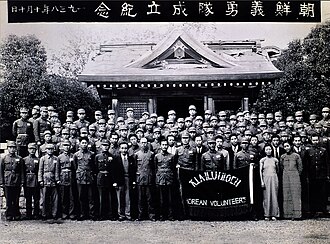
Following the March 1st Movement, Korean independence leaders recognized the need for a more organized political structure. In April 1919, the Provisional Government of the Republic of Korea was established in Shanghai, China — beyond the reach of Japanese colonial authorities. This government-in-exile sought international recognition, coordinated resistance activities, and maintained the idea of Korean statehood through decades of displacement. Kim Gu, who became one of the government’s most important leaders, dedicated his life entirely to the cause of liberation. The Provisional Government also sent delegations to the Paris Peace Conference of 1919, though their appeals were ultimately unsuccessful in gaining formal international support at that time.
2. Armed Resistance in Manchuria and Abroad
Not all resistance was peaceful. Korean independence armies operated in Manchuria, Siberia, and other regions outside Japanese control. These forces engaged Japanese military units in guerrilla campaigns throughout the colonial period. The Battle of Qingshanli in 1920 is remembered as one of the most significant military engagements of the resistance, in which Korean independence fighters achieved a notable victory against Japanese forces in Manchuria. These armed groups struggled under harsh conditions — limited resources, difficult terrain, and relentless pursuit by Japanese forces — but they kept the flame of armed resistance alive across decades.
3. Cultural and Diplomatic Resistance
Equally important, though less dramatic, was the work of those who preserved and promoted Korean language, history, and culture as acts of resistance. Scholars secretly compiled Korean-language dictionaries. Journalists risked imprisonment to report in Korean. Organizations like the Sin’ganhoe, founded in 1927, sought to unite nationalists and socialists in a broad coalition for Korean rights. Abroad, figures like Ahn Chang-ho traveled to the United States and elsewhere to build networks of support among the Korean diaspora and advocate for the Korean cause in international forums. Syngman Rhee, who would later become the first president of South Korea, lobbied American officials for years from his base in Hawaii.
Comparing Methods of Resistance
| Method | Key Examples | Primary Region | Strengths |
|---|---|---|---|
| Mass Peaceful Protest | March 1st Movement (1919) | Korean Peninsula | Demonstrated broad popular support; gained international attention |
| Armed Guerrilla Resistance | Battle of Qingshanli (1920), Korean Liberation Army | Manchuria, Siberia | Direct military challenge to Japanese authority |
| Diplomatic Advocacy | Paris Peace Conference delegation (1919), lobbying in the US | International | Sought legitimacy and foreign support |
| Cultural Preservation | Korean language dictionaries, underground press | Korean Peninsula and diaspora | Maintained national identity and consciousness |
The Long Road to Liberation
The independence movement endured for thirty-five years — through periods of intense repression, internal disagreements between factions, and the heartbreak of watching the world fail to act on Korea’s behalf. The 1930s brought harsher colonial policies as Japan prepared for and then entered World War II. Koreans were conscripted into the Japanese military and forced labor programs. Cultural suppression intensified. Yet resistance never fully ceased.
When Japan surrendered on August 15, 1945, following the atomic bombings of Hiroshima and Nagasaki, Korean liberation came — though not in the form independence activists had envisioned. Rather than emerging as a unified, self-governing state, Korea was divided at the 38th parallel between Soviet and American occupation zones. The peninsula’s subsequent partition, and the Korean War that followed in 1950, meant that the dream of a single, independent, democratic Korean nation was only partially realized. Nevertheless, August 15 is celebrated each year in both South and North Korea as Liberation Day — Gwangbokjeol in the South, meaning “the day the light returned.”
The independence movement left a profound legacy. It established the Republic of Korea’s founding political mythology, gave the nation a gallery of heroes and martyrs, and demonstrated that Korean identity had survived intact despite decades of systematic suppression. The figures of the independence movement — Yu Gwan-sun, Kim Gu, An Chang-ho, and countless others — remain central to Korean national consciousness today. Their portraits appear in museums, their names on streets and schools, their stories in textbooks and films.
Why Does the Korean Independence Movement Still Matter Today?
The independence movement is not simply a chapter in a history book. It continues to shape South Korean politics, Korean-Japanese relations, and Korean national identity in deeply meaningful ways. Disputes over historical memory — the comfort women issue, the forced labor question, the interpretation of the annexation treaty itself — remain active points of tension between South Korea and Japan in the twenty-first century. Korean society’s strong emphasis on collective memory, national pride, and the honoring of historical sacrifice all have roots in the independence era.
For historians and heritage enthusiasts, the sites associated with the movement offer tangible connections to this history. Seodaemun Prison in Seoul, where thousands of independence activists including Yu Gwan-sun were imprisoned and tortured, is now a museum and memorial. Independence Hall in Cheonan documents the full scope of the resistance. These places do not simply commemorate the past — they keep the conversation about justice, sovereignty, and national identity alive for new generations of Koreans and visitors from around the world.