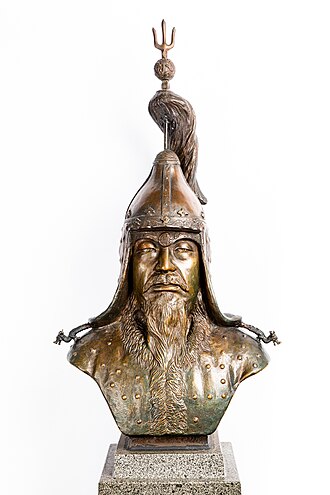
“My life and death are matters I have long decided. Do not be troubled by my passing.”
— Yi Sun-sin, attributed final words at the Battle of Noryang, 1598
In the annals of Korean history, few figures stand as tall as Admiral Yi Sun-sin. A naval commander of extraordinary genius, Yi defended the Joseon Dynasty against one of the most devastating foreign invasions Korea had ever faced — the Japanese campaigns of 1592 to 1598, known as the Imjin War. Despite fighting with limited resources, facing political persecution from his own court, and suffering personal tragedies, Yi remained undefeated in every naval engagement he commanded. His story is not merely one of military brilliance; it is a testament to unwavering duty, personal sacrifice, and the power of strategic ingenuity.
Quick Facts: Admiral Yi Sun-sin
| Fact | Detail |
|---|---|
| Born | April 28, 1545, Hanseong (modern Seoul), Joseon Korea |
| Died | December 16, 1598, Battle of Noryang |
| Dynasty | Joseon |
| Military Role | Admiral of the Joseon Navy |
| Famous For | Undefeated naval record during the Imjin War |
| Key Invention | Associated with development of the Geobukseon (turtle ship) |
| Posthumous Title | Chungmugong (Duke of Loyalty and Valor) |
| National Recognition | His image appears on the Korean 100-won coin |
A Soldier’s Path: Early Life and Rise Through the Ranks
Yi Sun-sin was born on April 28, 1545, in Hanseong — the capital of the Joseon Dynasty, which corresponds to present-day Seoul. From an early age, Yi was drawn to the path of military service, though his road to distinction was neither swift nor smooth. He sat for the military examination at the age of 32, which was considered late by the standards of the era, and famously fell from his horse during one examination, injuring his leg. Rather than waiting for help, he reportedly splinted his own broken leg with bark from a nearby tree and continued — a moment that has become emblematic of the resilience that would define his career.
Yi passed his military examinations in 1576 and began a series of appointments at border garrisons in the north, where he gained practical experience combating incursions from Jurchen tribes along Korea’s northern frontier. His talent was evident, but so was his stubbornness in the face of political pressure. On multiple occasions, Yi refused to carry out orders he considered dishonest or tactically unsound, earning him both admirers and powerful enemies at court. These conflicts led to repeated demotions and setbacks that would have ended lesser careers.
Despite these obstacles, Yi was appointed Commander of Jeolla Left Naval District in 1591 — a posting that would place him at the epicenter of the coming storm. He immediately set about strengthening his fleet, training his sailors, and supervising the construction of new warships. It was during this period that the Geobukseon, or turtle ship, was refined under his oversight. When the Japanese invasion came, Yi was ready.
Why Is Yi Sun-sin Considered Undefeated in Naval Combat?
The question of Yi’s undefeated record is one of the most remarkable aspects of his legacy. Over the course of the Imjin War, Yi commanded Korean naval forces in more than two dozen significant engagements against the Japanese fleet — and he never lost one. This achievement becomes even more astonishing when examined against the enormous disadvantages he faced.
Japan’s invasion of Korea began in the spring of 1592, when Toyotomi Hideyoshi dispatched an army of over 150,000 soldiers across the Korea Strait. The Japanese forces swept rapidly northward on land, capturing Hanseong and then Pyongyang in quick succession. On land, the Joseon military struggled to mount effective resistance. At sea, however, Yi Sun-sin changed the course of the war.
Within weeks of the invasion’s start, Yi’s fleet achieved its first major victory at the Battle of Okpo in May 1592, destroying dozens of Japanese vessels. Subsequent victories at Sacheon, Dangpo, and Hansan Island followed in rapid succession. The Battle of Hansan Island, fought in August 1592, is considered Yi’s masterpiece. Using a tactical formation known as the “crane wing” or hakikjin, Yi lured the Japanese fleet into open water and then encircled them, destroying or capturing the majority of the enemy ships. Contemporary accounts describe the destruction of 59 Japanese warships in a single engagement.
“Even if the enemy were to come with a thousand ships, they shall not pass if I am alive.”
— Yi Sun-sin, from his war diary Nanjung Ilgi
These naval victories had strategic consequences that extended far beyond the battles themselves. Japan’s invasion strategy depended on maintaining supply lines across the sea. Yi’s dominance of Korea’s southern coastal waters severed those lines, forcing the Japanese army in the north to operate without adequate provisions and reinforcements. Historians have widely argued that Yi’s naval campaigns were a decisive factor in preventing Japan from achieving a complete conquest of the Korean peninsula.
The Turtle Ship: Innovation in the Face of Invasion
No discussion of Yi Sun-sin is complete without addressing the Geobukseon — the turtle ship — one of the most iconic warships in Asian naval history. While armored vessels had existed in Korean naval tradition before Yi’s time, he is credited with refining and deploying the turtle ship as an effective weapon of war during the Imjin War.
The turtle ship’s design was revolutionary for its era. Its hull was covered with iron spikes and, according to some accounts, iron plating, making it extremely difficult for enemy sailors to board — a common Japanese naval tactic. The ship featured a dragon-shaped figurehead at the bow that could emit smoke to confuse enemies, and it was equipped with cannon ports on all sides, allowing it to fire in multiple directions simultaneously. The ship was powered by oarsmen as well as sails, giving it maneuverability in conditions where wind alone would be unreliable.
The psychological impact of the turtle ship was considerable. Japanese sailors who had grown accustomed to boarding enemy vessels and fighting hand-to-hand found themselves unable to close with these armored opponents. The ships served as heavily armed battering rams, cutting through enemy formations while Korean cannon fire wreaked havoc on the wooden Japanese fleet.
Political Betrayal and Imprisonment: A Hero Nearly Destroyed
Yi Sun-sin’s relationship with the Joseon court was deeply troubled. His insistence on independent military judgment and his refusal to engage in political flattery made him vulnerable to the scheming of rivals and jealous officials. In 1597, these tensions reached a crisis point.
A Japanese double agent fed false intelligence to the Korean court, claiming that the Japanese fleet would pass through a specific strait at a specific time. Yi was ordered to launch an attack based on this information — but he recognized it as a trap and refused to comply. This act of defiance, however well-reasoned, gave his enemies at court the opening they needed. Yi was arrested, stripped of his rank, and subjected to torture. He was ultimately demoted to the rank of common soldier and sent to serve under a rival general.
The consequences were almost immediate and catastrophic. Yi’s replacement, Won Gyun, led the Korean fleet into the very trap Yi had avoided. The resulting Battle of Chilcheonryang in 1597 was a disaster — the Japanese destroyed nearly the entire Joseon fleet, leaving only twelve warships intact. Korea’s naval supremacy was shattered overnight.
In the face of this emergency, the court had little choice but to recall Yi Sun-sin. He was reinstated as admiral and given command of those twelve surviving vessels. What followed is one of the most celebrated episodes in Korean military history.
3 Battles That Define Yi Sun-sin’s Legacy
1. The Battle of Hansan Island (1592)
Widely regarded as Yi’s tactical masterpiece, Hansan Island saw Korean forces lure a superior Japanese fleet into open water before deploying the crane-wing formation to encircle and destroy them. The victory secured Korean control of the southern seas and disrupted Japanese supply lines at a critical moment in the invasion.
2. The Battle of Myeongnyang (1597)
This is arguably the most astonishing victory in Korean naval history. With only twelve ships against a Japanese fleet variously estimated at over 130 warships and hundreds of support vessels, Yi exploited the narrow Myeongnyang Strait, where strong tidal currents negated the enemy’s numerical advantage. The Japanese lost at least 31 warships in the engagement, while Yi’s fleet suffered no ship losses. The battle restored Korean naval confidence and reversed the catastrophic losses at Chilcheonryang.
3. The Battle of Noryang (1598)
Yi’s final battle came as Toyotomi Hideyoshi had already died and Japanese forces were withdrawing from Korea. Yi, commanding a combined Korean and Chinese fleet, intercepted the retreating Japanese armada in the Noryang Strait. The battle was a crushing victory for the allied forces. Yi Sun-sin, however, was struck by a bullet during the fighting and killed. His reported last words asked that his death be kept secret so as not to discourage his sailors. He died as he had lived — placing the mission above himself.
Legacy: How Korea Remembers Yi Sun-sin
Yi Sun-sin’s place in Korean national consciousness is difficult to overstate. He is commemorated across the country in statues, museums, and cultural institutions. A grand statue of the admiral stands in Gwanghwamun Square in central Seoul, one of the most visited public monuments in the country. His war diary, the Nanjung Ilgi, has been recognized as a UNESCO Memory of the World document and remains a primary historical source of exceptional value — offering a rare first-person account of the war from the perspective of one of its central figures.
His image has graced the Korean 100-won coin, and the Republic of Korea Navy continues to honor his name through ships and institutions bearing the title Chungmugong, his posthumous honorific meaning Duke of Loyalty and Valor. The Joseon court, which had imprisoned and humiliated him in life, enshrined him as a national hero after his death.
Internationally, Yi has attracted significant scholarly attention as a figure comparable in tactical innovation to Lord Nelson or Horatio Nelson, though he predates the British admiral by nearly two centuries. His campaigns have been studied in military academies for their lessons in using terrain, deception, and limited resources to overcome superior numbers.