“We herewith proclaim the independence of Korea and the liberty of the Korean people.” — Opening line of the Korean Declaration of Independence, March 1, 1919
Few chapters in Korean history are as stirring, as painful, or as ultimately triumphant as the decades-long struggle for independence from Japanese colonial rule. From 1910, when Japan formally annexed the Korean peninsula, to liberation in August 1945, generations of Koreans — students, scholars, farmers, women, and exiles — waged a sustained campaign to reclaim their nation’s sovereignty. The Korean independence movement was not a single event but a living, evolving resistance that took shape across the peninsula, in the streets of Seoul, and in exile communities stretching from Shanghai to Honolulu.
Quick Facts: The Korean Independence Movement
| Fact | Detail |
|---|---|
| Period | 1910–1945 (Japanese colonial period) |
| Key Event | March 1st Movement (Samil Movement), 1919 |
| Declaration of Independence | Signed by 33 representatives on March 1, 1919 |
| Provisional Government | Established in Shanghai, April 1919 |
| Liberation Date | August 15, 1945 |
| National Commemoration | March 1 (Independence Movement Day) and August 15 (Liberation Day) are both national holidays in South Korea |
How Did Japan Come to Rule Korea?
To understand the independence movement, one must first understand how Korea lost its sovereignty. Following the First Sino-Japanese War (1894–1895) and the Russo-Japanese War (1904–1905), Japan emerged as the dominant imperial power in East Asia. Through a series of forced treaties — most notably the Japan–Korea Annexation Treaty of 1910 — Japan absorbed the Joseon dynasty’s kingdom entirely. The Korean emperor was stripped of his powers, the country was renamed Chōsen, and Japanese governance replaced all Korean institutions.
Colonial rule was enforced with a heavy hand. The Japanese Government-General of Korea deployed military police to suppress dissent, banned Korean-language education in many contexts, and introduced policies designed to erode Korean cultural identity. Land surveys dispossessed many Korean farmers of their land, and Korean labor was increasingly exploited for Japanese industrial and military purposes. Far from being passive subjects, however, Koreans began organizing resistance almost immediately after annexation.
The Spark: The March 1st Movement of 1919
The most iconic moment in the Korean independence movement came on March 1, 1919, when a nationwide uprising erupted across the peninsula. Known in Korean as the Samil (삼일) Movement — “three-one” for the date — this remarkable demonstration was set in motion by a group of 33 Korean civic and religious leaders who gathered in Seoul’s Taehwagwan restaurant to read aloud a Declaration of Independence they had drafted and signed.
The declaration, written largely by the scholar Ch’oe Nam-seon and endorsed by independence leaders from Christian and Cheondogyo (a native Korean religion) communities, drew on the language of Woodrow Wilson’s Fourteen Points and the global post-World War I atmosphere of self-determination. It called not for violent revolution but for peaceful recognition of Korean nationhood.
On that same day, crowds gathered in Pagoda Park (Tapgol Park) in central Seoul. A young student read the declaration aloud, and protesters took to the streets shouting “Manse!” — meaning “ten thousand years” and used as a rallying cry akin to “long live Korea.” The demonstrations spread rapidly. Within weeks, protests had erupted in hundreds of towns and villages across the country. Historians estimate that between one and two million Koreans participated in demonstrations over the following months.
The Japanese colonial authorities responded with brutal force. Thousands of protesters were killed, and tens of thousands were arrested and imprisoned. The village of Jeamri became a particular symbol of Japanese repression when Japanese soldiers locked villagers inside a church and set it ablaze. Despite — or perhaps because of — the violent crackdown, the March 1st Movement became the foundational myth of Korean national resistance, a moment that proved the Korean people’s will to be free had not been extinguished.
“The March 1st Movement demonstrated that Korean national consciousness had not only survived Japanese annexation — it had deepened into a powerful, organized force that could mobilize an entire people.”
5 Key Forces That Shaped the Independence Movement
- Religious Networks: Both Protestant Christian communities and followers of the indigenous Cheondogyo religion provided organizational infrastructure, communication networks, and principled leadership for the movement. The 33 signatories of the 1919 Declaration included leaders from both traditions, reflecting a remarkable cross-denominational alliance.
- Students and Youth: Young Koreans, especially students at mission schools and Seoul’s emerging modern institutions, were among the most active participants in protests and in spreading independence literature. Student organizations continued to play a central role throughout the colonial period.
- The Provisional Government in Exile: In April 1919, Korean leaders established the Provisional Government of the Republic of Korea in Shanghai, China. This government-in-exile, which counted Syngman Rhee among its early presidents, worked to gain international recognition and coordinate the independence struggle from abroad.
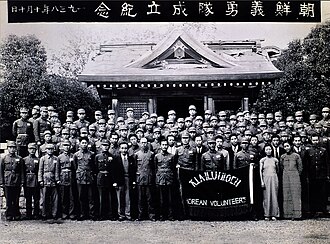
- Armed Resistance: Not all independence fighters chose peaceful protest. Korean independence armies, including the Korean Liberation Army established in 1940 under the Provisional Government, fought against Japanese forces in Manchuria and China. Figures such as Kim Gu organized armed operations and maintained pressure on Japan throughout the 1930s and early 1940s.
- Diaspora Communities: Korean communities in the United States, Manchuria, Siberia, and China all contributed to the independence movement — raising funds, lobbying foreign governments, and providing sanctuary to activists who had fled Japanese persecution.
The Provisional Government: Korea’s Government in Exile
One of the most remarkable institutional achievements of the independence movement was the establishment of the Provisional Government of the Republic of Korea (대한민국 임시정부) in Shanghai in April 1919, just weeks after the March 1st Movement. This was not merely a symbolic gesture — the Provisional Government drafted a constitution, organized a cabinet, published newspapers, operated a diplomatic corps, and sought international recognition for Korean independence.
The Provisional Government faced enormous challenges. Funding was perpetually scarce, internal factions disagreed sharply over strategy — with some favoring diplomatic engagement and others insisting on armed struggle — and the Japanese colonial authorities worked aggressively to infiltrate and disrupt its operations. When Japan invaded China in the 1930s, the government was forced to move repeatedly, relocating from Shanghai to Chongqing among other cities.
Despite these hardships, the Provisional Government endured for over two decades. In 1940, it established the Korean Liberation Army, which formally declared war on Japan and the Axis powers following Pearl Harbor. When liberation finally came in August 1945, the Provisional Government’s leaders — including Kim Gu, who had served as its president — returned to Korea, though the subsequent division of the peninsula and the beginning of the Cold War would complicate the movement’s legacy enormously.
Cultural Resistance: Keeping Korea’s Identity Alive
The independence movement was not fought only in the streets or on battlefields. It was also waged in classrooms, publishing houses, and cultural institutions. Korean intellectuals worked hard to preserve and celebrate Korean language, history, and culture at a time when Japanese policy increasingly sought to suppress Korean identity. Scholars compiled Korean historical records, linguists codified and promoted the Korean writing system (Hangul), and poets and novelists wrote in Korean even when doing so attracted official suspicion.
The Korean Language Society (Joseon eo Hakhoe), founded in 1921, worked systematically to standardize Hangul spelling and produce Korean dictionaries. In 1942, Japanese authorities arrested dozens of its members on charges of promoting Korean nationalism — an event known as the Korean Language Society Incident — demonstrating how seriously the colonial authorities took the threat of cultural resistance.
Comparison: Strategies of Resistance
| Strategy | Key Examples | Strengths | Limitations |
|---|---|---|---|
| Peaceful Protest | March 1st Movement (1919) | Mass mobilization; international attention; demonstrated broad support | Met with violent suppression; limited immediate political impact |
| Diplomatic Action | Provisional Government lobbying; Syngman Rhee’s efforts in the US | Built international awareness; established institutional legitimacy | Major powers largely declined to challenge Japan until WWII |
| Armed Resistance | Korean Liberation Army; guerrilla fighters in Manchuria | Maintained active military pressure on Japan | Outgunned and outresourced; high casualties |
| Cultural Preservation | Korean Language Society; Korean-language publishing | Preserved national identity across generations | Vulnerable to suppression; required secrecy |
Liberation and Legacy
Liberation came not through any single act of Korean resistance but through Japan’s defeat in World War II. On August 15, 1945 — a date Koreans call Gwangbokjeol (광복절), meaning “the day of the restoration of light” — Emperor Hirohito announced Japan’s surrender. Koreans across the peninsula and around the world erupted in celebration. Thirty-five years of colonial rule were over.
The immediate aftermath of liberation, however, was complicated. The peninsula was divided along the 38th parallel by the United States and the Soviet Union, setting the stage for the eventual creation of two separate Korean states — the Republic of Korea in the south and the Democratic People’s Republic of Korea in the north. Leaders of the independence movement found themselves on different sides of the ideological divide. Syngman Rhee became the first president of South Korea; Kim Gu, who opposed the division of the peninsula, was assassinated in 1949. The movement’s dream of a unified, independent Korea remained only partially fulfilled.
Yet the legacy of the independence movement endures powerfully in Korean national consciousness. March 1st is a national holiday in South Korea, observed with solemn ceremonies and the public reading of the 1919 Declaration of Independence. The 33 signatories of that declaration are honored as national heroes. The Provisional Government’s constitution is considered a foundational document of the Republic of Korea. And the spirit of the Samil Movement — the conviction that an entire people’s collective will could challenge even overwhelming power — has echoed through subsequent generations of Korean political and civic life, including the pro-democracy movements of the 1980s.
Continue Exploring
- On Coreaverse:
- External Resources: