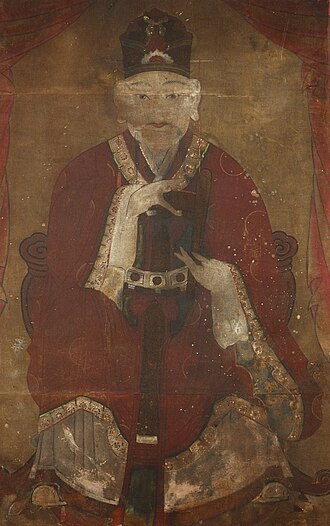
“He was a prince born of royal blood, yet he died in darkness — confined within wooden walls by the command of his own father.”
Few episodes in Korean history are as haunting, as debated, and as deeply human as the story of Crown Prince Sado. Born into the highest privilege of the Joseon dynasty, he was destined to rule one of East Asia’s most sophisticated kingdoms. Instead, his life ended in 1762 inside a wooden rice chest, condemned by royal decree to die of starvation and dehydration. The story of Sado has captivated historians, novelists, filmmakers, and ordinary readers for centuries — not only because of its violence and tragedy, but because it sits at the intersection of royal politics, mental anguish, factionalism, and the crushing burden of dynastic expectation.
Quick Facts: Crown Prince Sado
| Born | 1735 |
| Died | 1762 |
| Title | Crown Prince (Seja) of Joseon |
| Father | King Yeongjo of Joseon |
| Dynasty | Joseon (1392–1897) |
| Cause of Death | Starvation and dehydration after being confined in a rice chest |
| Son | Later became King Jeongjo |
| Era | 18th-century Joseon |
A Prince Born Under Pressure
Crown Prince Sado was born in 1735 as the son of King Yeongjo, one of Joseon’s longest-reigning and most accomplished monarchs. Yeongjo ruled for over fifty years and is remembered for important policy reforms, including the tangpyeongchaek — a policy designed to balance factional appointments in government and reduce the bitter rivalry between the Noron and Soron factions that had paralyzed court politics for decades.
Into this world of high expectation and political tension, Sado was born. As the crown prince, he was groomed from infancy to eventually assume the throne. Joseon’s royal court placed enormous emphasis on Confucian learning, ritual propriety, and scholarly achievement. The pressure placed on royal heirs was immense, and the relationship between a reigning king and his designated successor was never simple — it was laden with political consequence at every turn.
King Yeongjo’s relationship with his son appears to have deteriorated significantly as Sado grew older. The precise reasons for this breakdown remain a subject of historical debate, but contemporaneous accounts and later records suggest that the prince exhibited increasingly erratic and violent behavior as he entered adulthood. According to some accounts, Sado suffered from a severe mental illness — possibly exacerbated by the crushing psychological weight of palace life and his father’s harsh disapproval.
What Drove Sado to Violence?
The question of what drove Crown Prince Sado to his reportedly violent behavior is one of the most discussed in all of Korean historical scholarship. Some historians point to genuine mental illness, possibly triggered or worsened by the extreme isolation and rigidity of palace life. Others have suggested that Sado was a victim of the brutal factional politics of the Joseon court, with powerful factions at court actively working to undermine his position in the eyes of King Yeongjo.
One of the most important primary sources for understanding Sado’s life is the Hanjungnok (also known as Memoirs of a Lady of the Inner Court or Records Written in Silence), written by his wife, Lady Hyegyong of the Pungsan Hong clan. Lady Hyegyong composed this memoir in several installments over her long life, providing an intimate and deeply personal account of life inside the Joseon royal palace and of the tragic fate of her husband. While historians treat the memoir carefully — recognizing that it was written with specific audiences in mind and to defend the reputation of her own family — it remains an irreplaceable window into this period.
“The memoirs of Lady Hyegyong remain one of the most extraordinary personal documents to survive from Joseon-era Korea — a wife’s account of watching her husband unravel, written under impossible circumstances.”
According to accounts drawn from the period, Sado engaged in violent acts within the palace, reportedly killing palace servants and court ladies. Whether these acts were the result of untreated mental illness, political framing, or some combination of both, they created a crisis that King Yeongjo could no longer ignore. By 1762, the situation had become untenable.
The Rice Chest: 1762
In the summer of 1762, King Yeongjo made a decision that shocked the court and has reverberated through Korean history ever since. Rather than have his own son formally executed — an act that would have carried enormous ritual and political consequences — Yeongjo ordered Sado to climb inside a large wooden rice chest. The chest was then sealed. Deprived of food, water, and air, Crown Prince Sado died approximately eight days later.
The method of execution was deliberate in its ambiguity. By avoiding a formal beheading or official execution order, Yeongjo could technically claim that no crown prince had been put to death by royal command in the conventional sense. At the same time, the act was unmistakably an act of filicide — a father condemning his son to death. The legal and ritual gymnastics involved reflect the deeply Confucian framework within which Joseon’s royal family operated: relationships between father and son, king and subject, were governed by elaborate codes that made this situation almost paradoxically difficult to resolve.
Lady Hyegyong witnessed these events firsthand. Her memoirs describe the anguish of watching her husband enter the chest and the long, terrible days that followed. Her young son — the future King Jeongjo — was present at court during this period, a fact that would shape his entire reign.
The Aftermath: King Jeongjo and His Father’s Legacy
Crown Prince Sado never became king, but his memory profoundly shaped Joseon’s subsequent history. His son, who ascended the throne as King Jeongjo in 1776, made the rehabilitation of his father’s reputation a central project of his reign. Jeongjo was one of Joseon’s most celebrated rulers — an intellectual monarch who expanded the royal library, reformed the bureaucracy, and sought to balance the factional politics that had destroyed his father.
Jeongjo posthumously honored his father with the title of Jangjo — though this full posthumous recognition came later in the dynasty. He also constructed the magnificent Hwaseong Fortress in Suwon and moved the royal tomb of his father to the area, making the fortress partly an expression of filial devotion. Hwaseong Fortress, completed in 1796, is today a UNESCO World Heritage Site and stands as one of the most remarkable architectural achievements of late Joseon Korea.
Comparison: How Joseon Handled Royal Crises
| Situation | Ruler Involved | Outcome |
|---|---|---|
| Crown Prince Sado’s mental crisis and violence | King Yeongjo (r. 1724–1776) | Prince confined in rice chest; died 1762 |
| Factional conflict over royal succession | Multiple Joseon kings | Purges of opposing factions; exile or execution of officials |
| King Yeonsangun’s tyrannical reign | Yeonsangun (r. 1494–1506) | Deposed by coup; stripped of royal title posthumously |
| Jeongjo’s rehabilitation of Sado | King Jeongjo (r. 1776–1800) | Posthumous honors; Hwaseong Fortress built near father’s tomb |
Why Does Sado’s Story Still Matter Today?
The story of Crown Prince Sado has never faded from Korean cultural consciousness. It has inspired novels, television dramas, and major films — including the 2015 film The Throne (사도, Sado), which brought the story to a new generation of audiences and sparked widespread public conversation about the relationship between mental health, institutional power, and family obligation.
At a deeper level, Sado’s story raises questions that remain urgent. What does it mean for a society built on Confucian filial piety when a father orders the death of his son? How do institutions — whether royal courts or modern bureaucracies — respond when an individual within the system becomes a threat? And how do survivors, like Lady Hyegyong and the young Jeongjo, carry on and make meaning from trauma?
Historians also continue to debate the degree to which Sado was a victim of mental illness versus factional conspiracy. The Noron faction, which was dominant at court and deeply opposed to Sado’s circle, had strong political motivations to see the prince discredited. King Yeongjo’s own well-documented emotional volatility and famously difficult relationship with his son added further complexity. The truth, as with so many episodes in history, is likely irreducibly complicated.
What is beyond question is that Sado’s death in 1762 represents one of the most dramatic and emotionally resonant episodes in the five-hundred-year history of the Joseon dynasty. It is a story of power, love turned to rupture, political machinery grinding against human beings, and the enduring effort of survivors to make sense of the past — an effort that, in Lady Hyegyong’s case, produced one of the great literary documents of Korean history.