“I still have twelve ships.” — Admiral Yi Sun-sin, in a dispatch to the Joseon court before the Battle of Myeongnyang, 1597
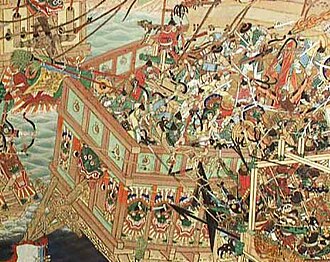
Few battles in world history match the sheer improbability of the Battle of Myeongnyang. On the 26th day of the ninth lunar month of 1597, Admiral Yi Sun-sin led a fleet of just 13 Joseon warships against a Japanese armada of more than 130 vessels in the narrow Myeongnyang Strait, off the southwestern coast of Korea. Against all odds, he won. The victory stands as one of the most remarkable feats of naval command in recorded history, and it fundamentally altered the course of the Imjin War — Japan’s brutal invasion of the Korean peninsula.
To understand why Myeongnyang matters, you have to understand how desperate the situation had become for Joseon Korea in the autumn of 1597.
The Road to Myeongnyang: How Korea’s Navy Was Nearly Destroyed
The Imjin War began in 1592 when the forces of Japanese warlord Toyotomi Hideyoshi invaded Korea with overwhelming land power. Throughout the first phase of the war, Admiral Yi Sun-sin’s naval campaigns consistently denied the Japanese control of Korean waters, frustrating Japanese supply lines and helping to stabilize the peninsula’s defense. His innovations — including the extensive use of the celebrated turtle ship, or geobukseon — had inflicted devastating losses on the Japanese fleet.
But Yi Sun-sin had powerful enemies at the Joseon court as well as on the battlefield. In 1597, political rivals succeeded in having him arrested, tortured, and stripped of his rank. He was demoted to the position of common soldier. His replacement as naval commander, Won Gyun, proved disastrously incompetent. At the Battle of Chilchonryang in August 1597, Won Gyun led virtually the entire Joseon fleet into a trap. The result was catastrophic: nearly all of Korea’s warships were destroyed and Won Gyun himself was killed. Of the entire Joseon navy, only 12 warships survived — later accounts would record a 13th vessel joining Yi’s reconstituted fleet.
The Joseon court, in desperation, reinstated Yi Sun-sin as supreme naval commander. He found himself with a shattered navy, demoralized sailors, and a Japanese fleet pushing rapidly up the western coast toward the capital. King Seonjo, alarmed by the scale of the disaster, suggested abandoning the navy altogether and having Yi join the land forces. Yi’s response was unequivocal: as long as he had ships, he would fight at sea.
| Date | 26th day of the 9th lunar month, 1597 (approximately October 26, 1597) |
|---|---|
| Location | Myeongnyang Strait, near Jindo Island, South Jeolla Province, Korea |
| Joseon Forces | 13 warships, approximately 130 men per vessel |
| Japanese Forces | Estimated 130+ warships, hundreds of logistical vessels |
| Joseon Commander | Admiral Yi Sun-sin |
| Result | Decisive Joseon victory; Japanese naval advance halted |
| Significance | Prevented Japanese resupply of land forces; turned the tide of the Imjin War |
Why Did Yi Sun-sin Choose the Myeongnyang Strait?
The selection of the battlefield was itself an act of strategic genius. The Myeongnyang Strait — the name means “Roaring Currents” — is a narrow channel between the southwestern tip of the Korean mainland and Jindo Island. The strait is infamous among sailors for its extraordinarily powerful tidal currents, which reverse direction roughly every six hours and can reach speeds that make navigation treacherous even for modern vessels.
Yi Sun-sin understood that the strait’s geography would neutralize Japan’s overwhelming numerical advantage. In open water, 13 ships against 130 or more would have been slaughtered. But in a narrow channel, only a limited number of enemy vessels could engage at once. More critically, Yi knew the timing of the tidal shifts with precision. He planned to engage the Japanese fleet while the current ran in his favor, and to hold his position as the tide turned against the attackers.
He also ordered an iron chain to be stretched across part of the strait, a measure designed to further obstruct the Japanese advance and cause confusion among their lead vessels. Every element of the plan depended on discipline, timing, and an intimate knowledge of local waters that the Japanese fleet simply did not possess.
“Those who seek death shall live, and those who seek life shall die.” — Admiral Yi Sun-sin, addressing his officers before the Battle of Myeongnyang
The Battle Itself: 13 Ships Against an Armada
When the Japanese fleet entered the strait on the morning of the battle, the Joseon warships held their position under Yi’s personal command. The initial moments were terrifying for the Korean sailors. Several of Yi’s subordinate commanders, overwhelmed by the sight of the approaching armada, began to pull back their vessels. Yi’s flagship remained alone in the channel, facing the Japanese vanguard by itself for a critical period.
Yi Sun-sin refused to retreat. His flagship’s cannons fired continuously into the lead Japanese vessels. The narrow channel prevented the Japanese from bringing their full numbers to bear, and the powerful current — running against the attackers — disrupted the coordination of their fleet. Gradually, inspired by their admiral’s example, the other Joseon commanders brought their ships back into the fight.
The battle raged for several hours. Japanese vessels were sunk or disabled in significant numbers; the cramped conditions in the strait turned their numerical strength into a liability. The Japanese commander, Kurushima Michifusa, was killed during the engagement — his body reportedly identified and his head displayed as a trophy to rally Joseon morale. When the tide shifted and began running against the Japanese fleet with full force, their advance collapsed entirely. The surviving Japanese ships withdrew in disorder.
Joseon sources record that 31 Japanese warships were sunk during the battle, with many more damaged. The Joseon fleet lost no ships. The human cost on the Japanese side was severe; on the Korean side, casualties were comparatively light given the scale of the engagement.
3 Reasons Why Myeongnyang Changed the Imjin War
- It broke Japanese naval dominance in the west. After Chilchonryang, Japan had achieved something it had never managed in the first phase of the war: control of Korean waters along the western coast. Myeongnyang ended that control abruptly. The Japanese fleet never again attempted to push northward along the western sea route in force.
- It severed Japanese overland supply lines. The Japanese strategy for the second invasion depended on using sea routes to supply their land armies as they advanced toward the capital, Seoul. With the western sea route blocked, Japanese land forces found their logistics increasingly strained. The strategic initiative began to shift back toward the Joseon-Ming alliance.
- It restored the legend of Yi Sun-sin. Yi’s reinstatement had been greeted with skepticism in some quarters — what could one man do with 13 ships? Myeongnyang answered that question definitively. His reputation, already formidable, became something close to mythological. Korean soldiers and sailors across the peninsula took heart from the victory, and the demoralization that had followed Chilchonryang began to lift.
Admiral Yi Sun-sin: The Man Behind the Victory
Yi Sun-sin was born in 1545 in Hanseong, the Joseon capital. He came from a yangban family but did not pass his military examinations until relatively late, finally receiving his commission at the age of 32. His early career was marked by competence, integrity, and a repeated willingness to speak uncomfortable truths to superiors — qualities that made him effective and also made him enemies.
By the time the Imjin War began in 1592, Yi had been appointed commander of the Left Jeolla Naval District, a position from which he would launch the campaigns that made his name. His development of the geobukseon — the famous turtle ship, an iron-plated or iron-spiked warship capable of ramming enemy vessels while protecting its crew — gave the Joseon navy a formidable weapon against Japanese boarding tactics. His strategic grasp, logistical skill, and personal courage in battle set him apart from virtually every other commander on either side of the conflict.
Yi Sun-sin did not survive the war. At the Battle of Noryang in December 1598, as a combined Joseon-Ming fleet was inflicting a final, devastating defeat on the retreating Japanese armada, Yi was struck by a bullet — most likely a Japanese arquebus round. His last recorded words, according to Korean historical sources, were a request that news of his death be concealed until the battle was won, so that his sailors would not lose heart. He died as he had lived: placing the mission and his men above himself.
He was posthumously honored with the title Chungmugong — Duke of Loyalty and Valor. Today his statue stands in the heart of Gwanghwamun Square in Seoul, one of the most visited public monuments in Korea.
Myeongnyang in Korean Memory and Culture
The Battle of Myeongnyang occupies a unique place in Korean national consciousness. It represents the capacity for resilience and ingenuity against overwhelming force — themes that have resonated through centuries of Korean history. Yi Sun-sin is consistently ranked in surveys as the most admired figure in Korean history, above even the creators of Hangul or the founders of dynasties.
The battle site itself, in what is now South Jeolla Province, has been developed as a heritage destination. The Myeongnyang Battle Site and its associated memorial hall draw visitors seeking to stand where one of history’s great naval engagements took place. The powerful tidal currents of the strait — unchanged since 1597 — remain an eloquent reminder of the natural force that Yi Sun-sin turned into a weapon.
In 2014, the South Korean film The Admiral: Roaring Currents dramatized the battle and became the highest-grossing film in Korean box office history at that time, with over 17 million tickets sold — a testament to how deeply the story continues to resonate with Korean audiences more than four centuries later.
| Battle | Year | Joseon Ships | Japanese Ships | Outcome |
|---|---|---|---|---|
| Battle of Okpo | 1592 | ~24 | ~50 | Joseon victory |
| Battle of Hansan Island | 1592 | ~56 | ~73 | Major Joseon victory |
| Battle of Chilchonryang | 1597 | ~200 | ~500+ | Catastrophic Joseon defeat (under Won Gyun) |
| Battle of Myeongnyang | 1597 | 13 | 130+ | Decisive Joseon victory |
| Battle of Noryang | 1598 | ~82 (with Ming allies) | ~500 | Joseon-Ming victory; Yi Sun-sin killed |
Continue Exploring
To learn more about the Battle of Myeongnyang, Admiral Yi Sun-sin, and the Imjin War, explore these resources: