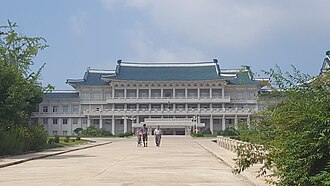
“To know Kaesong is to know the soul of Goryeo — a city where merchants, monks, and monarchs shaped a civilization that endured for nearly five centuries.”
Few cities in the Korean peninsula carry as much historical weight as Kaesong. Known in Korean as Gaesong (개성), this storied city served as the royal capital of the Goryeo dynasty for roughly five hundred years, from the dynasty’s founding in 918 CE until its fall in 1392. Today it sits inside North Korea, just north of the Demilitarized Zone, yet its monuments, earthworks, and UNESCO-inscribed heritage sites continue to speak to a time when Korea was a unified kingdom of extraordinary cultural and commercial vitality.
For anyone tracing the arc of Korean civilization, Kaesong is an unavoidable stop. It is the city where celadon pottery reached its artistic peak, where Buddhist culture flourished under royal patronage, and where one of East Asia’s most sophisticated commercial economies first took root. Understanding Kaesong means understanding a pivotal era that transformed the Korean peninsula from a fragmented collection of competing states into a coherent, culturally rich nation.
Quick Facts: Kaesong at a Glance
| Detail | Information |
|---|---|
| Korean Name | 개성 (Gaesong) |
| Historical Role | Capital of the Goryeo dynasty |
| Dynasty Served | Goryeo (918–1392 CE) |
| Current Location | North Korea, near the DMZ |
| UNESCO Status | Inscribed on the World Heritage List (2013) |
| Notable Heritage Sites | Manwoldae Palace ruins, Koryo Museum, royal tombs |
| Geographic Coordinates | 37.97°N, 126.55°E |
From Songak to Kaesong: The City’s Origins
Long before it became a dynastic capital, the area around Kaesong — historically called Songak — was a regional center of some importance during the Later Three Kingdoms period. When the warlord Wang Geon unified the peninsula and founded the Goryeo dynasty in 918 CE, he chose his home territory of Songak as the new capital, renaming it Gaegyeong (開京), meaning “the open capital.” This decision was both practical and symbolic: the city sat at a relatively central point on the peninsula, and it was the power base from which Wang Geon had launched his unification campaigns.
The Goryeo kings invested heavily in building up Gaegyeong as a royal city. Massive palace complexes were constructed, most notably the Manwoldae Palace, whose ruins can still be visited today. City walls were erected, Buddhist temples proliferated, and the administrative machinery of a sophisticated state took shape within the city’s boundaries. By the tenth and eleventh centuries, Gaegyeong was one of the most cosmopolitan cities in East Asia, drawing merchants, diplomats, and Buddhist pilgrims from across the region.
Why Was Kaesong the Heart of Goryeo Civilization?
Kaesong’s prominence during the Goryeo period was no accident. Several overlapping forces made it the cultural and economic engine of medieval Korea.
1. Royal Patronage of Buddhism
The Goryeo kings were fervent supporters of Buddhism, and Kaesong became the focal point of an extraordinary flowering of Buddhist art and scholarship. Temples multiplied within and around the city. The dynasty undertook one of the most ambitious publishing projects in premodern Asian history — the carving of the Tripitaka Koreana, a complete set of Buddhist scriptures carved onto more than eighty thousand wooden printing blocks. Although the blocks are now housed at Haeinsa Temple in the south, the intellectual and religious culture that produced them was centered on Kaesong. The city’s monasteries trained monks, produced illuminated manuscripts, and served as repositories of Korean Buddhist knowledge.
2. The Goryeo Commercial Economy
Kaesong merchants — known as Gaesong sangin — developed some of the most sophisticated commercial practices in premodern Korea. The city became famous across East Asia as a center of trade, and Goryeo merchants who operated out of Kaesong were so renowned for their acumen that the Korean word for merchant, sangin (상인), is said by some historians to derive partly from the city’s commercial reputation. Goryeo traded actively with Song China, the Jurchen Jin dynasty, and even Arab and Persian merchants who arrived via sea routes. Exports included the exquisite Goryeo celadon ceramics that remain among the most prized objects in Korean art history.
3. A Center of Confucian Learning
Although Buddhism dominated religious life, Kaesong was also the site of important Confucian educational institutions. The Goryeo Sungkyunkwan, the royal Confucian academy, was established in the capital, training the scholar-officials who staffed the dynasty’s bureaucracy. This dual heritage — Buddhist spirituality alongside Confucian statecraft — gave Goryeo civilization its distinctive character and helped lay the intellectual groundwork for the Joseon dynasty that would follow.
“Kaesong was not merely a capital — it was a crossroads, where the ceramics of Chinese-inspired artisans, the sutras of Buddhist monks, and the ledgers of far-traveling merchants all came together in one storied place.”
Mongol Invasions and the Resilience of Kaesong
The thirteenth century brought catastrophe to much of East Asia in the form of the Mongol conquests, and Goryeo was no exception. Beginning in 1231, Mongol forces launched a series of devastating invasions of the Korean peninsula. The Goryeo court famously relocated its capital to Ganghwa Island, off the western coast, in 1232, hoping that the sea — which the Mongols were ill-equipped to cross — would protect the royal family and government. Kaesong itself was seized and suffered considerable destruction during these campaigns.
The Goryeo government maintained its resistance from Ganghwa for nearly three decades before finally negotiating a peace with the Mongols in 1259. The court eventually returned to Kaesong, which was rebuilt and once again served as the capital under Mongol suzerainty. This period of Mongol domination, which lasted until the mid-fourteenth century, deeply affected Korean culture and politics, but Kaesong endured. When Goryeo general Yi Seonggye overthrew the dynasty and founded Joseon in 1392, he moved the capital south to Hanyang — present-day Seoul — and Kaesong’s era as the center of Korean political life came to an end.
Kaesong’s Heritage Sites: What Survives Today
Despite centuries of conflict and the physical separation imposed by the Korean War and the DMZ, a remarkable amount of Kaesong’s historical heritage survives. In 2013, UNESCO inscribed the Historic Monuments and Sites of Kaesong on its World Heritage List, recognizing the city’s outstanding universal value as the capital of the Goryeo dynasty and as a site of exceptional cultural, historical, and archaeological significance.
The inscribed property encompasses twelve separate components, including:
- Manwoldae Palace Site — The ruins of the main royal palace complex of Goryeo, covering an extensive area and offering a vivid sense of the scale of medieval Korean royal architecture.
- Kaesong Naesong City Wall — Sections of the ancient city walls that once encircled the Goryeo capital.
- Koryo Museum (Songgyungwan) — Housed in the former Confucian academy of Goryeo, this museum preserves important artifacts from the dynasty, including celadon ceramics, stone steles, and Buddhist objects.
- Royal Tombs of the Goryeo Kings — Several royal burial mounds are included in the UNESCO inscription, providing evidence of Goryeo funerary practices and cosmological beliefs.
- Sungyang Seowon — A Confucian academy associated with the loyal Goryeo official Jeong Mongju, who was killed in 1392 for his refusal to support Yi Seonggye’s new dynasty.
The Seonjuk Bridge, near Kaesong, is also closely associated with Jeong Mongju’s assassination and remains one of the most emotionally resonant historical sites connected to the end of the Goryeo dynasty.
Kaesong in the Modern Era: Division and Industrial Zones
The twentieth century added new layers of complexity to Kaesong’s long history. After the Korean War (1950–1953), the city ended up inside North Korean territory, separated from South Korea by the DMZ. Despite this division, Kaesong became the site of an unusual experiment in inter-Korean economic cooperation: the Kaesong Industrial Complex, established in 2004. Under this arrangement, South Korean companies operated factories in Kaesong using North Korean labor, creating a small but symbolically significant zone of economic exchange between the two Koreas. The complex was suspended in 2016 amid political tensions and has not fully resumed operations since.
The industrial complex underscored a bitter irony: a city that once stood at the cultural and political heart of a unified Korean civilization now straddles one of the most militarized borders on earth. Yet the UNESCO inscription of 2013, pursued by North Korea and supported by the international community, demonstrated that Kaesong’s historical significance transcends the politics of division.
Continue Exploring
On Korea Through Time
- The Goryeo Dynasty: Five Centuries of Korean Civilization
- The Tripitaka Koreana: Printing the Buddhist Canon in Wood
- Goryeo Celadon: The Art That Defined a Dynasty
- Jeong Mongju: The Loyal Minister Who Defied a Dynasty