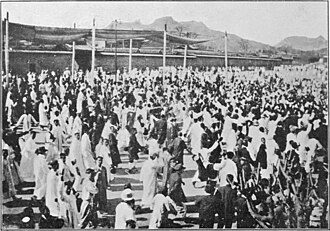
“We herewith proclaim the independence of Korea and the liberty of the Korean people.” — Opening line of the Korean Declaration of Independence, March 1, 1919
On the first day of March 1919, something extraordinary happened across the Korean peninsula. In cities, towns, and remote villages alike, ordinary Koreans — students, farmers, merchants, Christian ministers, and Buddhist monks — stepped into the streets and declared, in one collective voice, that their nation would be free. They called it Samiljeol (삼일절), the March First Movement, and it would become the most important moment of resistance in Korean modern history.
What began as a planned, peaceful declaration of independence in Seoul’s Tapgol Park rapidly spread into a nationwide uprising that lasted for months, drawing in an estimated two million participants and sending shockwaves far beyond Korea’s borders. It challenged the legitimacy of Japanese colonial rule, reshaped the Korean independence movement, and left a legacy that still resonates deeply in Korean national identity today.
Quick Facts: The March First Movement
| Date | March 1 – approximately May 1919 |
|---|---|
| Location | Across the Korean peninsula (then under Japanese colonial rule) |
| Korean Name | 삼일운동 (Samiljeol / Sam-il Movement) |
| Key Symbol | Reading of the Declaration of Independence at Tapgol Park, Seoul |
| Signatories of Declaration | 33 representatives (the “33 Patriots”) |
| Estimated Participants | Approximately 2 million people |
| Outcome | Suppressed by Japanese authorities; led to establishment of the Provisional Government of the Republic of Korea |
| National Holiday | March 1 is a public holiday in South Korea |
What Were the Roots of the March First Movement?
To understand why March 1, 1919 mattered so profoundly, we must look back to 1910, when Japan formally annexed Korea through the Japan-Korea Annexation Treaty. The nine years that followed were marked by what the Japanese colonial government called budan seiji — military rule. Korean language instruction was restricted in schools, Korean land and resources were systematically exploited, and Korean cultural identity was steadily suppressed. Japanese gendarmes (military police) governed daily life with an iron hand, carrying swords as symbols of authority over the civilian population.
By 1919, frustration had reached a breaking point. Two external events provided the critical spark. First, the death of former Korean Emperor Gojong in January 1919 — with widespread rumors that he had been poisoned by the Japanese — triggered an enormous outpouring of national grief and rage. Koreans from all walks of life were planning to travel to Seoul to pay their respects, providing a natural gathering point for the movement’s organizers.
Second, and equally important, was the international atmosphere. United States President Woodrow Wilson had delivered his famous Fourteen Points speech in January 1918, championing the principle of national self-determination — the idea that peoples of the world should have the right to choose their own governments. Korean intellectuals and independence activists seized on Wilson’s words with enormous hope, believing that the post-World War I international order might finally provide a path toward Korean liberation. That hope would ultimately prove bittersweet, but in early 1919 it was a powerful motivating force.
How the Movement Was Organized
The March First Movement did not emerge spontaneously. It was carefully planned by networks of Korean religious and intellectual leaders working in remarkable secrecy under the noses of the colonial authorities. Central to its organization were Korean Christian leaders — who had built up significant organizational infrastructure through churches and schools — and leaders of the Cheondogyo religion (a Korean indigenous faith), who contributed both organizational capacity and a mass following among rural Koreans.
The 33 men who signed the Korean Declaration of Independence — known reverentially as the “33 Patriots” — represented a cross-section of Korean religious leadership, including 16 Christians and 15 Cheondogyo leaders, along with 2 Buddhists. These men understood they were placing themselves in grave danger. Rather than attending the public reading of the declaration at Tapgol Park, they gathered privately at the Taehwagwan Restaurant in Seoul, read the declaration among themselves, and then telephoned the Japanese colonial authorities to announce what they had done — effectively turning themselves in to demonstrate the movement’s commitment to nonviolent resistance.
The declaration itself was a remarkable document. Written primarily by Choe Nam-seon, one of Korea’s most important early modern writers, it drew on both Korean traditional concepts and the international language of Wilsonian self-determination. It did not call for violence. It called for justice.
“The March First Declaration was not a cry of despair but an affirmation of existence — a people telling the world: we are here, we are a nation, and we will not disappear.”
March 1, 1919: The Day the Streets Spoke
On the morning of March 1, 1919, copies of the Declaration of Independence were distributed through networks of students and religious organizations across the country. At 2 p.m. in Seoul’s Tapgol Park — a location deliberately chosen for its public accessibility — a student read the declaration aloud to an assembled crowd. The crowd erupted in cries of “Daehan Dongnip Manse!” (대한 독립 만세!) — “Long live Korean independence!” — and took to the streets.
Within days, the demonstrations had spread with stunning speed to nearly every corner of the peninsula. Students, farmers, market vendors, laborers, and religious communities all participated. Korean women played a significant and often underappreciated role; figures such as Yu Gwan-sun, an eighteen-year-old student who organized demonstrations in her home region of Cheonan after her school was closed by the authorities, became enduring symbols of the movement. Yu Gwan-sun was arrested, tortured, and died in prison in 1920 at the age of eighteen — and she remains one of Korea’s most beloved national heroes.
The Japanese colonial response was swift and brutal. Military and police forces were deployed across the peninsula. Demonstrators were beaten, arrested, and shot. Villages where protests had occurred were sometimes burned. The Jeam-ri Massacre of April 1919 — in which Japanese soldiers locked Korean villagers inside a church and set it on fire — became one of the most horrifying episodes of the suppression.
The Scale of the Uprising and Its Human Cost
The full scope of the March First Movement was vast. Estimates of participation vary, but historians generally agree that approximately two million people took part in demonstrations across the peninsula over the roughly two-month period of peak activity. Thousands of protests occurred in hundreds of locations, from major cities to remote rural communities.
| Category | Estimated Figures |
|---|---|
| Total participants | Approximately 2 million |
| Koreans killed by Japanese authorities | Estimates range from 7,500 to over 20,000 |
| Koreans arrested | Approximately 46,000–50,000 |
| Koreans wounded | Estimated 15,000–16,000 |
| Churches and schools destroyed | Hundreds across the peninsula |
The casualty figures remain a subject of historical debate, with Korean and Japanese sources differing significantly. What is not in dispute is that the suppression was severe, and that thousands of Koreans paid with their lives, their freedom, or their health for the act of declaring their national identity.
3 Lasting Consequences of the March First Movement
1. The Establishment of the Provisional Government of Korea
The March First Movement directly led to the creation of the Provisional Government of the Republic of Korea, established in Shanghai, China in April 1919. This government-in-exile — led by figures including Syngman Rhee (as its first president) and later Kim Gu — became the organizational center of the Korean independence movement throughout the colonial period. It maintained diplomatic activities, published newspapers, organized armed resistance, and kept the flame of Korean national aspirations alive for the next twenty-six years until liberation in 1945. The Republic of Korea’s current constitution traces its legitimacy directly back to this provisional government.
2. Reforms in Japanese Colonial Policy
Faced with the scale of the uprising and international criticism, the Japanese colonial government made significant changes to its approach. Governor-General Hasegawa Yoshimichi resigned and was replaced by Saito Makoto, who inaugurated what was called the “Cultural Policy” (Bunka seiji) period. The hated military gendarmerie system was replaced by a civilian police force (though repression certainly continued), some restrictions on Korean-language publications were relaxed, and Korean cultural and educational activities were given somewhat more space. Historians debate how genuine these reforms were, but the Movement undeniably forced a recalibration of colonial strategy.
3. A Permanent Symbol of Korean National Identity
Perhaps most enduringly, the March First Movement became the founding myth of modern Korean nationhood — not of a dynasty or a military victory, but of a people’s collective will. March 1 (Samiljeol) is today a national public holiday in South Korea, commemorated with ceremonies, the reading of the Declaration of Independence, and educational events. The 33 signatories, Yu Gwan-sun, and the countless unnamed participants occupy a central place in Korean historical consciousness. The movement demonstrated that Korean national identity had survived annexation intact — and that it would not be extinguished.
The March First Movement and the Wider World
The movement’s significance extended beyond Korea. News of the uprising reached international audiences, particularly through missionary networks and sympathetic foreign journalists. It influenced independence movements elsewhere in Asia; the Chinese May Fourth Movement of 1919, one of modern China’s most important political awakenings, was partly inspired by the Korean example. In India, Mahatma Gandhi and others noted the Korean uprising as they developed their own philosophies of nonviolent resistance.
The movement also exposed the limits of Wilsonian self-determination. Despite the hopes of Korean leaders, the Paris Peace Conference of 1919 paid little attention to Korea’s plight. The great powers were focused on redrawing European borders, and Japan was a valued Allied partner. The lesson that international goodwill alone could not liberate Korea profoundly shaped the subsequent strategies of the independence movement, pushing some leaders toward more militant approaches and others toward building longer-term political and cultural foundations for eventual independence.
Continue Exploring
On This Site
- The Joseon Dynasty: Korea’s Last Royal Era
- Emperor Gojong and the End of the Korean Empire
- The Provisional Government of Korea in Shanghai
- Hangul and the Survival of Korean Cultural Identity Under Colonialism