“Of the Three Kingdoms of Korea, none spread its cultural seeds more widely across the seas than Baekje — a kingdom whose influence shaped Japan, China, and beyond long after its walls had fallen.”
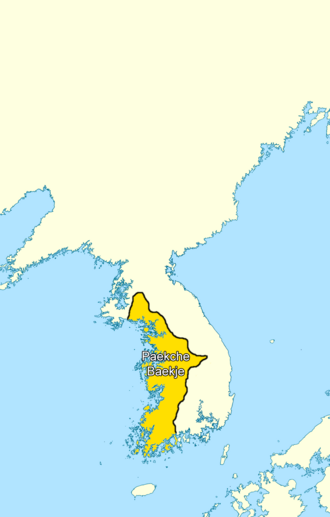
When most people think of ancient Korea, they think of Silla’s golden crowns or Goguryeo’s warrior kings painted on tomb murals. Yet one kingdom, Baekje (also spelled Paekche), quietly built one of the most sophisticated civilizations of the ancient world — a maritime state of artists, monks, architects, and diplomats whose legacy reached far beyond the Korean peninsula. Founded, according to tradition, in 18 BC, and destroyed by a Tang–Silla alliance in 660 AD, Baekje left a mark on East Asia that archaeology and history are only now beginning to fully appreciate.
Quick Facts: The Kingdom of Baekje at a Glance
| Founded | 18 BC (traditional date) |
|---|---|
| Dissolved | 660 AD |
| Location | Southwestern Korean peninsula (modern Gyeonggi, Chungcheong, and Jeolla provinces) |
| Capitals | Wiryeseong (early), Ungjin (modern Gongju), Sabi (modern Buyeo) |
| Religion | Buddhism (introduced 4th century), Shamanism |
| Language | Han (Koreanic) |
| Notable for | Cultural transmission to Japan, Buddhist art, maritime trade |
| Ended by | Tang–Silla alliance, 660 AD |
Origins and Early History: Who Founded Baekje?
Korean tradition holds that Baekje was founded in 18 BC by Onjo, a son of Jumong — the legendary founder of Goguryeo. According to the Samguk Sagi, the primary historical chronicle of Korea’s Three Kingdoms period, Onjo led a group of followers southward from Goguryeo territory and established a capital at Wiryeseong, believed to be near the site of present-day Seoul. This founding myth connects Baekje to the same semi-legendary lineage as its northern rival, though modern historians treat these traditions with appropriate caution.
What is less disputed is that Baekje gradually consolidated power across the southwestern Korean peninsula, absorbing the loosely affiliated Mahan confederacy of chiefdoms that had long dominated the region. By the 3rd and 4th centuries AD, Baekje had become a fully recognizable centralized kingdom, competing with Goguryeo to the north and Silla to the east for dominance over the peninsula.
The kingdom’s early heartland centered on the fertile plains and river valleys of what are now Gyeonggi and Chungcheong provinces. Control of these agricultural lowlands gave Baekje a strong economic foundation. Access to the Yellow Sea, meanwhile, gave it something arguably more valuable: a gateway to China and, through the maritime routes that crossed the Korean Strait, to the Japanese archipelago.
Why Did Baekje Become a Great Cultural Transmitter?
Of all the roles Baekje played in ancient East Asian history, none is more significant — or more fascinating — than its function as a transmitter of civilization. Positioned between the Chinese mainland and the Japanese archipelago, Baekje became the essential cultural bridge across which Buddhism, Confucianism, writing, art, and architecture flowed from the Asian continent into Japan.
“Baekje was not simply a conduit — it was a creative interpreter, refining and transforming the cultural imports it received from China before passing them eastward to Japan.”
Buddhism is perhaps the most dramatic example. According to traditional accounts, in 552 AD, the Baekje king sent Buddhist scriptures, monks, and images of the Buddha as diplomatic gifts to the Yamato court in Japan. This moment is recorded in Japanese chronicles as the official introduction of Buddhism to Japan — one of the most consequential events in Japanese cultural history. Baekje monks did not merely deliver texts; they helped construct temples, taught rituals, and shaped the earliest forms of Japanese Buddhist practice.
But the kingdom’s cultural exports went far beyond religion. Baekje craftsmen traveled to Japan and helped build the great early temples of the Asuka period, including structures at what would become the Horyuji temple complex — a UNESCO World Heritage Site and one of the oldest wooden buildings on Earth. Baekje architects, painters, tile-makers, and metalworkers brought technical expertise that transformed Japanese material culture. Japanese historical sources explicitly credit Baekje artisans with teaching the arts of papermaking, painting, and advanced construction.
At the same time, Baekje maintained active diplomatic and cultural exchange with the successive dynasties of China, receiving the latest in Buddhist scholarship, Confucian learning, and artistic styles, which it then adapted in its own distinctive way. This active, creative role — absorbing from China, transforming at home, transmitting to Japan — is what makes Baekje unique among the Three Kingdoms.
Three Defining Moments in Baekje’s History
1. The Reign of King Geunchogo (346–375 AD)
Under King Geunchogo, Baekje reached its greatest territorial extent. Geunchogo pushed Baekje’s northern frontier deep into Goguryeo territory and established formal diplomatic relations with the Eastern Jin dynasty of China. This reign marked the height of Baekje’s early power and set the template for the kingdom’s dual strategy of military expansion on land and diplomatic engagement across the sea. Geunchogo also reportedly sent scholars to Japan, establishing the first recorded cultural contacts between Baekje and the Yamato court.
2. The Capital Moves: Ungjin and Sabi
In 475 AD, Goguryeo forces under King Jangsu struck south in a devastating campaign, sacking Baekje’s capital at Wiryeseong and killing King Gaero. The kingdom was forced to abandon its northern heartland and relocate its capital southward to Ungjin (modern Gongju). The trauma was profound — Baekje had lost its richest territories and its founding capital. Yet the move also triggered a remarkable recovery. By 538 AD, the capital moved again, further south to Sabi (modern Buyeo), where Baekje entered one of its most culturally productive periods. The Sabi period produced some of the finest Buddhist art and architecture in Korean history, including elaborate gilt-bronze incense burners, elegant roof tiles, and planned urban layouts that reflected sophisticated city design.
3. The Fall of Baekje, 660 AD
By the 7th century, the geopolitics of East Asia had shifted dramatically. The Tang dynasty of China and the kingdom of Silla formed a powerful alliance aimed at eliminating both Baekje and Goguryeo. In 660 AD, a combined Tang naval force and Silla army struck Baekje from two directions. The decisive engagement came at the Battle of Hwangsanbeol, where the Silla general Gyebaek led a final, desperate Baekje defense. Despite his tactical skill and the fierce resistance of his outnumbered troops, Gyebaek was killed and his forces overwhelmed. The Baekje capital at Sabi fell shortly afterward, and King Uija was taken captive to Tang China. The kingdom ceased to exist as a political entity, though resistance movements continued for several years.
Baekje and Japan: How Deep Was the Connection?
The relationship between Baekje and the Yamato state of Japan was one of the most consequential bilateral relationships in early East Asian history. It was not merely a matter of cultural transmission — it involved sustained political alliance, royal intermarriage, and mutual military support. When Baekje fell in 660 AD, Japan (then the Yamato court) sent a substantial military force to support a Baekje restoration movement. The effort ultimately failed, but it illustrates how seriously the Yamato court regarded its relationship with Baekje — as more than cultural patronage, but as a genuine alliance between states.
Japanese historical sources from this period refer to Baekje in terms that suggest deep familiarity and even kinship. Some scholars have noted that members of the Baekje royal family who fled to Japan after the kingdom’s fall were absorbed into the Japanese aristocracy. The legacy of Baekje in Japan thus survived the kingdom’s political end, living on in noble lineages, temple traditions, and artistic practices that shaped Japanese culture for centuries.
Baekje Art and Archaeology: What Has Been Found?
For much of the 20th century, Baekje remained the least archaeologically understood of the Three Kingdoms. Goguryeo had its spectacular painted tombs; Silla had its gold-laden burial mounds at Gyeongju. Baekje’s material remains, by comparison, seemed modest. This perception has changed dramatically with decades of intensive excavation at sites associated with the Sabi capital period.
Among the most celebrated finds is the Baekje Incense Burner (Baekje Geumdongyongbongbaengsanhyangno), a gilt-bronze masterpiece unearthed at a temple site near Buyeo. Standing nearly 64 centimeters tall, it depicts an elaborate mountain landscape populated with mythological creatures, birds, and human figures — a tour de force of metalworking that reveals the extraordinary sophistication of Baekje’s court culture. The burner is now considered one of the supreme treasures of Korean art history.
The Mireuksa Temple site at Iksan, associated with a later Baekje king, has also yielded remarkable finds. The stone pagoda at Mireuksa is the oldest surviving stone pagoda in Korea, and recent restoration work uncovered a treasure cache inside its foundation stone — including a gold plate inscribed with a dedication text that has helped historians better understand Baekje’s Buddhist royal culture.
In 2015, a cluster of sites associated with Baekje’s Ungjin and Sabi periods was inscribed on the UNESCO World Heritage List under the name “Baekje Historic Areas.” The inscription recognized these sites as “outstanding examples of the later period of the Baekje Kingdom” that show “the exchange of human values” across East Asia — a formal acknowledgment of Baekje’s extraordinary historical significance.
Comparison: The Three Kingdoms of Korea
| Kingdom | Location | Known For | Fell To | Date Dissolved |
|---|---|---|---|---|
| Goguryeo | Northern Korea & Manchuria | Military power, painted tombs, vast territory | Tang–Silla alliance | 668 AD |
| Baekje | Southwestern Korea | Cultural transmission, Buddhist art, maritime trade | Tang–Silla alliance | 660 AD |
| Silla | Southeastern Korea | Gold artifacts, later unified the peninsula | Survived; unified Korea | 935 AD |
Why Does Baekje Still Matter Today?
Baekje matters today for reasons that extend well beyond academic history. In South Korea, the regions associated with Baekje — modern Chungcheong and Jeolla provinces — retain a cultural identity partly shaped by the memory of a kingdom that was sophisticated, cosmopolitan, and ultimately defeated. The UNESCO World Heritage inscription of the Baekje Historic Areas has brought new international attention to sites at Gongju, Buyeo, and Iksan that are now major destinations for cultural tourism.
For Japan, the Baekje connection is woven into some of the oldest and most revered institutions of Japanese culture. The temples of the Asuka and Nara periods, the earliest Japanese Buddhist artworks, and the lineages of early Japanese noble families all bear traces of Baekje influence. In 2001, the Japanese Emperor Akihito publicly acknowledged documented Korean ancestry in the imperial lineage — a statement widely interpreted as referencing Baekje royal connections — a remarkable moment that illustrated how alive these ancient ties remain in modern East Asian consciousness.
Baekje also offers historians and archaeologists a valuable perspective on how civilizations transmit culture across borders. It was not a passive relay station between China and Japan, but an active creative force — absorbing, transforming, and innovating before passing cultural forms onward. Understanding Baekje means understanding how ideas, art forms, and religious traditions travel and change as they move across cultures. In that sense, Baekje is not just Korean history. It is world history.
Continue Exploring
On Coreaverse
- Baekje Historic Areas: A UNESCO World Heritage Guide
- The Three Kingdoms of Korea: Goguryeo, Baekje, and Silla Explained
- How Buddhism Came to Korea — and Changed Everything